

When We Played for 40 Million People (and Didn't Know It)
In 1986, Atlantic Records sent Valerie and me on a promotional tour of Europe. We were jet-lagged, shell-shocked by sudden fame, and completely unprepared for what we would find across the pond. We appeared on over a dozen radio and TV shows in England, France, and Italy, including a little BBC thing called…TOP OF THE POPS.
Welcome to the pre-Internet era of rock stardom, where you could conquer Europe and have no clue you were doing it.

It was the summer of 1986, and the Nu Shooz song ‘I Can’t Wait’ was a Top-5 hit all over the world.
Our label, Atlantic Records, sent us over to Europe to do press and TV appearances; not the whole band, just Valerie and me. We were too busy to notice that the label wasn’t interested in the band, and was marketing us as a Husband and Wife ‘Synth-Pop’ Duo from Portland, Oregon.
We had an eight-hour hop over the North Pole. A car picked us up at Heathrow. On the way into town, our song came on the radio. Pretty cool!
So here we are in London.


It was the Pre-Internet era, what we call ‘the Horse and Buggy days.’ There was no way to do research into which media outlets we were slotted to appear on. We didn’t know if we were going to be on the British version of Dick Clark or Howdy Doody. Nowadays it’s so easy. Does the interviewer have an audience of ten thousand, or a million…or twelve? Is the show we’re going on a local morning show, or syndicated around the world?
Besides being jet-lagged and shell-shocked by our sudden rise to fame, we were clueless about the music business…I mean the POP music business.
We were scheduled to be on a show called Top of the Pops on the BBC. Never heard of it.
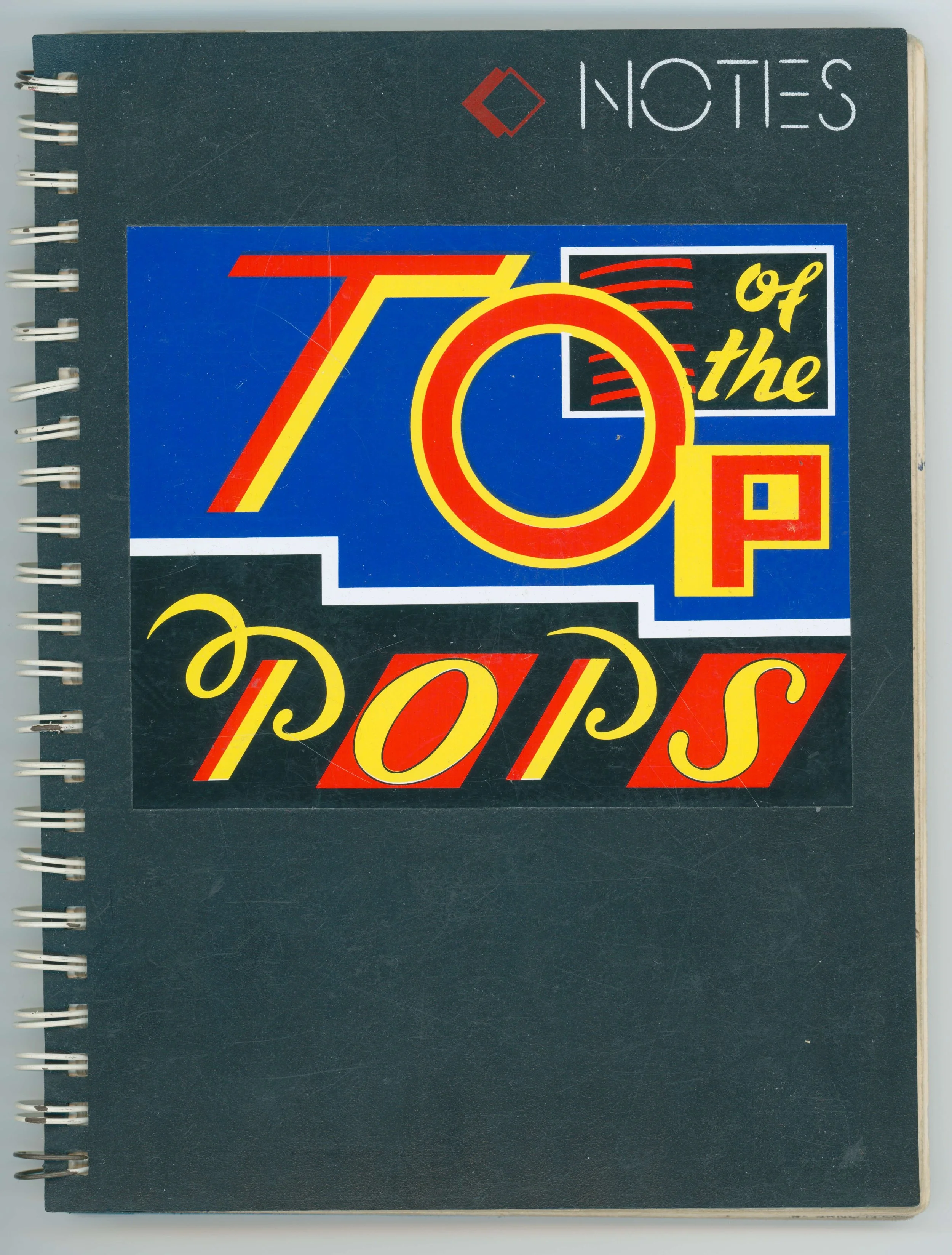
John’s Journal from 1986
But first, we were ushered into a recording studio, where a room full of musicians was re-recording our song! What? The label rep took us aside and quietly explained that the British Musician’s Union requires that British musicians have to be hired to play any music that will appear on TV. I remember the guitar player didn’t have the part quite right, but the horns and the backup singers were better than the record!
I asked the label guy, “Do we have to use this version?” “Oh no,” he laughed. Nudge nudge wink wink. “This is all for appearances. Don’t worry.”
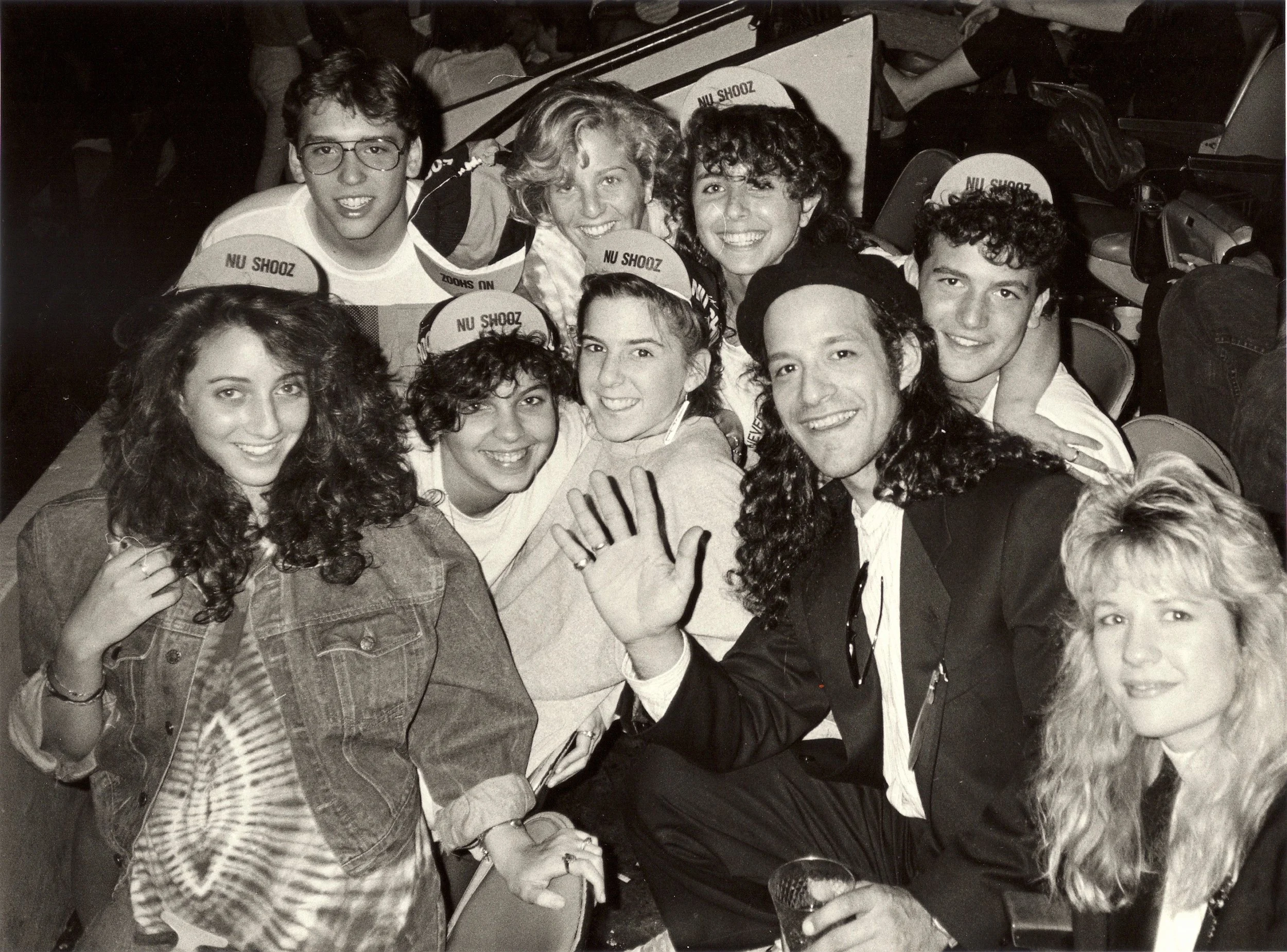
Before our appearance on Top of the Pops, we flew up to Manchester to be on a cute little ‘jukebox’ show, a sort of Dick Clark/American Bandstand in miniature. Fine Young Cannibals were on the show too. The audience was mostly middle-school kids. (Thirty or forty years later, someone sent us a clip of that show which was re-broadcast in Germany!)

Our driver for the British leg of the trip was a portly gentleman named Bil. [One ‘L.’] He took a liking to us right away and vice versa.
“You folks aren’t like the usual Rock Stars,” he said. “You’re real people.” He went above and beyond the call of duty and showed us around London, a city he clearly loved. I remember he showed us some Medieval doorways on London Bridge, barely five feet high. “People were much shorter then.”

John and our driver, Bill, on the London Bridge.
He took us to the oldest Toy Store in England, established in the late 1700’s. He bought me a little box of toy soldiers- I still have them- dressed like Hussars from the Crimean War. He introduced us to his wife, and we all had fish and chips at his local pub. All in all a perfect London experience; one we never could have had as mere tourists.


I think we did a couple of morning shows, and then it was onto Top of the Pops. I was used to hiding out in the corner of our nine-piece band, so now I’m feeling naked. It’s just Val and me out there doing these silly dance steps, miming our song. But what I mostly remember is I made one of the worst fashion choices of my career, a stupid, ill-fitting beret!
It was all a great big swirl.
A different driver picked us up to go to the airport, and we never saw BIL again; never got to thank him for being the best part of our trip.
Then it was on to Paris.


The French label put us up in a palatial suite at the Hotel Nikko overlooking the Seine.


I think we did about ten TV shows while we were there, mostly morning shows. I don’t know how effective it was since we didn’t speak French. The last thing we did was a TV show called ‘La vie du Famille.’ (Family Life) It was a kind of Ed Sullivan/Hollywood Palace kind of revue…you know, pop singers but also jugglers. I can still hear the theme song in my head forty years later:
La vie du famille
C’est important
Also on that show were Vince Clarke of Erasure, and the ‘Soul Makosa’ man, Manu Dibango.

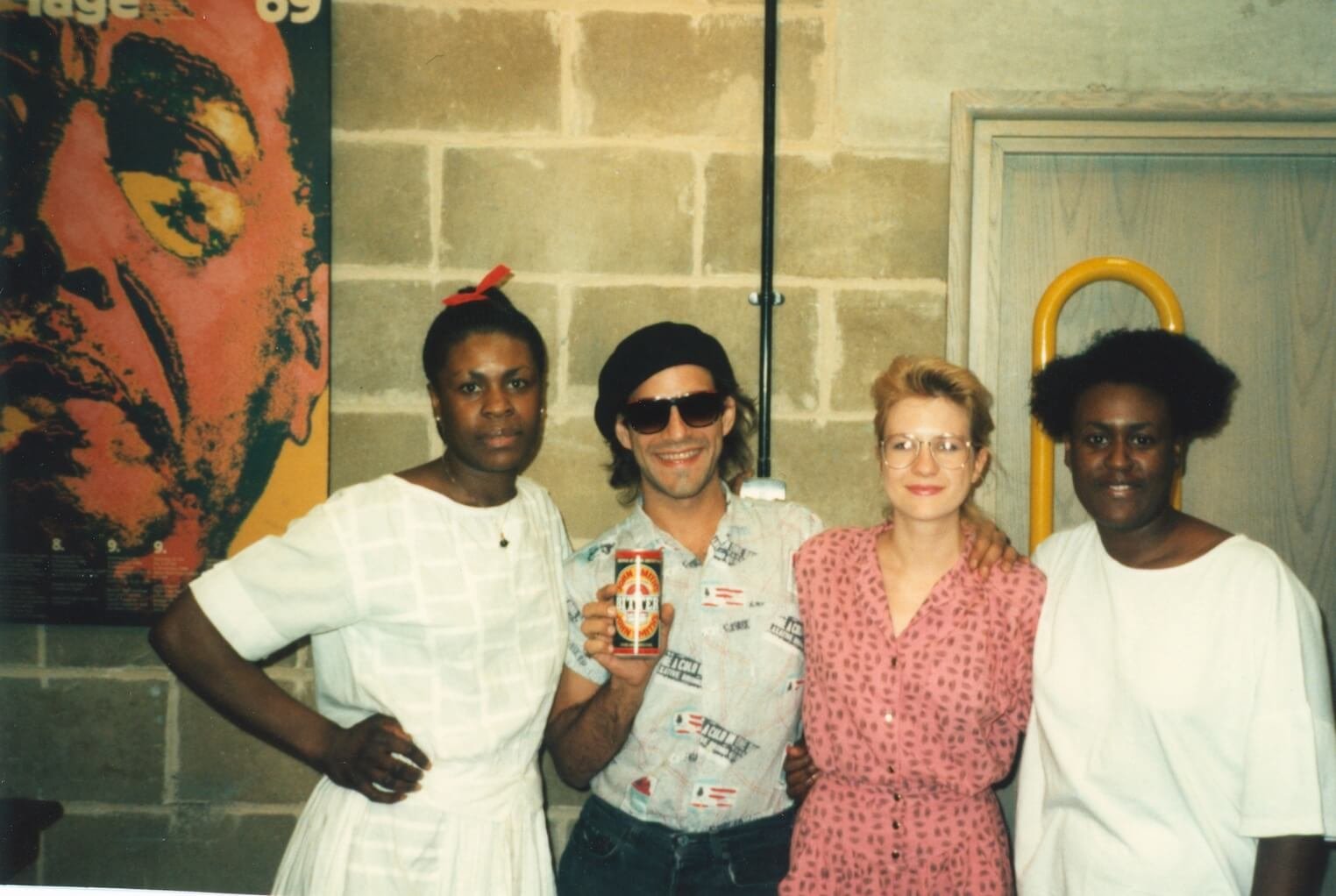
Backstage, taking an old-fashioned 80s selfie.
Next, it was on to Italy, where we did some radio.

(They pronounced the name of our band like New Shoots.) We were scheduled to appear at an outdoor show in Sienna. It was part of a festival called the Pallio, sort of like the running of the bulls in Pamplona, but with horses. It had been going on for the last 500 years!

Sienna, Italy
Squads of Ghibbellines and Guelfs did that drill where they toss flags in the air. The food was better than in France, that’s for sure. And I was getting used to the Synth-Pop-Duo thing. To get out of doing dance steps, I refused to lip-sync guitar and hid behind a dead keyboard instead.
There was a Brit Punk band called Sigue Sigue Sputnik on the show, with their Statue-of-Liberty hair-dos. They were flipping off the audience. Well, I never dug the Punk thing.
Anyway, the point of this story is, in the Pre-Internet era, there was no way to look things up, to find out what we were getting into. As we learned much later, Top of the Pops was beamed all over Europe and in the 80s had an audience of FORTY MILLION PEOPLE!
If I had known, I would have insisted on bringing the band!
And maybe chosen a better hat.

Everything About The Making Of I Can't Wait
Did you know 'I Can't Wait' was originally much faster? When we slowed it down to 104 BPM in the studio, the band thought John was crazy! But that slower groove, combined with some engineering magic and creative percussion (including wine bottles!), helped create the sound y’all know and love.

The most frequently asked FAN QUESTIONS are about the making of “I Can’t Wait.” So, here’s an attempt to include every technical detail about how we made that song forty-one years ago. It’s amazing that we’re still talking about it almost half a century later!
The recording of “I Can’t Wait” perfectly captures that unique moment in music history when analog and digital technologies were colliding. Looking back, it’s amazing how we managed to create such a rich, layered sound with relatively simple equipment. Every decision - from the LINN drum machine to engineer Fritz’s compression techniques - helped shape what would become Nu Shooz’s signature hit.
Subject: I Can't Wait production
Message: Hello Valerie and John! I was listening to "I Can't Wait" today and would love to know how the song was produced. Equipment. Instruments. Etc... Has this information ever been shared in an interview somewhere that I can look up? Thanks for this wonderful classic. — Patrick
Hi Patrick!
Thanks for your letter. We get asked this question a lot, so I'm going to write down the definitive version of THE MAKING OF 'I CAN'T WAIT.'
EVERYTHING ABOUT THE MAKING OF NU SHOOZ 'I CAN'T WAIT' (That we can remember.)
It was the winter of 1983, a time almost unrecognizable now. TV still signed off at 2 a.m. Cable was just getting started. And none of the gear existed that we take for granted now. MIDI was new and prohibitively expensive. NU SHOOZ had a horn section but no keyboards.
Without MIDI or a multitrack, it was harder to write songs, to make them stand up and walk around by themselves. We were playing all the time, almost every weekend, and this created an insatiable need for new material. People would leave the band and you couldn't play this or that song anymore. The new guy would come in, and we'd have to teach him all the moldy oldies. There were songs I was so tired of that it hurt to play them. And in Portland, funk records were hard to find. So, I had to become a full-time songwriter. In the Brill Building days, writers like Carole King and Jerry Goffin made hit songs by putting in the hours—showing up every day.
I started writing songs in batches of ten. How it worked was, I'd number one to ten on a piece of paper and then slot in a bunch of tempos, like this:
Mid-tempo [meaning funk]
Mid-tempo
Fast
Mid-tempo
Slow
Fast... etc
Next, I would assign a Kick/Snare pattern to each number. When you're writing songs, specifically Funk songs, you become a connoisseur and collector of Kick/Snare patterns. Some of my personal favorites are Surf Beats for fast stuff, and anything by Jimmy Jam and Terry Lewis for the FUNK.
I got a lot of Nu Shooz Kick/Snare patterns from the Grandmaster Flash album 'THE MESSAGE.'
I tried to finish two songs a week for Wednesday rehearsal. I.C.W. was one of the first songs to come out of this batch writing process.
As I said before, it was hard without any gear to make a song hang together in your head. My Mother-in-Law had this thing called an OMNICHORD. It looked sort of like a zither, but it was completely electronic. It had a little drum machine in it, you know, like those old 'Home Organ' beats: Swing, Waltz, Bossa Nova, etc. And there was one called ROCK BEAT 1.

I plugged the OMNICHORD into a cassette machine and recorded ROCK BEAT 1 at a bunch of different speeds. This worked for all the tempos mentioned above. This was a vast improvement. Before that, I was trying to make drum beats by banging on a kitchen table with dinner plates on it.

Then I begged our manager to rent a ¼" four-track machine from the local sound company. For the princely sum of $24 a month, they rented us a TEAC 3440. Great machine. [I still have it, by the way.] Right away, I filled a tape with my OMNICHORD beats, and just like that, I was in business. Writing songs was suddenly so much easier.
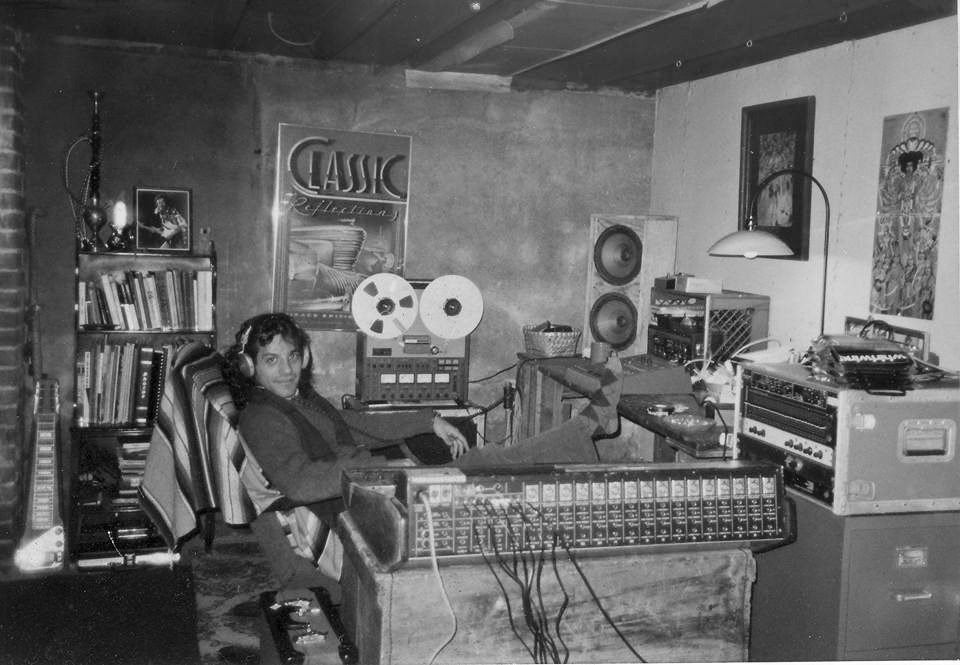
I.C.W. was written while sitting on a wooden stool next to the furnace in our basement rehearsal space. The bass line was composed on a 1965 Fender P-Bass [Black/Rosewood Fretboard/Tortoiseshell guard] belonging to our Soundman. The Bass was tuned to Drop-D. The chords were played on a cheap [but nice] nylon string guitar called a DISCOTECA SERRANO.
I mixed the demo to cassette, put it in my Walkman, and spent the next month or so walking around and around the block. The first chorus bit that I heard in my head was:
"I Can't Wait till FRIDAY NIGHT"
Eventually, that morphed into the call-and-response:
'Cause I Can't Wait
BABY
I CAN'T WAIT.
Phew!
So now that the chorus was "sitting still," the song needed verses.
My love— The first two words of a Lionel Richie song
Tell me what it's all about— A line from my Bone Pile
You've got something
That I can't live without— A vague come-on
Happiness— The first word in an Alan Toussaint song
Is so hard to find— My answer to his line
Etc., etc.
Back then, I was good at one-and-a-half verses.
Anyway…
We had a Wednesday rehearsal coming up, and I didn't have anything but this half-finished song. The band was actually loading their gear into the basement. Valerie was standing at the sink, and I was at the kitchen table. In ten minutes, I wrote the rest of the song. There! I shoved the paper at Valerie.
She said, "Good enough."
There was just enough time left to scribble up a horn chart.
So now it's 1984, and we're playing I.C.W. in the clubs. We called it a B-level dance song. People danced to it, but we played it way too fast, just to get it over with. Around that time, Rick, our manager, called.
"We need to record something. I need something to market."
He didn't like our first album, "Can't Turn It Off," and he was right. It didn't represent the band anymore. Rick had just inherited five grand from a deceased aunt, and he wanted to bankroll a Nu Shooz album.
He asked me, "Do you have any songs you like?"
"Well," I said, "the one that sounds the most real is 'I Can't Wait.'"
By real, I meant that it sounded the most like a real record. Valerie sounded great on it right away. [Her voice worked perfectly an octave above my songwriter croak.]
Rick booked us into Cascade Studio in Portland, Oregon. Sessions began in the summer of 1984. Before we went into the studio, I was pondering whether or not to use a drum machine. We used to make fun of the early ones. The ROLAND 808 only became popular with the advent of Hip-Hop. We tried cutting the song with a live drummer first, and that just didn't work. We had to have that machine kick/snare/clap…like ZAPP!
For a band that couldn't afford keyboards, a drum machine was out of the question.
Fortunately…
We knew a rich guy who didn't play but had a house full of all the best gear.
He owned a LINN LM-1.

The LINN LM-1 was Roger Linn's first commercially available drum machine. It was so much heavier sounding than an 808. It retailed for $5,000 [in '80s money!]
Next, we put on a bass.
Live bass didn't cut it, either. So we hired a bass player, Nate Philips, who owned a MINI-MOOG. He was one of the great Portland funk players, going back to the '70s band Pleasure. Nate dialed in the sound and played the part. I got my own MINI-MOOG not long after that, but I never could get close to the sound that he made.
The piano was a seven-foot Steinway.
The guitars were a cream-white [nicotine yellow] 1969 Fender Stratocaster and my number one fave 1967 Gibson 335 [battered black].
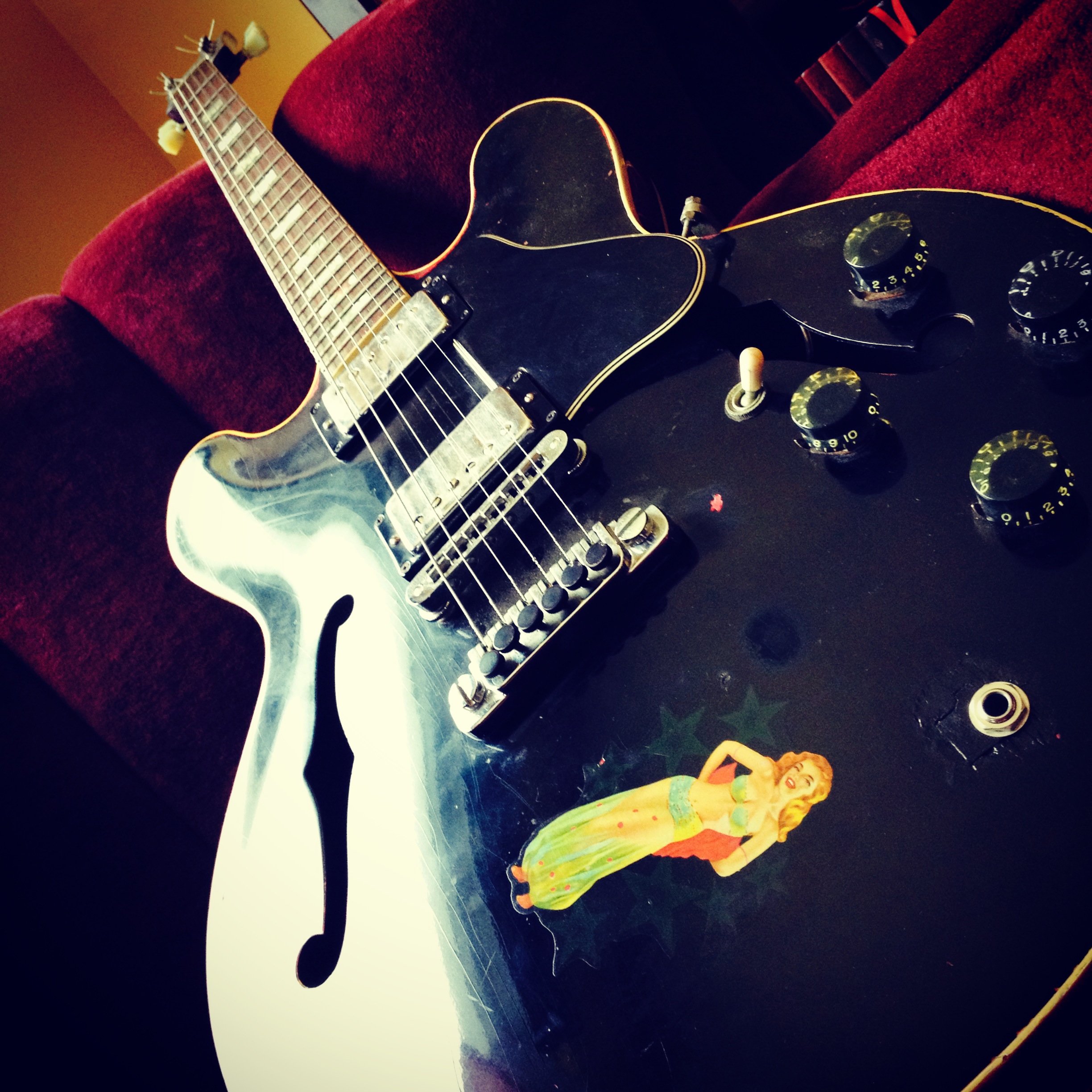
This is it — John’s 1967 Gibson ES335.
The horns are real, just trumpet and tenor doubled.
Our saxophone player, Dan Schauffler, had just bought a ROLAND JX-3P synth. It had eight preset sounds, and I'm pretty sure we used them all. A good example is the chime in the intro, which was kind of a take-off on "Tubular Bells" by Mike Oldfield, and the legato synth string line that follows. The JX-3P was one of the first commercially available MIDI synths. Everything was new back then.

The Roland JX-3P in all it’s magnificence.
Cascade Studio had a two-inch 16-track machine, which was and is kind of rare, then and now.
It was a real stroke of luck for two reasons. First of all, the tracks are wider than a 2" 24-track, and they actually have a fatter sound. And second, we didn't have those eight extra tracks to clutter up the song.
Before we had anything on tape, I had an epiphany and realized that it would be so much funkier if we slowed it down. I tramped around the studio parking lot, singing the bassline, feeling for where the funky place was. Then I ran back into the control room. We slowed it down to 104 bpm from however the hell fast we were used to playing it.
The band thought I was NUTS!
Especially Valerie, who found it impossible to sing over.
As history shows, we worked that out.
Our engineer was Fritz Richmond, who was a former member of the Jim Kweskin Jug Band and still played with Maria Muldaur. He was one of the bright lights of the Greenwich Village folk scene of the late '50s/early '60s. We didn't know who he was until years later. I could go on and on about Fritz.

Fritz Richmond with Maria Muldaur and Jim Kweskin Jug Band
Often during the making of "That's Right," it was just Fritz and I alone in the control room. We cut the guitars direct, straight into the board, no amp involved. I was frustrated by all the little clicky noises the guitars made.
"I hate recording!" I said.
"Recording is FUN!" Fritz says.
That's the kind of guy he was. Sometimes, he would show up wearing funny hats, bowlers, and tam-o'-shanters. And he was a calming presence, like a great pediatrician.
I ended up stuffing a bunch of toilet paper down at the first fret, and that cut out most of the noises. Later, when I could hear what compression was, I realized that Fritz had really whomped down on those guitars. That's why they sound like a record.
For a great example of what compression sounds like, listen to the guitars on the Beatles' "Baby You Can Drive My Car."
The clap sound on the LINN DRUM was a weak little KACK. Nothing like the big disco clap on ZAPP! Records. We fooled with that for a while. Fritz put a tight delay on it, maybe 22 milliseconds, and turned up the feedback so there were three or four repeats, so instead of KACK, we had the very satisfying THRAPP we all know and love.
Then we recorded vocals. The backup singers were Valerie, her sister Shannon, and Lori Lamphear, a 1980 NUSHOOZ alumnus. We were meticulous about the pronunciation of certain words. We spent hours and hours on this. A good example is how they swallow the 'T' on the word 'WAIT.'
Another feature of the vocals is the quarter note delay on Valerie, which gives the lead vocal a psychedelic dreaminess even if you don't notice it right away. The syncopated vocal lends itself to a straight delay time, whereas a less syncopated line would suggest a dotted 8th note delay.
After all that work, the track still sat there. Then I was listening to Jungle Love by The Time. That track had some bottles for percussion. I came up with a stereo bottle part and a stereo tambourine part, and then the track really started to roil and boil. It was the final touch…almost.
THE REMIX


The sample at the beginning of the I.C.W. 12" [which we affectionately call "the Barking Seal"] was played by Dutch D.J. Peter Slaghuis on an EMU EMULATOR II. The model II still used those big 3" floppies, like a Commodore 64. Over the years, people have told me what the sample was, but I can never remember.
He achieved the stutter effects [I-I-I-Can't Wait] by actual tape-cutting with a razor blade and editing block. I watched him cutting tape at Atlantic Studios in NYC. He had some good tricks, but he was very shy, didn't speak very good English, and didn't like people around when he worked.
So…
That's all the technical musical hardware and anthropology that I can recall. It's amazing that people are still interested in this song forty-plus years on. You can see what a bare-bones process it was, And what a miracle it is. Thanks for the letter.
John R. Smith
NUSHOOZ
11.28.23
P.S. Forty years later, we learned that Peter Slaghuis, who did the famous ‘Dutch Remix’, didn’t like the song, so he didn’t fool with it very much. His dream was to do remixes for ABBA…which is about as far away from Nu Shooz as you can get!
Carlos And Should I Say Yes en Español
One of our favorite songs we recorded during our years at Atlantic was 'Should I Say Yes.'
We were so pleased with the result that we decided to record a version in Spanish. Here's the story of that record and the remarkable man who helped us with the translation, Carlos Camus. It's a little snapshot of the vibrant music scene in Portland, Oregon, in the 1980s.
A long-time friend of NU SHOOZ found a video on YouTube and shared it with us. Somebody took our song ‘Should I Say Yes’ and spliced the Spanish version onto the end. (The Spanish version starts at minute 4:00 in the video above.)
The Spanish version.
Diciendo Si
Diciendo No
Long before their worldwide success with ‘Do That Conga,’ Miami Sound Machine was putting out Spanish versions of their songs in Latin America. That made us aware of that huge audience to the South.
’ S.I.S.Y.’ was the perfect song to do. We looked around for someone to write the translation. Right away, we thought of Carlos.
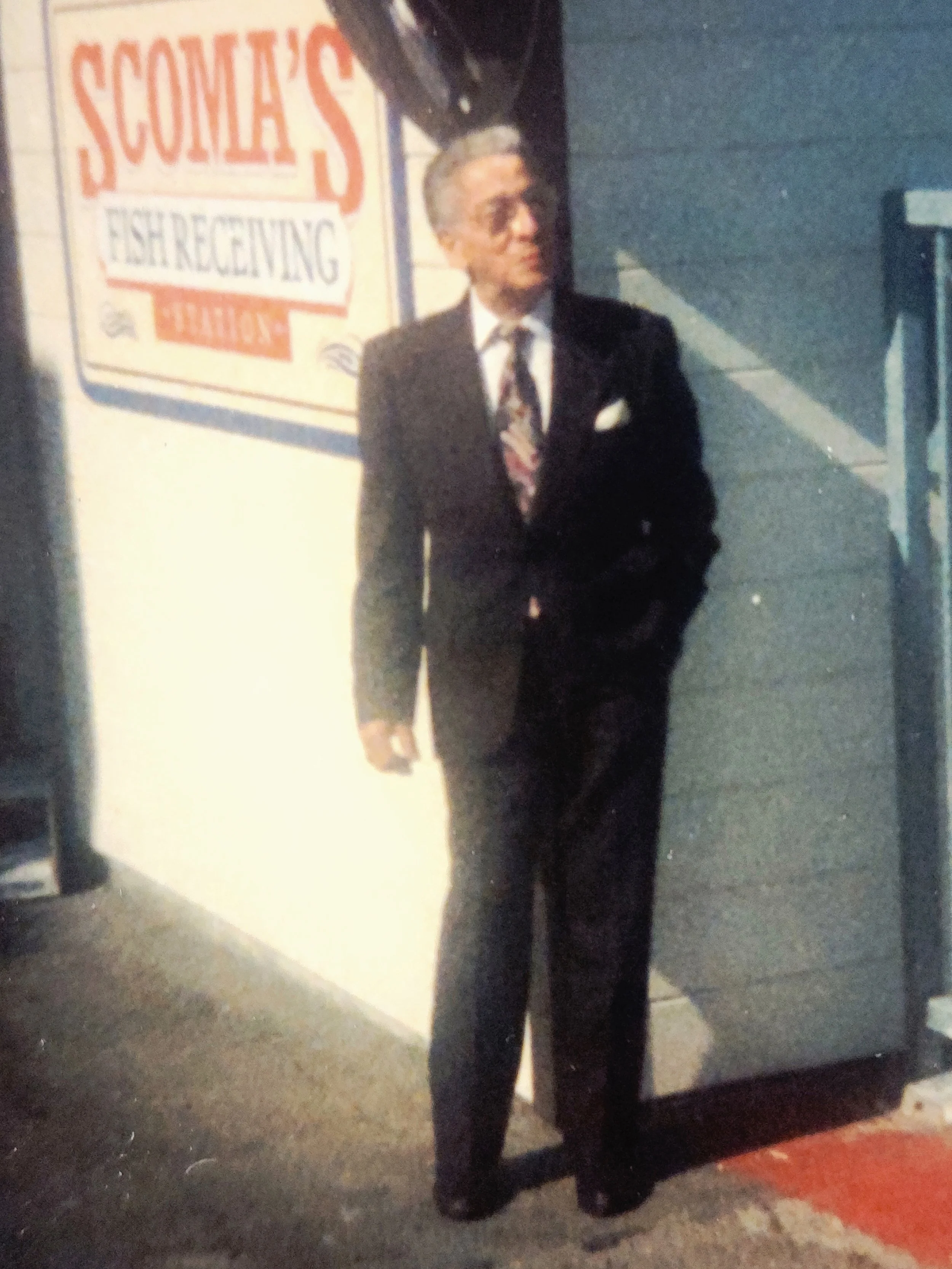
Carlos Camus was a very interesting gentleman, one of the true characters on the Portland music scene of the 1980s. A trim little man in his late 50’s/early 60’s, he came out every night to DANCE. Always impeccably dressed — elegant but never overstated. Valerie remembers his shoes. They were dancing shoes.
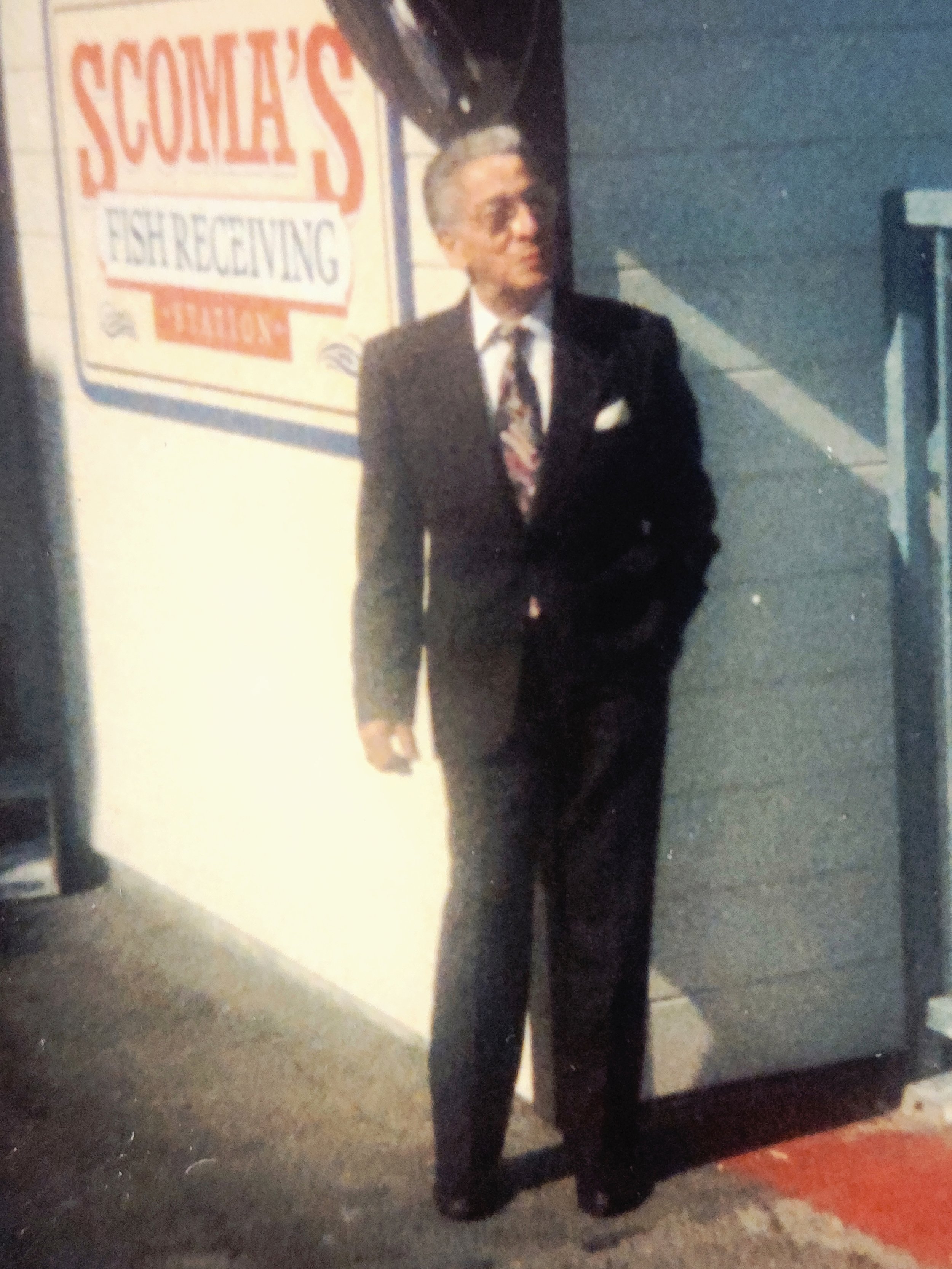

He came to hear our band when we played at KEY LARGO, a music club in Portland, OR. He came to hear all the bands, no matter what the style, punk, funk, or reggae, always sitting at his special table, sipping a flute of champagne, I believe. He was always one of the first people to get on the dance floor. Often he’d ask some young girl from the audience to dance with him. His invitation was always accepted. It wasn’t creepy. It was beautiful. He had those Old-World manners from another time and place. Everybody wanted to dance with Carlos.
We didn’t know his country of origin. There was something European in the mix, so maybe Argentina. He would have been right at home in one of those Tango movies from the 1940s. Later, we found out that he was Chilean, but the Tango image still fits.
Carlos would kick things off, then retire to his table and his champagne and watch as the dance floor filled with Hippie Twirlers, Leather Punks, and the Funky People.
For his day job, Carlos had a little shoe repair shop up on West Burnside. (This was before the world was taken over by disposable shoes.) He re-soled my Frye boots more than once.
Carlos was a little timid when I asked him to translate ‘Should I Say Yes.” He said, ‘I’ll get my daughter Jacqueline to help.’ Together, they cobbled together the version that you hear today.
I only wanted to change one thing. Their version of the chorus went:
Debo decir si
Debo decir no
That’s correct, but too many syllables for the song.
‘Can we say diciendo si, deciendo no? It sings a little better.’
‘Well,’ Carlos said, That’s saying yes, saying no, But I suppose you could do that.”
So that’s how the final version came together.
Back to the YouTube remix…
So, where did somebody find this rare piece of SHOOZ history?
We have a cassette version of it somewhere, in some box, from the studio where it was recorded. But, as far as I know, it was never released, not even as a test pressing.
Go figure.
The last time I saw Carlos, he had closed down his shoe repair shop. It had been a while since I saw him last. He had aged a lot. Most of the clubs he went to were gone. He didn’t remember me or the record we had made.
That whole scene is gone now, the bands, the clubs, and that elegant soul who came to dance and spread joy. There was a brass plaque on his table, stage left at the KEY LARGO club.
This Table
Is
Reserved
For
CARLOS

CHOONS: FROM PORTLAND TO THE WORLD; The Story of Nu Shooz' "I Can't Wait."
Host Diego Martinez from CHOONS takes us back to the Mid-70s and the incredible series of events that led to “The Bassline Heard’ Round the World.” It’s one of our favorite interviews ever. Enjoy!
CHOONS is a podcast about "The Songs we vibe to," dedicated to the "History and longevity of underrated and much loved tunes."
Host Diego Martinez takes us back to the Mid-70s and the incredible series of events that led to "The Bassline Heard 'Round the World." It’s one of our favorite interviews ever. Enjoy!
Perennial Interview Question #3: How’d You Get The Band Name?
Ever wonder how the band got its name? Well, wonder no more! John answers the perennial interview question, How’d You Get The Name?
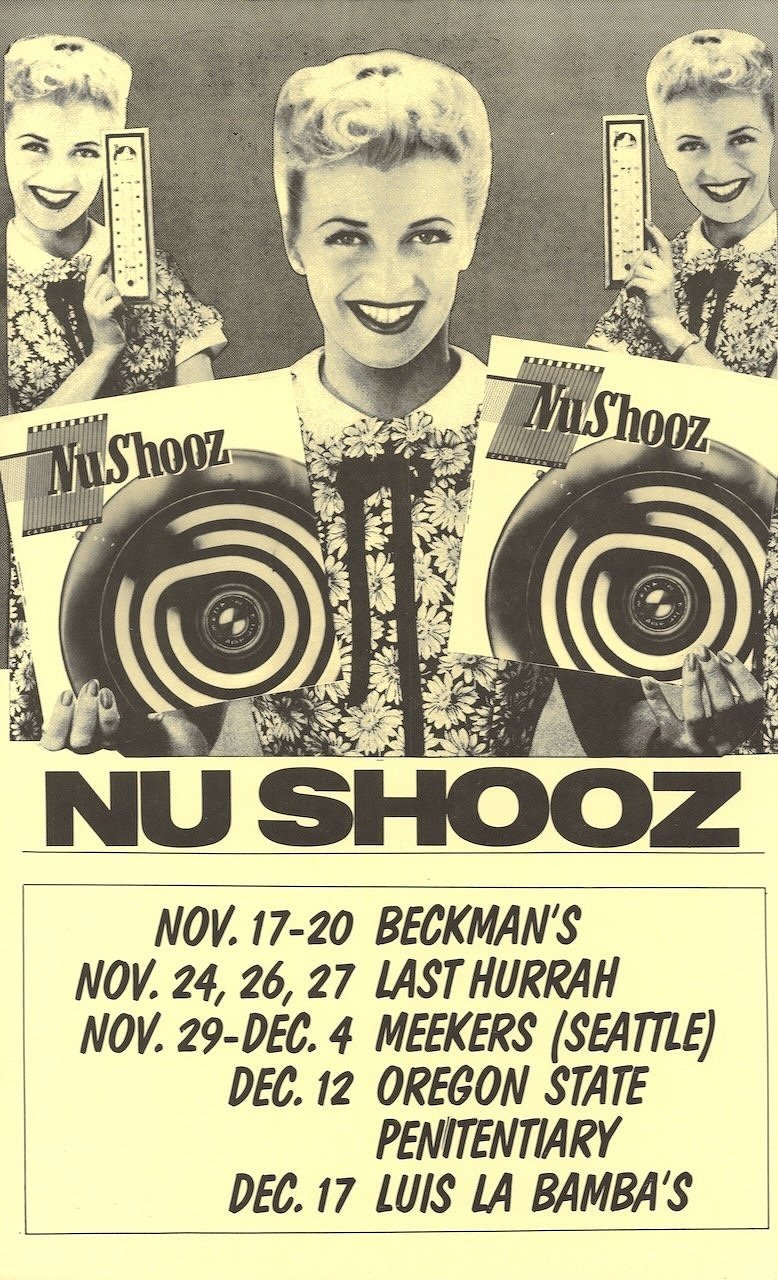
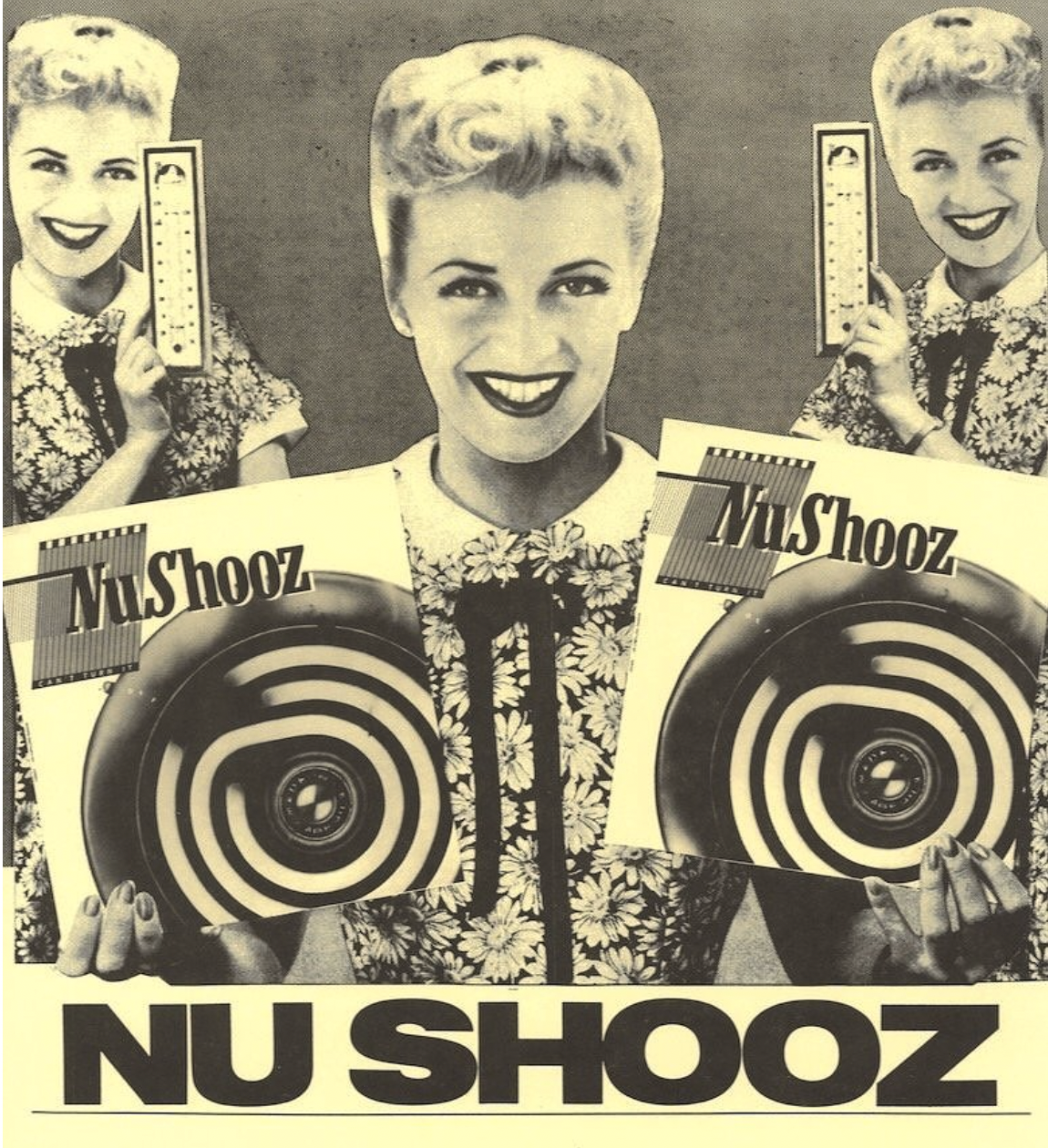
Early Nu Shooz band poster circa 1982
HOW DID WE GET THE BAND NAME?
OK…Once and for all, we come to Perennial Interview question #3.
(Question #1 is: What’s “I Can’t Wait” about?
Answer: “It’s about six minutes and twenty-nine seconds. That’s the long version.”
Question #2: What’s it like to be in a Famous Band with your spouse?
Answer: “Well, we got to see each other a lot!”)
Back to Question #3.
We started rehearsals for what became Nu Shooz in May 1979. Our drummer, Randy Givens, was the son of a music store owner. He could play something credible on almost any instrument and was particularly resourceful at getting gigs. Before we learned our first song, he’d already gotten us a gig at Col. Summers Park, half a block down the street.
The gig was a month away.
We needed a name.
Something to put on a poster.
Somebody (not me) said, “Let’s call it ‘The John Smith Group’.” That was the kind of thing jazzers did in the late 70s.
“Hell no!”
I forget what other names we came up with. I think one of them was ‘Hide the Silverware,’ which I kinda liked.

John Smith & Larry Haggin
Larry Haggin and I, former members of the late great Latin band Felicidades, had decided to put a new thing together. We were standing by the kitchen stove at “Twenty-One-Twelve,” the house where we had band practice. On the wall behind the stove was ‘Contact Paper.’ Does anybody remember that stuff? It came in wood grain and bunny rabbits and a thousand other prints.
This one was printed to look like a page from an 1890’s newspaper, what they used to call ‘fish wrap.’
And on the page was an ad for lace-up shoes.
Larry and I looked over at the same time and said, “We could be The Shoes!”
“Yeah…that’s stupid enough.”
This was the era of Band Names with Dumb Nouns; The Cars, The Police, Doctor and the Medics.
“Yeah…The Shoes.”

photo by Valerie Day
OK. Fast-forward two weeks. We’re in a Record Store. (Remember those?) And we find a record by a band called SHOES. Just SHOES. Personally, I thought the omission of the ‘the’ a little pretentious.
Anyway, the search for a band name began all over again.
Then, Jim Hogan, our bass player and arguably the best-looking member of the group, says, “Why don’t you call it New Shoes?”
“Hey!”
“Not bad!”
The original concept for the band was a mash-up of the Temptations and late-period Isley Bros.; four-part soul harmonies and Psychedelic Jazz guitar solos. There were two good singers in our four-piece band and two bad ones. I was definitely in Column B. We won’t say who the other one was.
Since the concept was a vocal group, I decided to be clever and spell the name New Shoo’s, you know, ‘Shoo’ like a backup vocal syllable. “Shoo-bop-shoo-BAM!”

Poster art by John R. Smith
But Americans, as a people, not the best of readers, read it as Shoosss. So that lasted for one poster.
Jim Hogan to the rescue again.
“You should spell it N-U-S-H-O-O-Z.
The ‘Z’ makes it more ROCK!”

For 30 years I didn’t like our band name very much. It sounded frumpy and old to me. I wanted something edgy and dangerous like METALLICA or MEGADETH. Then in the roaring 2010s, we went out on the 80’s tour, and I realized that it was perfect. Like the ’80s, it was bright and bouncy and all about dance music.
We’ve answered this question so many times that our stock answer to the Perennial Interview Question #3 is:
“The BEATLES was already taken.”
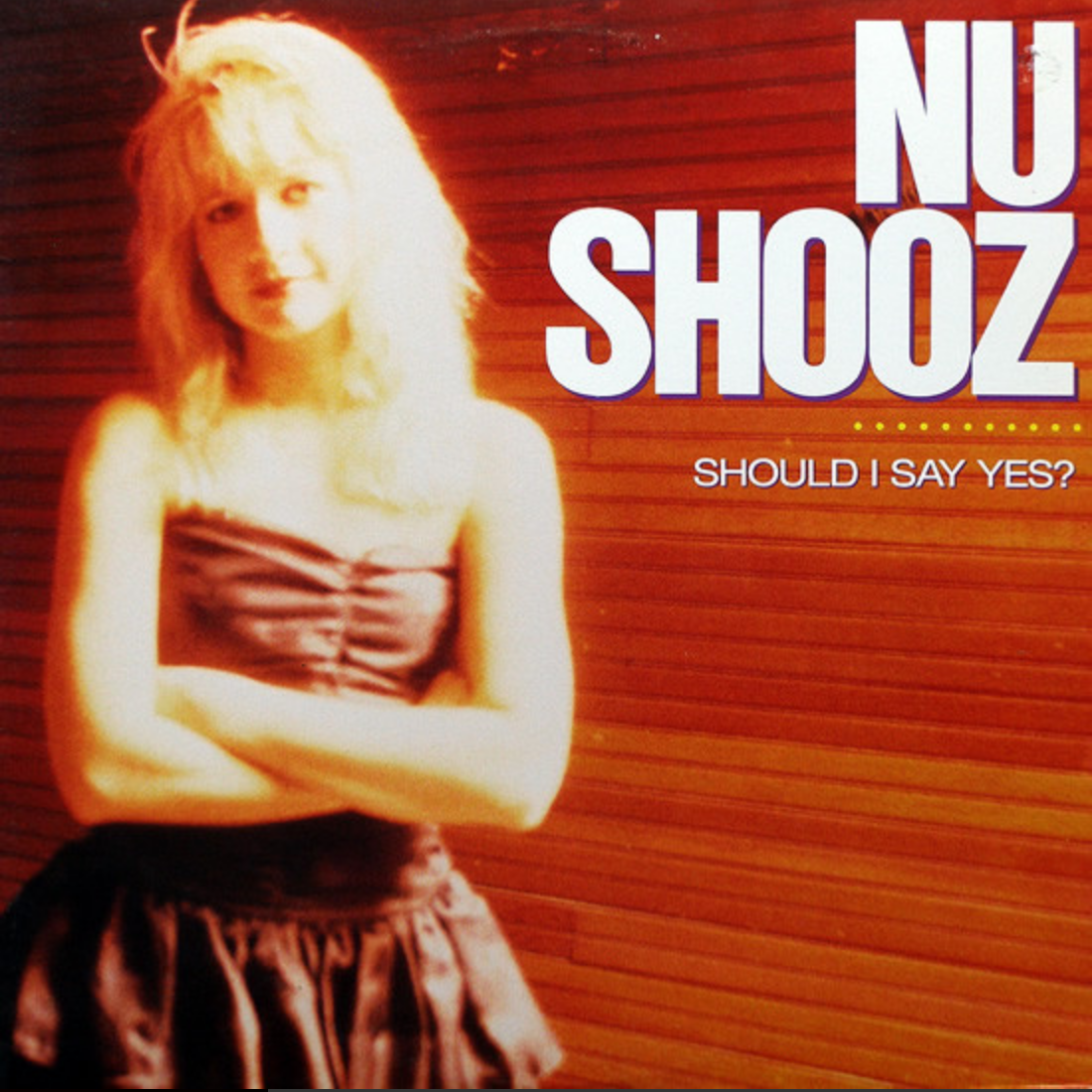
Song Stories: Should I Say Yes
We’re kicking off a nu series called “Song Stories” about the birth of the Nu Shooz Sound. First up, a story about the creation of Should I Say Yes.
Many moons ago, we asked our audience, 'What would you like to see on our blog posts?' The unanimous response was, 'More stories about the 80's and what it was like in Nu Shooz world.'
So, we've got a good one for you. This is part of an interview we did for "The Old School Rewind" podcast on January 19th, 2018. The host is Randy 'Bubba' Black. It's a great conversation. RBB did deep research on our band, which made it a real pleasure.
Randy 'Bubba' Black: Your next album, (Told U So) you did at Paisley Park.
Valerie: Yeah we did.
John: Yeah, we were there for a couple of months.
VJD: In Minneapolis, not all of the time at Paisley Park, but...you know, some of the time.
JRS: We spent the whole summer in Minneapolis. We finished our work there just as winter was coming on.


Fall in Minneapolis lasts about a week. The leaves all turned, the weather changed, and at the end of the week we no longer had warm enough clothes to stay there.
RBB: Oh my goodness!
JRS: So we left, and ended up finishing that record with Jeff Lorber in L.A.
VJD: Warmer there!
RBB: Tell me about 'Should I Say Yes.'
VJD: It's actually one of my favorite things that we recorded.
JRS: Yeah, me too.
RBB: Me three.
VJD: Thank you.
JRS: And by the way, 'Should I Say Yes' is still huge in Uganda and Zimbabwe!
RBB: To this day...
JRS: They still bang it in the clubs there, yeah.
VJD: Sadly, it only made it to number 41 on the chart.
RBB: But you got played on Rhythm Radio though, and Rhythm Radio wasn't about the charts like that. They were daring enough to jump out past the 50's and put those out at that time, if I remember correctly.
JRS: Yeah, that was also remixed by a guy named MANTRONIX.
RBB: Love MANTRONIX.
JRS: I thought he did a stellar job. He really made it thump harder. Yeah, that was a good song...kind of based on an LL Cool J thing.
RBB: Really?
JRS: Yeah.
RBB: Which one?
JRS: I'm not gonna say.
VJD: [Laughs]
RBB: I love it!
JRS: Oh, and another good story about 'Should I Say Yes,' was...The studio we were in in Minneapolis- not Paisley Park- this place called Metro...they exiled me to the basement for smoking. I was in this place called the Dungeon, which was very dungeon-like...you know, that old 19th Century stone. While I was down in the Dungeon working on 'Should I Say Yes,' there was a tornado! And four people were KILLED!
RBB: Wow!
JRS: I came out of the studio at three in the morning, it was like the calm after the storm.
RBB: Oh my God!
JRS: I had totally missed this tornado that raged through Minneapolis and killed people. When I came outside it was like tweet-tweet-chirp-chirp. It was the calm after the storm because we were in the flatlands, and the weather just blows through there.
So, yeah...that was 'Should I Say Yes.'
If you're interested in the music of the 80's and the artists who made it happen, check out "The Old School Rewind." You can listen to stories of artists like Trenier, The Jets, Animotion, Wang Chung, and many many more.
That's all for now.
Take Care...See you soon!
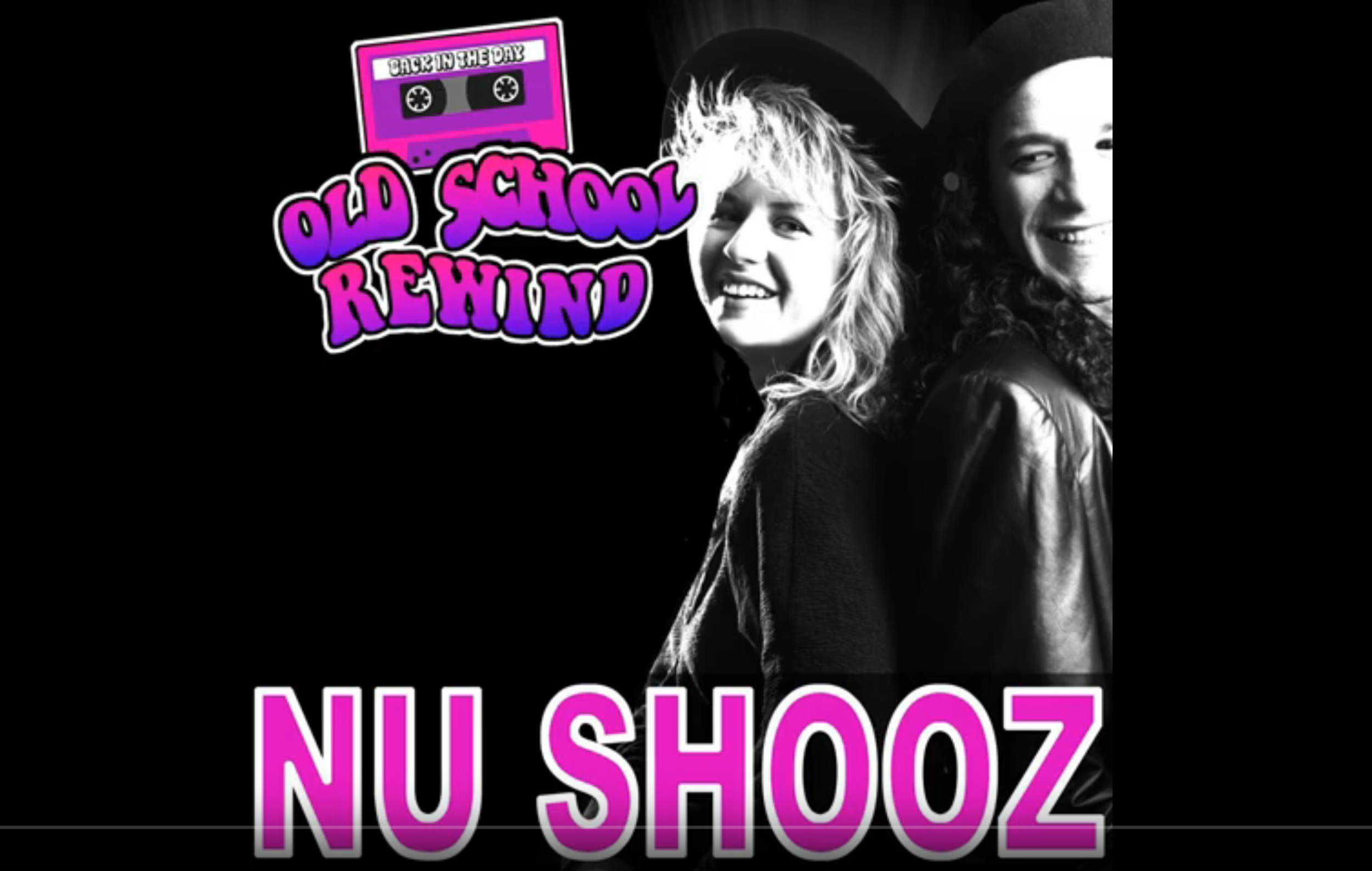
You can listen to the whole interview here.
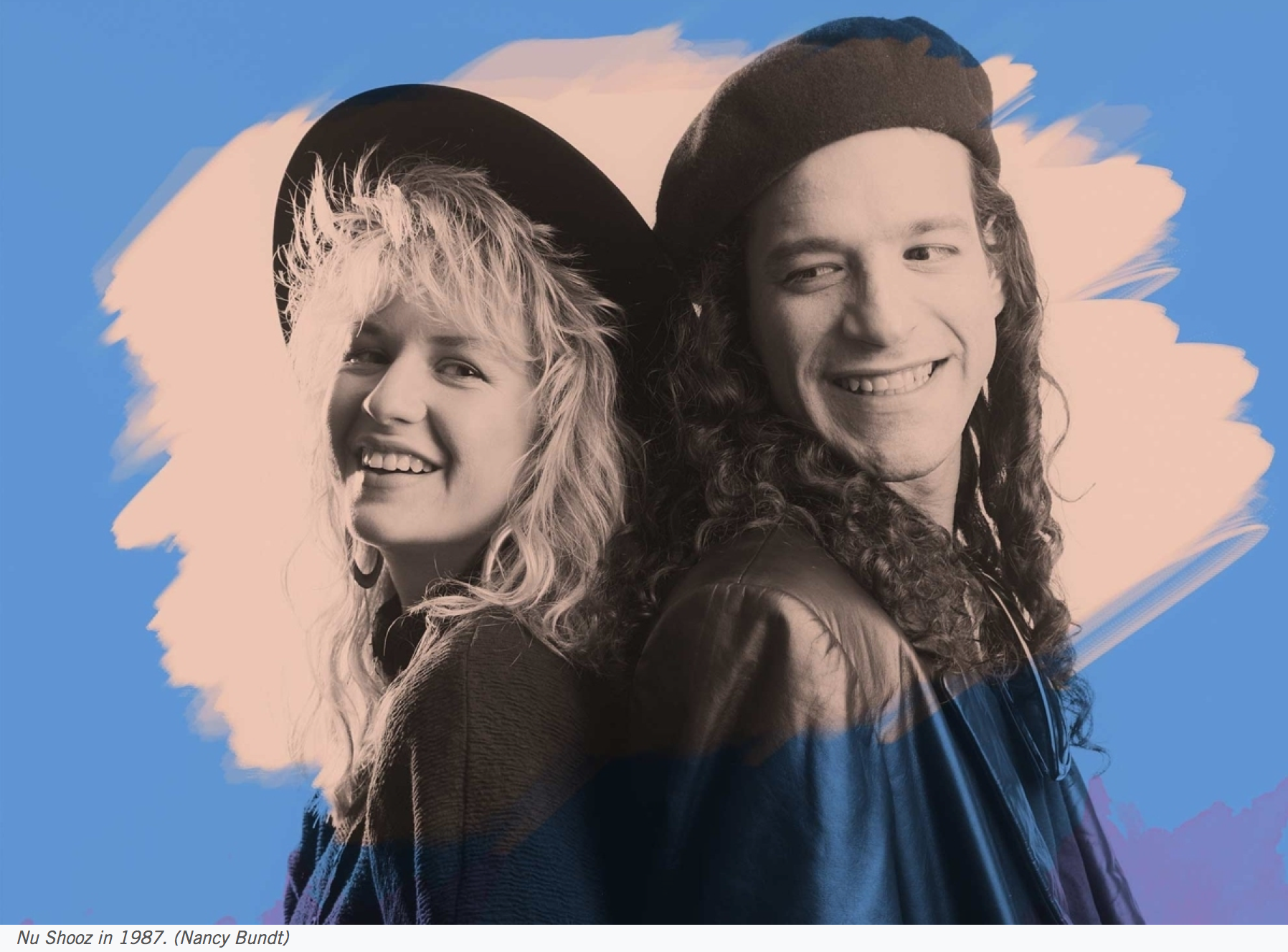
'How Two “Jazz Hippies” (and a Dutch DJ) Made Portland’s Biggest Song Ever'
by Matthew Singer/Willamette Week
For a song to achieve immortality, it's going to need an especially sharp hook.
Sometimes it's a riff. Sometimes it's a melody. In the case of Nu Shooz's "I Can't Wait," it's the sound of Donald Duck scatting through a vocoder.
God knows what the keyboard preset is actually labeled. But you'd recognize it before the prominent bassline, or even the title. It wasn't even the band's idea—a Dutch DJ threw it on a remix—but it was the missing piece that, in 1986, propelled a regional Portland hit into a global smash.
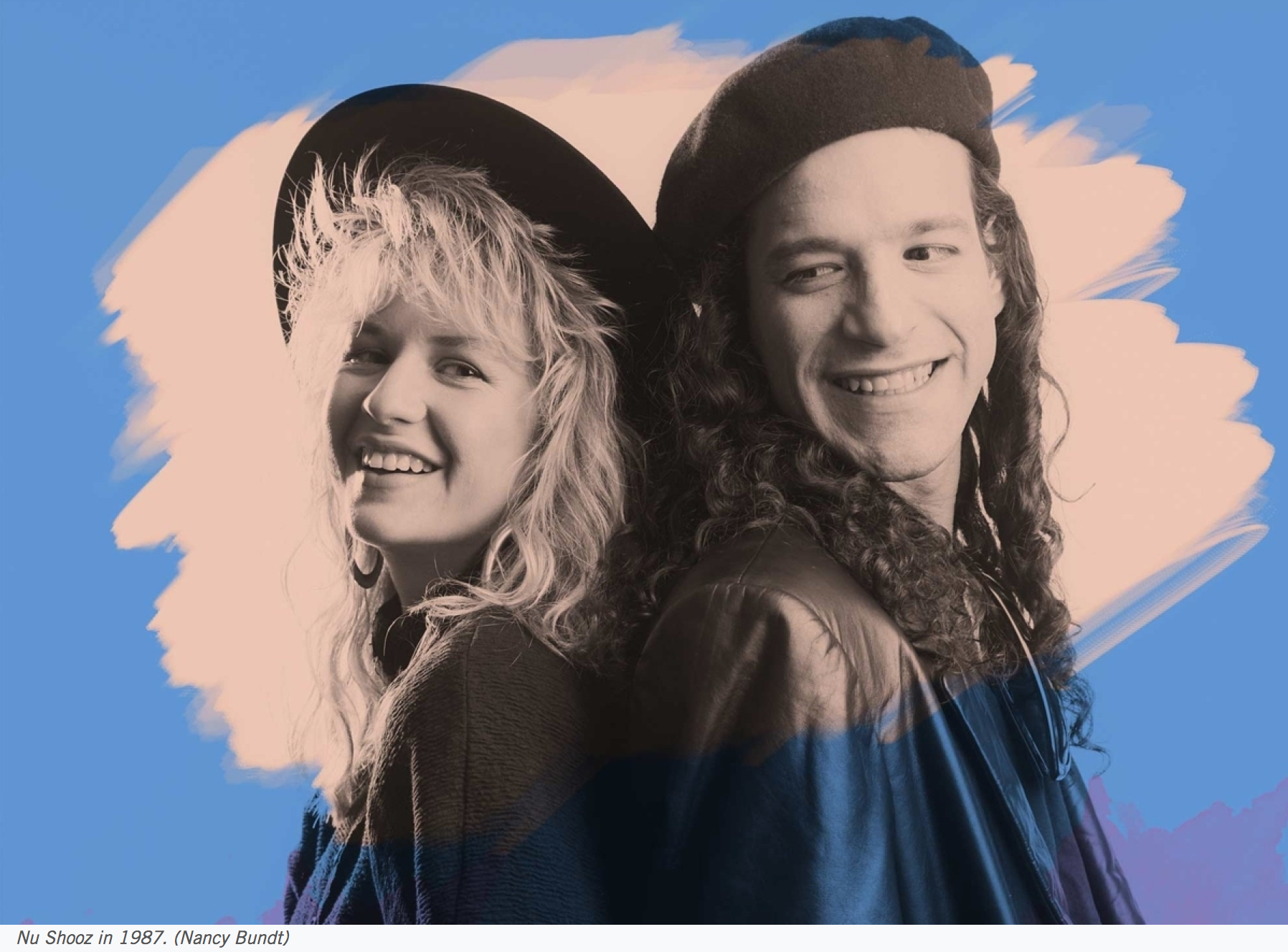
'Nu Shooz's "I Can't Wait" turns 30.'
By Matthew Singer, Willamette Week February 16, 2016
For a song to achieve immortality, it's going to need an especially sharp hook.
Sometimes it's a riff. Sometimes it's a melody. In the case of Nu Shooz's "I Can't Wait," it's the sound of Donald Duck scatting through a vocoder.
God knows what the keyboard preset is actually labeled. But you'd recognize it before the prominent bassline, or even the title. It wasn't even the band's idea—a Dutch DJ threw it on a remix—but it was the missing piece that, in 1986, propelled a regional Portland hit into a global smash. Even in its original form, "I Can't Wait" is the platonic ideal of a classic '80s song: timeless in its blend of fat-bottom funk and R&B elegance, but with just enough retro-futurist kitsch to immediately evoke the era.
As two self-professed "jazz hippies," singer Valerie Day and songwriter John Smith admittedly had no idea what went into creating a pop single. So how did they end up writing the biggest song ever to come out of Portland? Turns out it was, at first, mostly an act of desperation.
By 1983, Nu Shooz was in a rut. It had been playing clubs since the late '70s, drawing good crowds but failing to sustain a lineup or a consistent musical direction. In December, John Smith dedicated himself to rerouting the band back to its R&B roots.
John Smith: The mission statement was to write the funkiest thing that I could, and kind of blow all the dust out of the exhaust pipe and get us back to what we're supposed to be doing. I rented a four-track machine for the incredible sum of $24 per month, and the first reel, "I Can't Wait," was on it. There were five tunes I was working on, sitting on a wooden box by the furnace in the basement with a nylon string guitar. In the summer of '84, we went into the studio, and the first thing I did was slow it way down. It laid there like a lump.
Valerie Day: It was slower than the live version we'd been playing. I remember coming into the studio the day it was my turn to record the vocals, and I hadn't heard he'd slowed it down. I get into the studio, and I was like, "I can't sing this."
Smith: For about six months, we tinkered with it. Then, on the way to the studio one day, I was listening to the Time, and they had this bottle part on "Jungle Love." I appropriated that, put it on the track, and then it started to move.
"I Can't Wait" ended up as one of five songs on Nu Shooz's second official release, an EP recorded at Cascade Recording in Portland.
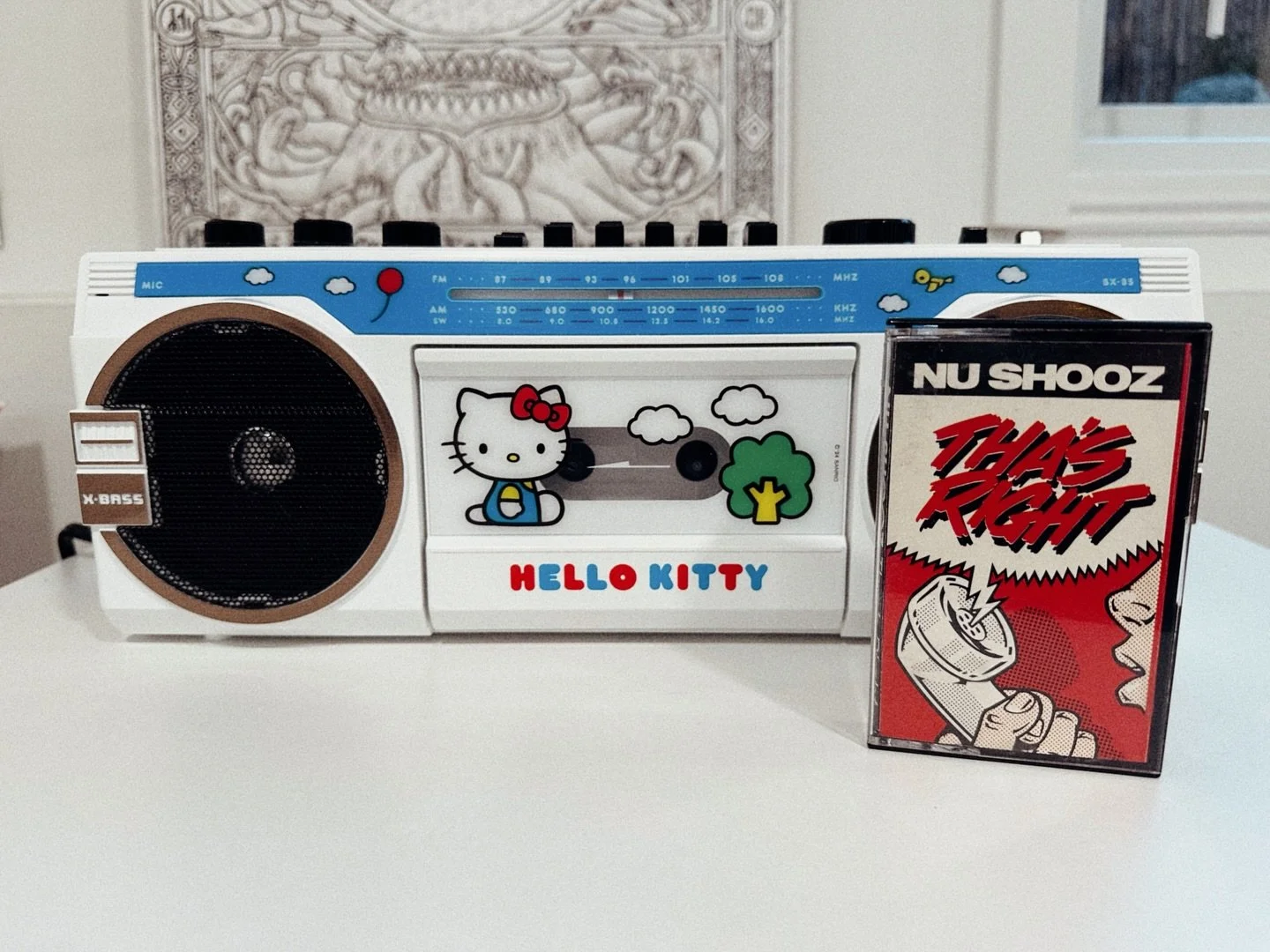
Day: We get these five songs recorded, we put this on a cassette called Tha's Right, and we release it on our own, basically. And nothing, really, was happening. Except this music writer, for The Downtowner magazine in Portland, he wrote about the band and said we were boring live, but we had made this really cool thing, and it was a shame local radio wouldn't play it.
Gary Bryan, co-host of KKRZ's morning show: We read the article and went on the air. They mentioned Nu Shooz in the article, and we were like, "We'd love to play it, but we can't play it if we don't have it." No one ever brought it in.
Day: Our manager at the time, who was a bartender at the Veritable Quandary, he was a morning person, thank God. So he heard this on the radio. He jumped on his Vespa, he drove it to the station, handed them the cassette, and they picked "I Can't Wait" to play.
Bryan: The next day, we put it on the air. We made a big deal out of it. A lot of people started calling for it, and we put it into heavy rotation. It came up every hour and 45 minutes or something. We took it to No. 1 on our chart, and that meant we were reporting that to radio and record magazines, and to Billboard. And we thought, "Let's get these guys a record deal. Let's try to bust a band out of Portland!"
After hearing "I Can't Wait," Greg Lee, a local promo manager for Warner Bros., became a champion for the band in the Pacific Northwest, helping spread the song across the region.
Greg Lee: I took it to several Portland radio stations and played it for them, and they all agreed immediately, like, "You need to get this to us!" That was the impetus for myself. I wanted this to be on Warner Bros.
Day: Greg also got us a demo deal with Warner Bros. We recorded some songs we'd had for a while, and the label said, "Sorry, we've got Madonna already."
Lee: Usually, when a label passes, they don't offer you anything other than "C'est la vie." [Michael Ostin, head of Warner Bros. A&R] gave the band what was called a demo deal. That was a financial gift, so to speak—an honorarium given to the band to make another demo. It was sort of like, "We're passing, but we see there's something there."
Striking out with the majors, the band's manager licensed "I Can't Wait" to a service which would do limited pressings geared toward the international market. A Dutch disco label picked it up, and handed the song off to a young DJ named Peter Slaghuis for a remix. He didn't change much, but he did add a curious-sounding synth melody over the top.
Smith: We call it "the barking seal." The first time I heard it, we were playing the University of Southern Oregon in Ashland, and I heard it over the phone. Our manager played it. "Here's the remix, what do you think?" And I liked it because I never in a million years would've thought of that.
Day: We met Peter Slaghuis when he came to New York one time, and he tragically died in an auto accident when he was in his 30s. Much, much later, we found an interview he did where he said he actually didn't like "I Can't Wait" at all. He did as little to it as possible because he didn't really want to work on it.
Smith: The secret Nu Shooz cool test is, if they come up and sing the bassline, they're cool. If they sing the barking seal, they're less cool.
The "Long Vocal Dutch Remix" became a hit in the New York club scene, and finally landed Nu Shooz a deal with Atlantic Records. By June 1986, "I Can't Wait" hit No. 3 on the Billboard charts, leading to appearances on American Bandstand and Soul Train, an international tour and a Grammy nomination for Best New Artist. It also opened up other, previously unfathomable opportunities.
Smith: My manager asked me who I most wanted as a sideman, and out of my mouth came, "Oh, Maceo Parker," because he'd been my hero since I was 11 years old. So we recorded with him on the second Atlantic record.
Day: One of our heroes at the time were Jimmy Jam and Terry Lewis, and I think we met them at the Minneapolis Music Awards.
Smith: Jimmy Jam came up to me and said, "We wish we had written that song."
Nu Shooz followed "I Can't Wait" with two other charting singles. But its second album for Atlantic, Told U So, underperformed. A third album was never released.
Smith: They didn't even call us to say they were dropping us. We found out at a show. We met the new Atlantic rep, and he didn't know who we were. I said, "We're on the release schedule for September," and he said, "Uh, I don't think so."
Day: It was kind of hard for them to understand who we were and what we were about and what our potential was. We had three A&R people in that seven-year period, and one of them was the guy who discovered White Lion or whatever.

Nu Shooz in 2013. IMAGE: Phil Isley.
Nu Shooz went on hiatus, with Day and Smith concentrating on raising their son. Beginning in the late '90s, "I Can't Wait" began to take on a second life, appearing on movie soundtracks, getting sampled by Vanessa Williams and 50 Cent and, most recently, remixed by Questlove for a Target ad. Day and Smith are currently working on a new Nu Shooz album, due out this year.
Day: It's kind of a miraculous thing. This song is like our child. We birthed it and raised it to a certain point, and then it went out in a world and now it's doing it's own thing. We obviously had something to do with it, but at a certain point, it's not about you anymore. It's really about the song having its own life.
I Can’t Wait: The Video…What IS It All About?
Since it first appeared in 1986 during the heyday of MTV, people having been asking us about the video for “I Can’t Wait”. What is the meaning behind it all? Why is Valerie pulling a shark out of a coffee pot? Is the dog wearing sunglasses a part of the band?
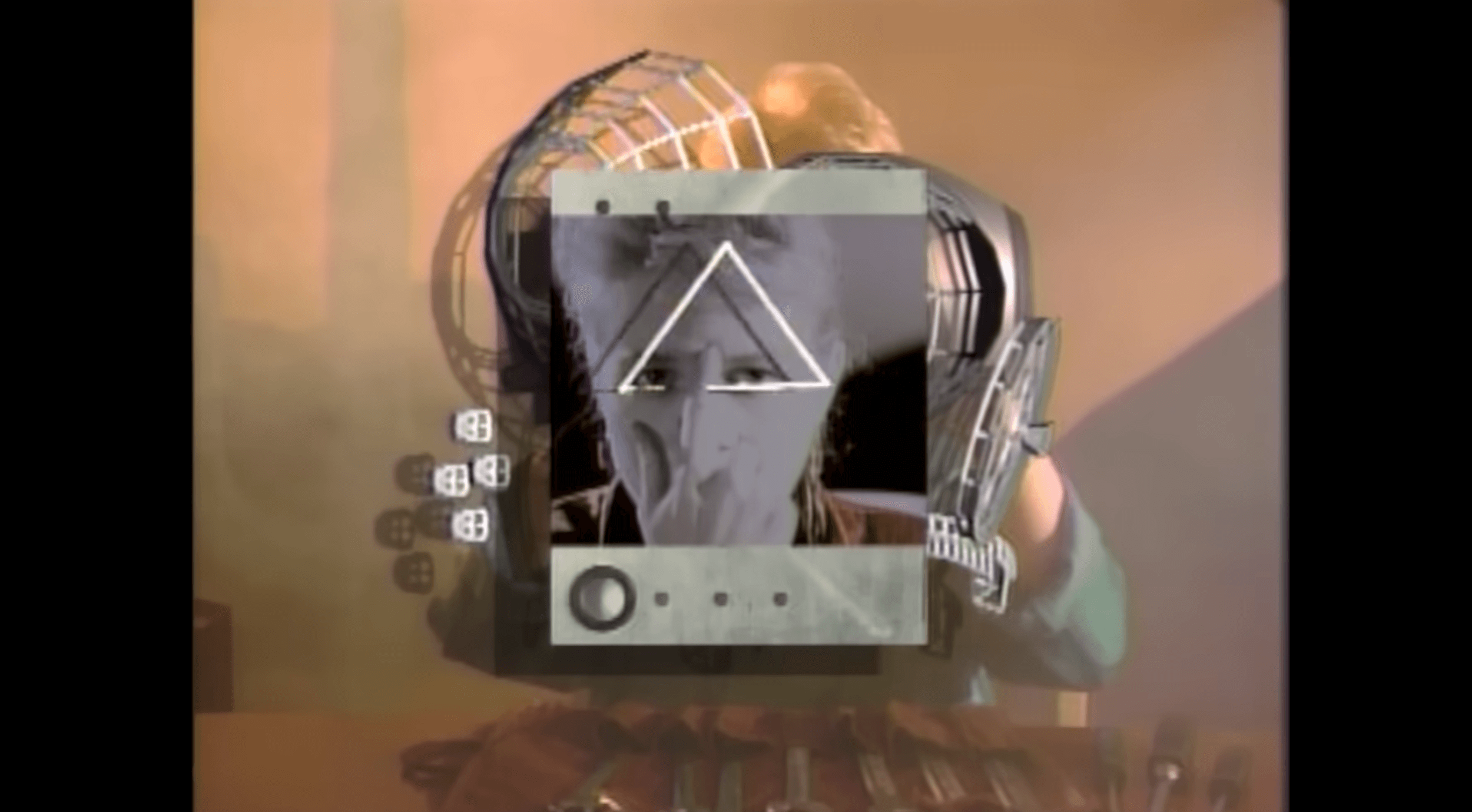
Since it first appeared in 1986 during the heyday of MTV, people have been asking us about the video for “I Can’t Wait”. What is the meaning behind it all? Why is Valerie pulling a shark out of a coffee pot? Is the dog wearing sunglasses a part of the band?
John and I have always loved the video for I Can’t Wait. Working on it with Jim Blashfield was one of the highlights of our pop music career. Jim lives in Portland with his wife, Mellisa Marsland (who also produced the video), and his daughter Hallie. We have gotten to be good friends with Jim and his family over the years. We even got to work with Jim recently on a multi-media performance called Brain Chemistry For Lovers. Jim directed, edited the script, and created video for it. Over the years, we’ve had a few discussions about the music business and assorted other music-related topics, but because the video for ICW had always “made sense” on a non-literal level to us, John and I had never thought to ask Jim, “What was that all about?”
Enter Sloan de Forest, a woman who calls herself “the Pauline Kael of classic MTV.” Sloan had a blog called “Images of Heaven: Remembering The Lost Art of Music Video.” She had decided it was time to uncover the story behind the “making of” ICW. She emailed Jim. He responded and copied us on the email. The blog no longer exists, but Jim's response does. Here it is in its entirety:
The video came about because I was a filmmaker living in Portland and my producer Melissa Marsland and I had just finished our first video, And She Was, and another for Joni Mitchell called Good Friends, and our fellow Portlanders-- the Nu Shooz crew who had been having some big international dance hits-- asked us to do a video for them. I explained that I wanted to improvise it. I didn't want to plan it at all. I wanted the experience of just making it up from what was around when we got to the studio. The morning of the shoot, I loaded my kitchen table and chair, and lamp into my car, along with some biology slides and a coffee maker, and some kind of cigar box, and headed over to the stage.
I rummaged around among the props there and found some canvas and some walls from a commercial, and some fake cactuses. I went upstairs, where the band and the crew were assembled-- we had a good and very professional crew, as you can tell from looking at the images-- and told them I would be back in 10 minutes with instructions about setting up for the first shot, about which I had no idea whatsoever. I rummaged around in people's offices and borrowed a few other items which looked promising. I went upstairs and said we were doing a video that took place in the desert and set people about creating that. It seemed like we needed something in front of the green walls, so the video editor went down the street and came back with a dumpster and rigged a way to make the lid go up and down with fishing line.
I recalled that my friends who were on vacation had a great-looking dog house for their dog Buster and some people went there and stole it. We called up a friend with an obedient dog who would stay when asked, and he brought his pooch over. Somebody else got a bunch of tools out of the trunk of their car. Now, fully prepared, with the band members doing an admirable job of hiding their apprehension, we were all set to shoot the live-action! Valerie was completely along for the ride with a great sense of playfulness, as her song was absolutely misinterpreted.
After the shoot, the next step was a trip to Seattle to get the footage transferred and do strange things to some of it, and then, for post-production, a trip to the thrift store and the corner grocery, returning with every other little gadget and doo-dah you see on the screen.
The video editor was Mike Quinn, who subsequently did the high-degree-of-difficulty video editing for my videos for Paul Simon, Peter Gabriel, and others. During editing, I called my friend Roger Kukes, the animator, and asked him if I could use part of his animated film Up for the ending of the video where Valerie Day opens the little box, and all the wiggly images come out, revealing all knowledge known to humankind.
I recall that the opening scene with the Banana and souvenir totem pole dropping onto a piece of metal with holes in it took about 8 hours to composite and was completed while I slept on the couch in the editing room. The scene where the image of the dog watching the golf ballish thing swings in and unceremoniously lands on Valerie's head-- and where it remains for longer than might be considered, strictly speaking, necessary-- is there because it made me laugh when we tried it in post and was left in because nobody said I couldn't. We had a take in which the guy with the smoke machine walks through in the background, waving it around while Valerie is singing, but I left that out due to some conservative impulse on my part, which I regret.
When they saw the video, the record company called it "unusual," or perhaps "quite unusual," or maybe "very unusual," or possibly some other less neutral phrase that I have repressed.
So what is it? Besides being a promo for a band and a song, it is an experiment to see what results when you take a line from the video "tell me what it's all about" and decide that Valerie is some kind of a scientist with an interest in small appliance repair instead of somebody waiting, lovesick, for a phone call, and let everything follow logically from that. If viewers look closely, they may notice that happiness seems to be represented as a shark found lurking in a coffee pot, a metaphor which is certainly worth considering if you ask me.
This being Portland and Nu Shooz being Nu Shooz and me being something of a troublemaker with a perhaps overdeveloped allegiance to the ordinary, the Portland MTV video premiere party was held in a truck-stop cafe and bar up the street. The local news sent a mobile truck to broadcast the glamorous event live.
By the way, and not incidentally, Valerie Day and John Smith, the Nu Shooz core, are fabulous and very versatile musicians and have a new CD out, Pandora's Box, that is exquisitely produced, hypnotically beautiful and completely different from the zillion seller Poolside, of which I Can't Wait was a part. I didn't have in mind to promote their CD when I began this fascinating run-on mind-evacuation, but since I'm talking about it... https://nushoozorchestra.bandcamp.com/album/pandoras-box
So hey, thanks for your interest, Sloan. I agree that some pretty interesting work was made during that period, and am aware that my co-conspirators and I were behind a few of the more interesting ones. That was our intention. To do stuff that bent the expected trajectory or looked deeper, or cast light and attention on subjects, images, and ways of seeing things that were often overlooked. Thanks for appreciating that!
I must go now and milk the swan.
Jim Blashfield
Reading Jim’s account of how the video came together made us appreciate him even more than we already do. And what a blast to have his version of the making of! He’s a master at using images to explore that theme park of the mind – the unconscious – and give us all a great time while doing it.
Thought I’d share it with you.
- Valerie
Find our latest newsletter below!
Search The Blog….
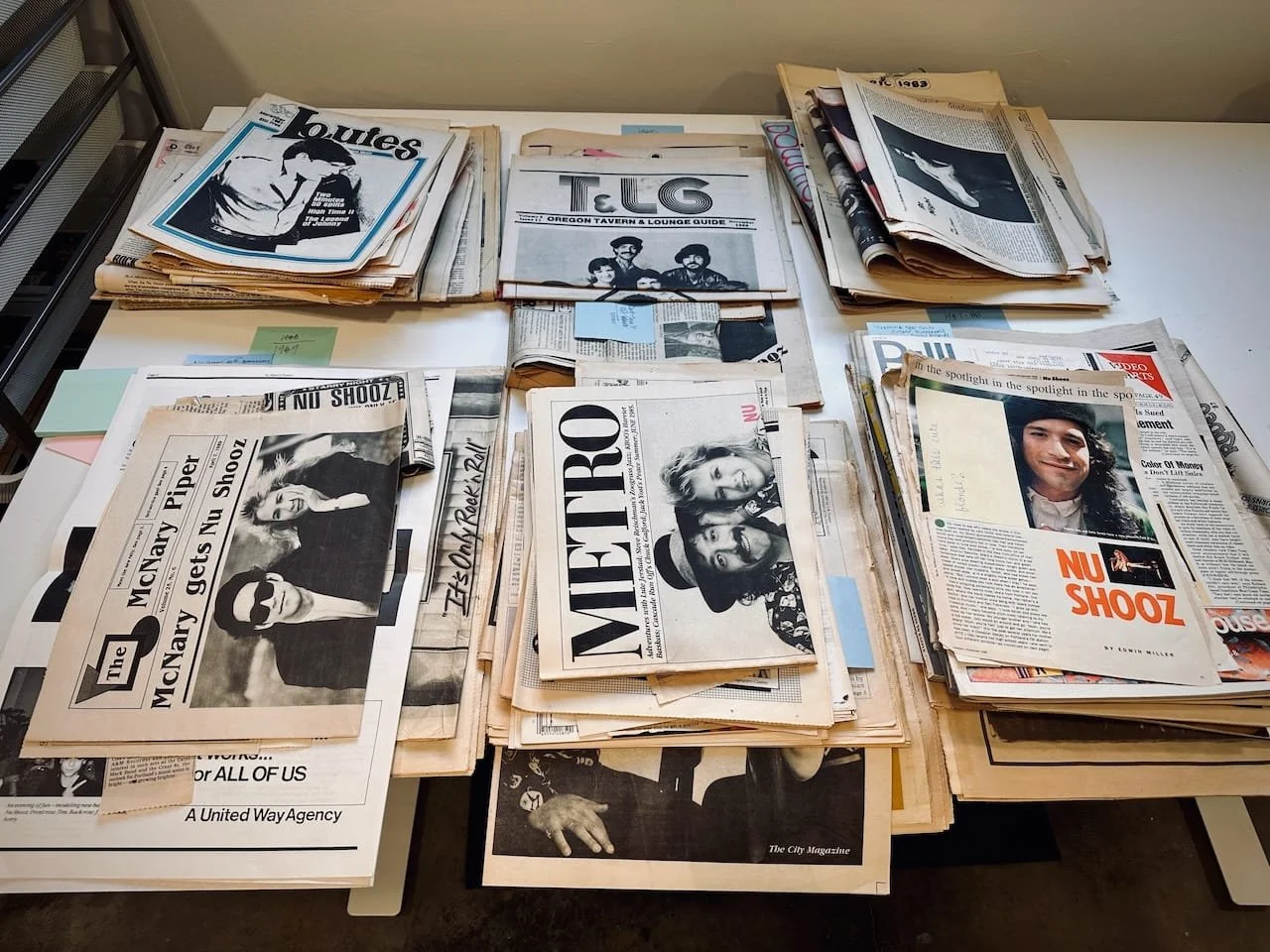

![Welcome to your summer. Yes, it's finally here! And it's the 46th anniversary of the very first NuShooz gig. [Colonel Summer's Park, Portland, Oregon, June 21st, 1979.] What a different world that was; pre-internet, no smartphones or smart toasters,](https://images.squarespace-cdn.com/content/v1/54cee645e4b01fa0f0bfc5f9/1772327896063-IIMMIJOZCTP00HOVTU9D/image-asset.jpeg)