
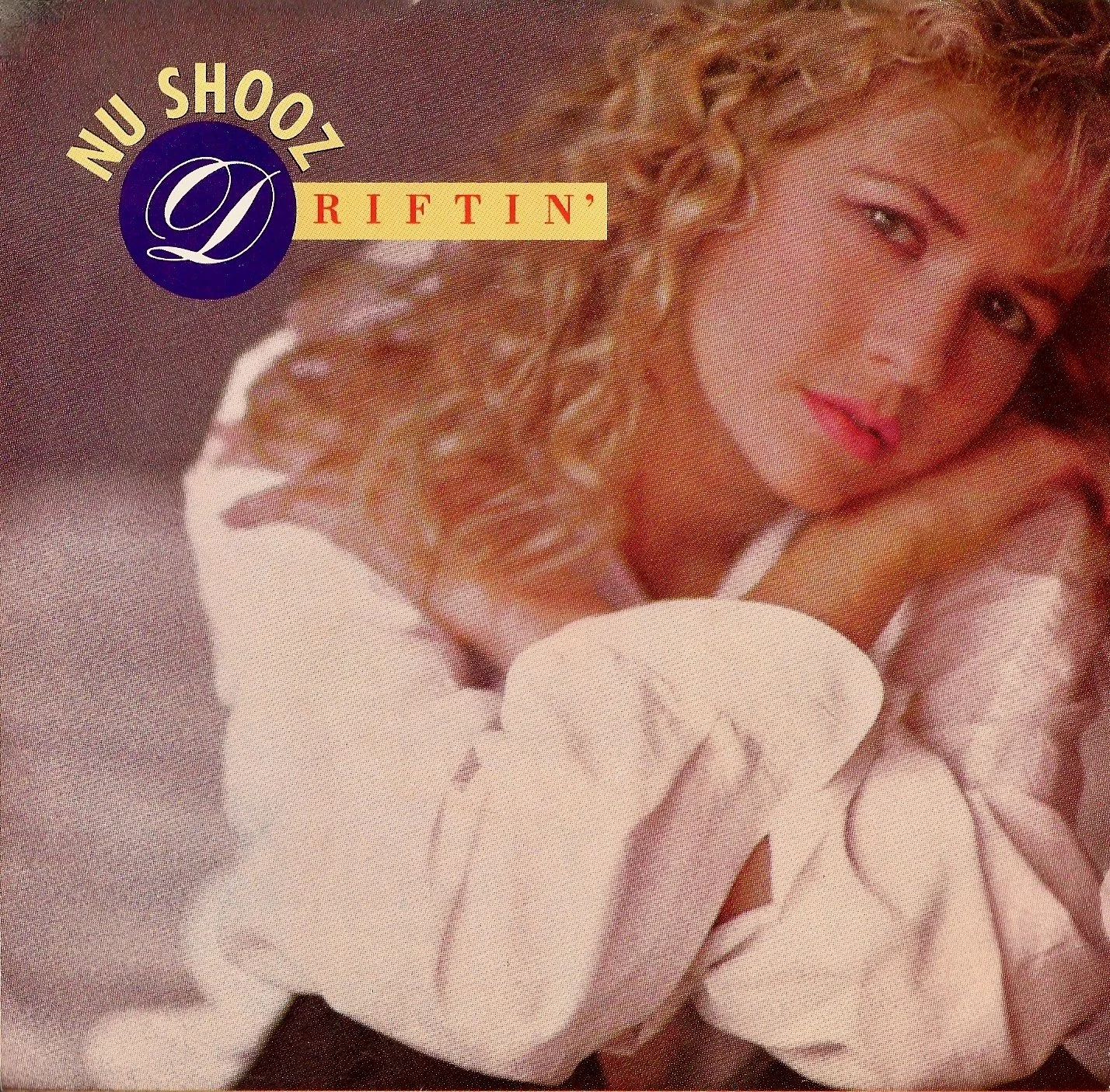
Stealing Like an Artist: The Creation Story of Driftin’
Dive into the creative process behind Nu Shooz's 'Driftin,' an 80s song that embodies Austin Kleon's philosophy of artistic influence and transformation.


In 2012, Austin Kleon wrote an influential little book called ‘Steal Like an Artist.’ “What a good artist understands is that nothing comes from nowhere. All creative work builds on what came before. Nothing is completely original.”
The Nu Shooz song ‘Driftin’ is a perfect example of this kind of thinking in action. The song was written in 1987 for the Shooz’s second Atlantic album ‘Told U So.’ My songs usually start with a nice set of chords. ‘Driftin’ was based on two chords one of my friends used to play. I often name music bits: the BB King Lick, the Watchtower Progression, the Stevie Wonder Thing, etc. So the first two chords in Driftin’ are the Azul Chords, named after my late friend and fellow songwriter, Azul Amey.
The harmony (on the word Driftin’) came from some R&B tune I can’t even remember. I just knew I could use that bit for something. And it was that tiny piece that put the song into the Ballad box. Lastly, there was a Jimi Hendrix song called ‘Driftin’ on his album ‘Cry of Love.’ I can’t remember how that piece of DNA drifted into the songwriting process, but that one word fit everything else that was going on…
I remember exactly where I was sitting when this was all coming together. It was late spring. I had a cute little Gibson B-25 on my lap. I’m playing the chords and trying to stuff every nautical oceanic seafaring thing into the lyrics. And during this whole process something happened that was more than stealing. It’s more like borrowing a few lumps of clay from fellow artists, taking it back to the potter’s wheel, spinning and kneading it till it becomes something completely new. My version of Driftin’ bears no resemblance to Jimi’s, but he was definitely along for the ride.
We loved this song so much that we recorded it twice: first in 1987 on our album ‘Told U So’ and then in 2010 on ‘Pandora’s Box.’
FAN QUESTIONS!
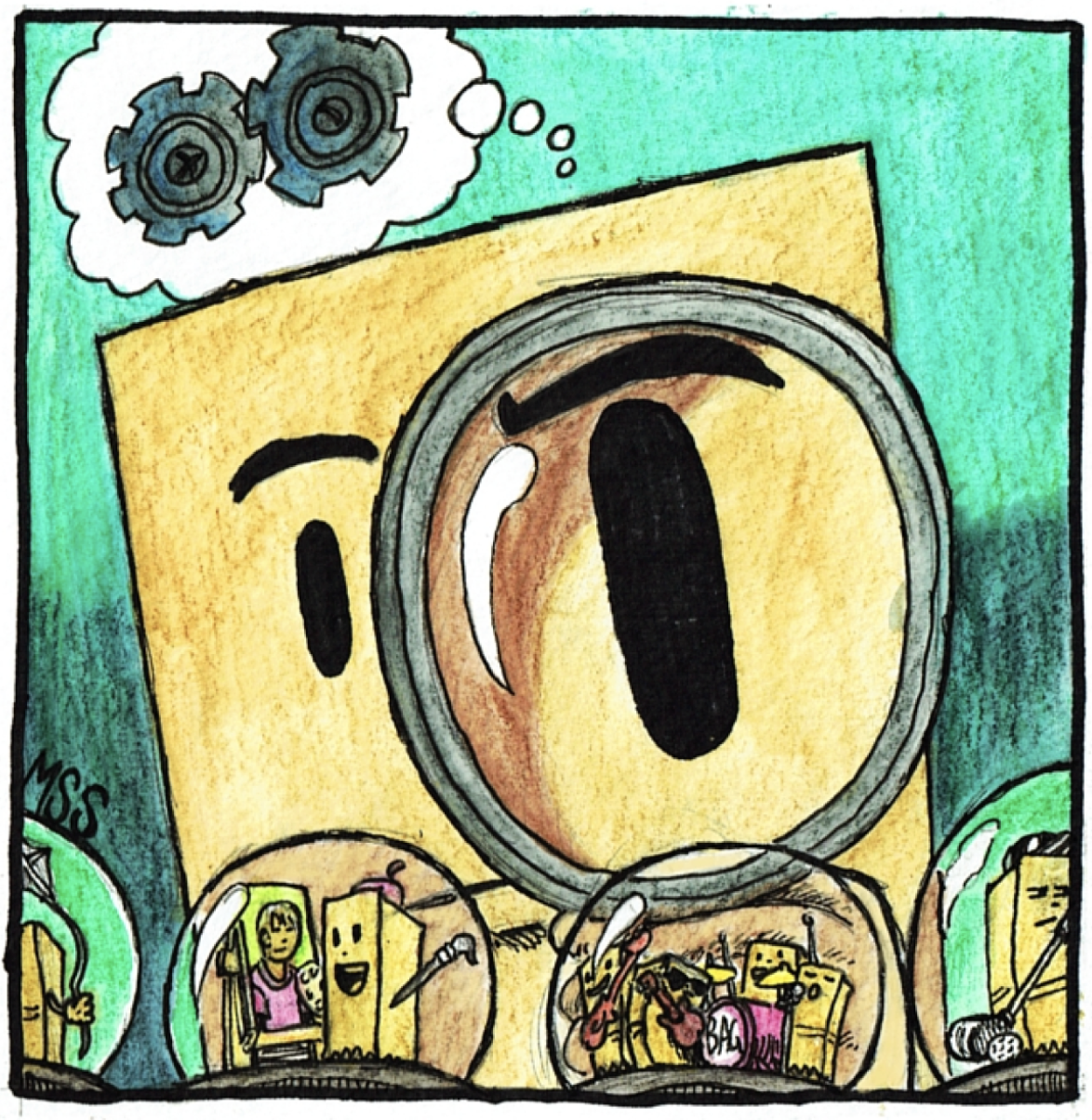
Greetings, music aficionados! John here. KJ, one of our fans, was curious about how I go about writing songs. I thought it was high time I shared my creative process with you all. From inspirations to the unique assembly line method I fondly call 'the Bone Pile,'’ I'll be revealing how the magic happens. Ready to take a tour of the songwriting landscape of Nu Shooz? Let's dive in!

Artwork by Malcolm Smith at Art Party Comics
KJ writes, “Tell Me A Lie” is one of my all-time favorite Nu Shooz songs, and I was wondering what your songwriting process is.
Hello KJ!
Well, first of all, thanks for that wonderful letter. 'Tell Me a Lie' was one of my absolute favorite songs off of "Bagtown." Another was 'The Color of Everything' from “Pandora’s Box.” That whole album was a departure from my normal writing style, which was to start with a bass line, a kick/snare pattern, some nice chords, and go from there.
On 'Pandora,' well... Martin Scorsese made a documentary about Bob Dylan called 'No Direction Home,' which I watched over and over in the studio. And that's when I finally realized what Lyrics could do. That they could be like impressionist paintings. At that point, I'd been writing songs for thirty years. So this time, I STARTED WITH THE LYRICS, just writing free of the music.
The first song that came out of that writing style was 'Spy vs Spy.' It was like a revelation. It opened up lyrics to new rhyming schemes and song forms. In the early days, it was so hard to keep four hours of material fresh. At the end of the night, there were always songs we were tired of but had to play to fill the time. So, I worked on songs in batches of ten and tried to finish two every week for Wednesday's rehearsal. I wrote some pretty flimsy stuff at times, but just good enough to fill the dance floor. (Some of those I'm still rewriting in my head.)
But how I did it was what we called the BONE PILE. The BONE PILE worked like this.
I would work on music and lyrics separately. I'd collect a bag of chord changes that I liked and SEPARATELY a bag of word fragments, mostly TITLES and hooks. Then, I'd try the hooks against the chord changes till I found ones that fit together. It was very much an assembly line process. 'The Real Thing' was a song that came together like that. The lyric fragment I started with in that song was "Whatever you want, whatever you need." And it expanded out from there. Musically, I knew I wanted to make a Gamble and Huff/ Philly Soul song like they might write for the OJays.
So, that might be more than you wanted to know, but that's how it was done.
We really appreciate it when people dig into our band and get beyond 'I Can't Wait.' There's a lot there. And we loved the bit about your bass player from Senegal. Our songs were well-liked in Africa, especially (for some reason) 'Should I say Yes.'
Gotta question for the Shooz? Just get in touch through our contact page and we’ll try to answer in a future newsletter!
9 Songs That Made Me Want To Get Into Music
On Valerie’s podcast, every guest talks about a moment in their life that inspired them to make a life in music. For me, it was all about the music. These nine songs, ranging from soul to Latin to early New Orleans soul, convinced me to switch from pathology to music. And they’ve kept me playing for fifty years.

On Valerie Day’s podcast, LIVING A VOCAL LIFE, she asks every guest a couple basic questions. They’re the bookends of the show. The first one is, WHAT IS YOUR FIRST MEMORY OF SINGING? That usually happens between the ages of three and six. At the end of the show, Valerie asks, IF YOU COULD GO BACK IN TIME AND SAY SOMETHING TO YOUR YOUNGER SELF, WHAT ADVICE WOULD YOU GIVE? What would you say to that kid?
So much to say…
Everyone chose around age fifteen. We all have our own version of what that was like. To go back and talk to my younger self was always my ULTIMATE SCI-FI FANTASY! [I wouldn’t mind going back and helping to produce some of those NU SHOOZ records, too…kid do you really need four tambourine parts?]
All of the guests on Valerie’s podcast said basically the same thing. They told their fifteen-year-old incarnation;
YOU ARE BEAUTIFUL
YOU’RE NOT CRAZY
THIS PATH IS OPEN TO YOU
THAT PATH…
…MAYBE NOT SO MUCH
Everybody said it. I found that fascinating.
Oh…
If I could only go back and tell my kid self what the dead-ends were…but we’re not allowed to do that. It’s the PRIME DIRECTIVE, like on Star Trek or any Time-travel story. You’re not allowed to interfere with the past. And I get it. Our younger selves had to make their own mistakes…to learn from them.
But we have this longing to go back into the past and say, “Hey baby, relax. It’s alright. You’re beautiful. You’ve got a thing on that piano, or yeah, DANCING is not a stupid career if you’ve got the dance in your bones.”
I had a lot of dead-ends.

I thought I wanted to be a Pathologist because of a book I read. You wanna go back and say, “No, get your hands on a guitar as soon as you can. There’s MUSIC in your head.” But you’re not allowed to say that because you’re on the deck of the Enterprise, and you’re not allowed to communicate with that rogue planet.
My own journey into music was slow but constant. There was a Tom Lehrer record on the turntable when I was five. I played it over and over and picked up a lot of unsavory lines I didn’t understand.
THE GUY WHO TOOK A KNIFE
AND MONOGRAMMED HIS WIFE
THEN DROPPED HER IN THE POND
AND WATCHED HER DROWN.
[Note: I picked one of the cleaner ones here.]
The Golden Age of Sixties music was happening all around me. Herb Alpert and the Kingston Trio and Bobby Darin. Uncle Tony was a professional trombone player. He had a striped jacket and straw boater for his Dixieland gigs. From age seven to around age eleven, I just played army. I fought in both the European and Pacific Theaters, of course. Then I wanted to be a Scientist and spent all my spare cash on beakers and Erlenmeyer flasks.
I didn’t really want to be a scientist. I was into the theater of it. My laboratory was a stage set.
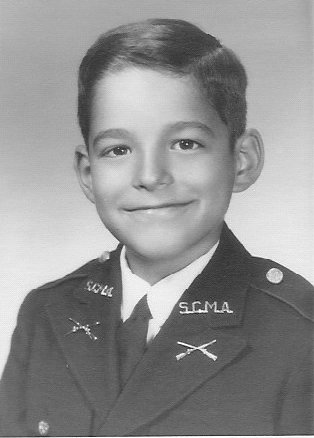
John Smith, military school. 6th Grade.
I moved to L.A. in the summer of ’66. Herb Alpert was on the radio playing ‘Taste of Honey.’ I could imitate his trumpet solo. My mother asked, “Do you want to play a musical instrument?” Nah, I said, mostly because it was her idea. It would be another five years before I picked up an instrument and fourteen before I had a band of my own.
But for all the dead-ends, there was this constant gravitational pull toward a life in music.
Plaintive chord changes thrilled me before I knew what they were. Go listen to ‘Tears of a Clown.’ Do it right now, and see if you don’t get a few tears of your own.
I could probably list a hundred songs that changed my life in some way. This is a list of songs that tipped the scales toward a life in music and away from Pathology.
HERE ARE NINE SONGS THAT MADE ME WANT TO GET INTO MUSIC
...which kinda turned out O.K.
“I Was Made To Love Her” Stevie Wonder
I remember where I was when I heard this. Squeezed into the back of a V.W. bug. We were on our way to go swimming in some Ohio lake. It was the summer of ’67. My introduction to Soul Music?
No, there was one before that.
2.) “Natural Man” Lou Rawls
Maybe that was my introduction to Soul Music.
No. I think there was one before that.
When I was seven years old, that would have been 1962, I got the measles. In those days, they said the measles could make you go blind.
So they gave me a pair of kid-sized sunglasses...
And not crappy ones.
Legit horn-rimmed Marcello Mastrioni SHADES!
And they gave me something else.
A BABY BLUE TRANSISTOR RADIO in a brown leather case embossed like a pair of brown wingtips.
And I remember the first song that came out of that radio.
3.) “Java” Al Hirt
[Yeah, I know it doesn’t count as a Soul tune.]
What was playing that answer lick?
“Da-boo-dat
Da-boo-dat
Daba-dooby-aba-dat”
To my seven-year-old ears, it sounded like rubber bands. It took me twenty years, no lie, to figure out that they were tenor saxophones.
Now we jump forward a couple years.
4.) “Mother Popcorn”
James Brown
There was this black family that lived down the alley, Frank and Amanda Miller and their six [count ‘em...six] kids. Two of them were deaf/mute. My mom worked three jobs, so they kind of took me in. Frank was building a supercar in the garage, a ’49 Plymouth with T.V., C.B. Radio, a refrigerator, and shag carpets; the kind of ride Curtis Mayfield would have called a ‘Gangster Lean.’ Frank worked at the Naval shipyard over in Long Beach. He brought home all kinds of wires, meters, and parts pulled out of old battleships and destroyer escorts. Amanda, meanwhile, was taking care of the six kids.
So...one day, she comes to me and says
“I’m goin’ to the record store. Tell me two songs you want.”
She bought me two 45’s.
5.) “Love Makes a Woman” Barbara Acklin
And this was the other one.
[By the way, Amanda Miller taught me how to dance the Popcorn.]
6.) “Say a Little Prayer”
Dionne Warwick
Eighteen years later, we got to meet Dionne Warwick on the Solid Gold show. I chickened out of telling her that I was thirteen and loved her stuff with Burt Bacharach. She was really tall. So was Marilyn McCoo.
Maybe THAT was my introduction to Soul Music.
7.) “More Love”
Smokey Robinson and the Miracles
8.) "Tears of a Clown”
Smokey Robinson & The Miracles (see above.)
9.) "Nina y Senora" Tito Puente
There was so much Latin music going on in Portland in the ’70s. This is a sample of what was playing in our apartment around 1977.
Oh, But I left out...
10.) “Bread and Butter”
The Newbeats
Some early New Orleans soul…love that piano part. ‘Judy in Disguise’ is another piano part like that.
And the song that made me switch from Pathology to Music
11.) “Message To Love” Hendrix/Band of Gypsies
Four bars of that song and I was hooked.
That’s what I gotta do with MY life.
[Oops…there were more than nine.]
A girl named Leanne gave me a broken guitar from her parent’s closet. The bridge was dangling from a single string. Of course, the first thing I did when I got home was…pose in the mirror, like Hendrix in Life Magazine. The next thing I did was try to learn to play, and I didn’t miss a day for the next fifty years.
So…
That fifteen-year-old worked it out for himself. And maybe the dead-ends are important. Maybe they add up to something greater than the sum of their parts. They add up to who we are now.
What songs influenced you?

Photo by Valerie Day
The Sweet Middle
It’s a frightening time to be an artist. On one hand we have technological capabilities undreamed of thirty years ago. On the other, our lives are so full of distractions it’s a wonder anyone can do anything. Worst of all, it’s impossible to get anyone’s attention these days, not without a million dollar advertising blitz. Open up the paper and there are thousands of bands, art exhibits, films, dance performances, a tsunami of artists.
Welcome to the Post-Modern world.
In the midst of this apocalyptic scenario, the conversation around our house lately has been ‘Why do art at all?’
Here’s what we came up with:
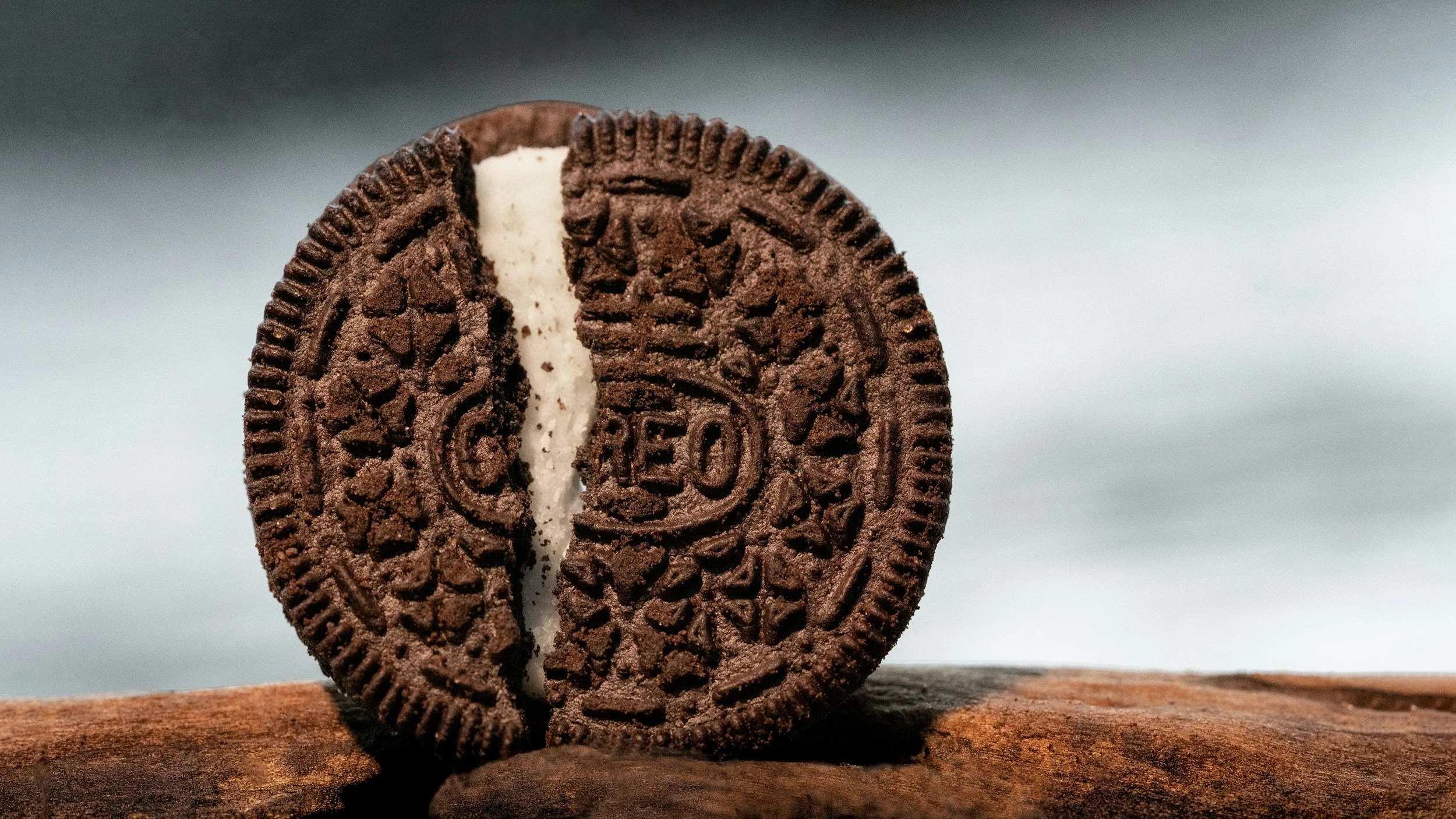
Photo by Brad Switzer on Unsplash
by John Smith
It’s a frightening time to be an artist. On one hand, we have technological capabilities undreamed of thirty years ago. On the other, our lives are so full of distractions it’s a wonder anyone can do anything. Worst of all, it’s impossible to get anyone’s attention these days, not without a million-dollar advertising blitz. Open up the paper, and there are thousands of bands, art exhibits, films, dance performances, a tsunami of artists.
Welcome to the Post-Modern world.
One of the characteristics of Post-Modernism is that all art will be mashed together. The Mona Lisa and Venus DeMilo are Photoshopped into a ’58 Chevy Belair. They’re driving across the surface of the moon while listening to a hybrid of Flatt and Scruggs, Grandmaster Flash, and an Indonesian Monkey Chant.
You get the idea.
In Post-Modernism no one piece of art is more important than any other. Pure genres are dead. Long live the mash-up.
In the midst of this apocalyptic scenario, the conversation around our house lately has been ‘Why do art at all?’
Here’s what we came up with:
1.) DOING SOMETHING IS BETTER THAN DOING NOTHING.
Sure, doing nothing has its place, say on a Zen retreat. Generally, though, doing nothing is boring. Nature abhors a vacuum, and our own natures abhor it most of all. Time is not constant. The observer influences the result. (Sorry for the oversimplification of the Heisenberg Uncertainty Principle.) When you’re truly engaged, time flies by. There aren’t enough hours in a day. Compare that to its opposite, say the last period of the day before school gets out. We crave engagement, and engagement sets us free.
2.) ART FEEDS THE MIND, BODY, & SPIRIT
Ask anyone with a career in the arts, and they’ll tell you they have never stopped striving. That’s because no matter what your chosen medium is, there’s always more to learn. Michelangelo and Leonardo da Vinci — two of the greatest artists in human history — never reached a point where they felt they’d arrived. The great cellist Pablo Casals was still perfecting his technique at age ninety.
That means there’s a lifetime of things to work on, a lifetime of food for the human spirit.
3.) ART IS FUN
Even if no one ever hears your song or watches your movie or offers you three million dollars for your finger painting, the act of creation FEELS GOOD. It’s like meditation and sports all rolled into one. I’m no scientist, but I’m sure there are measurable effects when a person is creating, changes in heart rate and respiration, different parts of the brain lighting up.
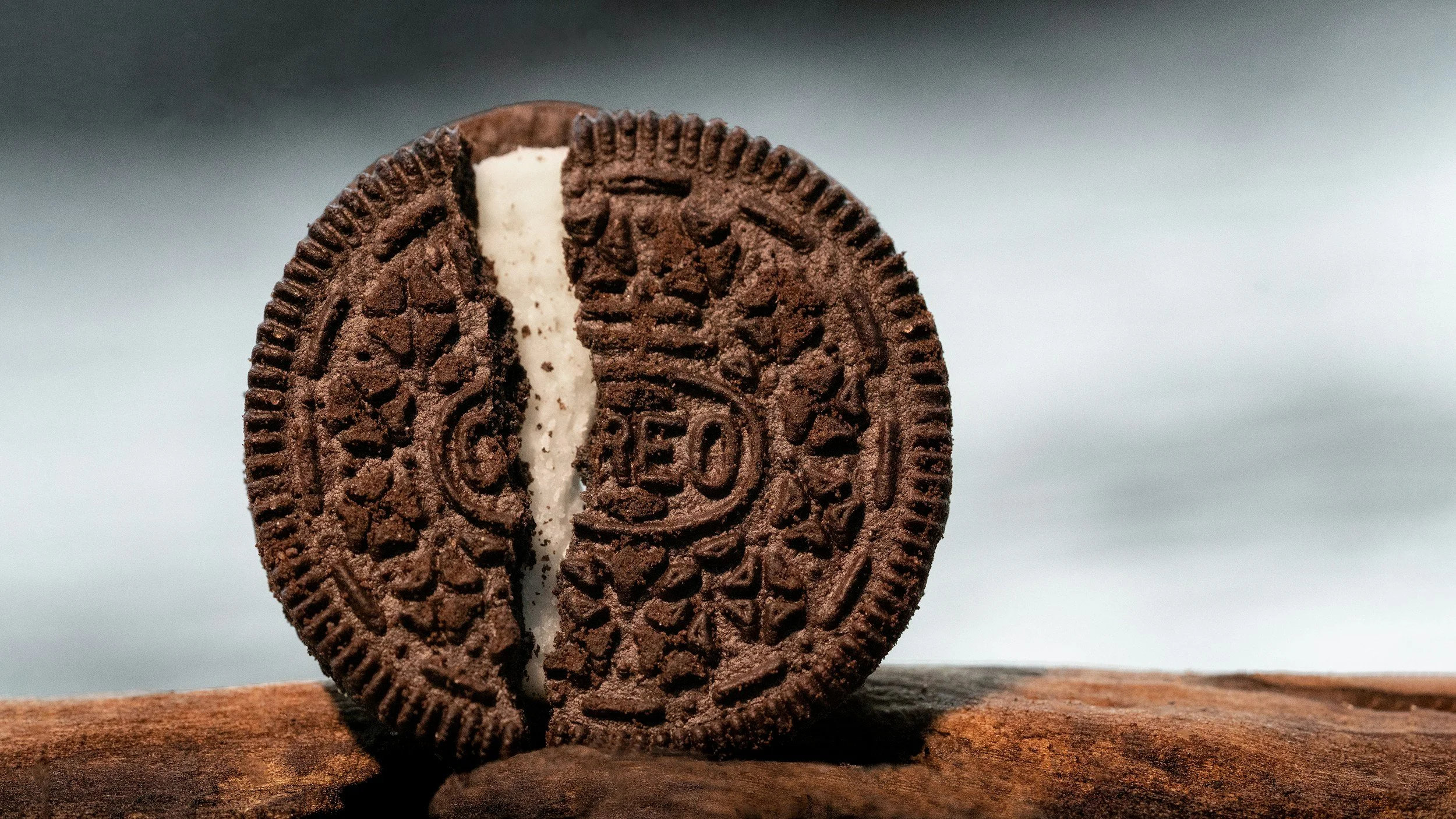
4.) THE SWEET MIDDLE
Now we come to my personal favorite, what I call The Sweet Middle. Imagine a hamburger, not a cardboard one made by a King, or a Jack, or a Clown. A real, honest-to-God American hamburger.
What’s the best part?
It’s not around the edges of the bun. It’s the middle. Think about it. That’s where the rare meat is, where it’s mixing with the condiments, becoming more than the sum of its parts.
The same is true with making art.
The best part isn’t the beginning of a project, though the initial idea may be exciting. (Some people never get past the idea.) It’s not when it’s finished. A lot of artists I know lose interest in their creations once they’re complete. They’re already on to the next thing.
The best part of a project is when it’s up and running, but it isn’t finished yet. It exists, but still contains possibility. In other words, it’s still in motion.
That’s the best part of the creative process, the Sweet Middle. After lots of soul searching, we realized that’s a good enough reason to keep making stuff, even in our crazy Post-Modern world.
Don't Push The River: Movement Is Life
Thirty million years ago, we were writing songs for the fifth Nu Shooz album. It was a struggle. The label hated everything we handed in. We began to doubt ourselves. But I’m proud to say we didn’t stop.
Movement is life, and by moving, we know we’re alive.
Sink or swim, baby.

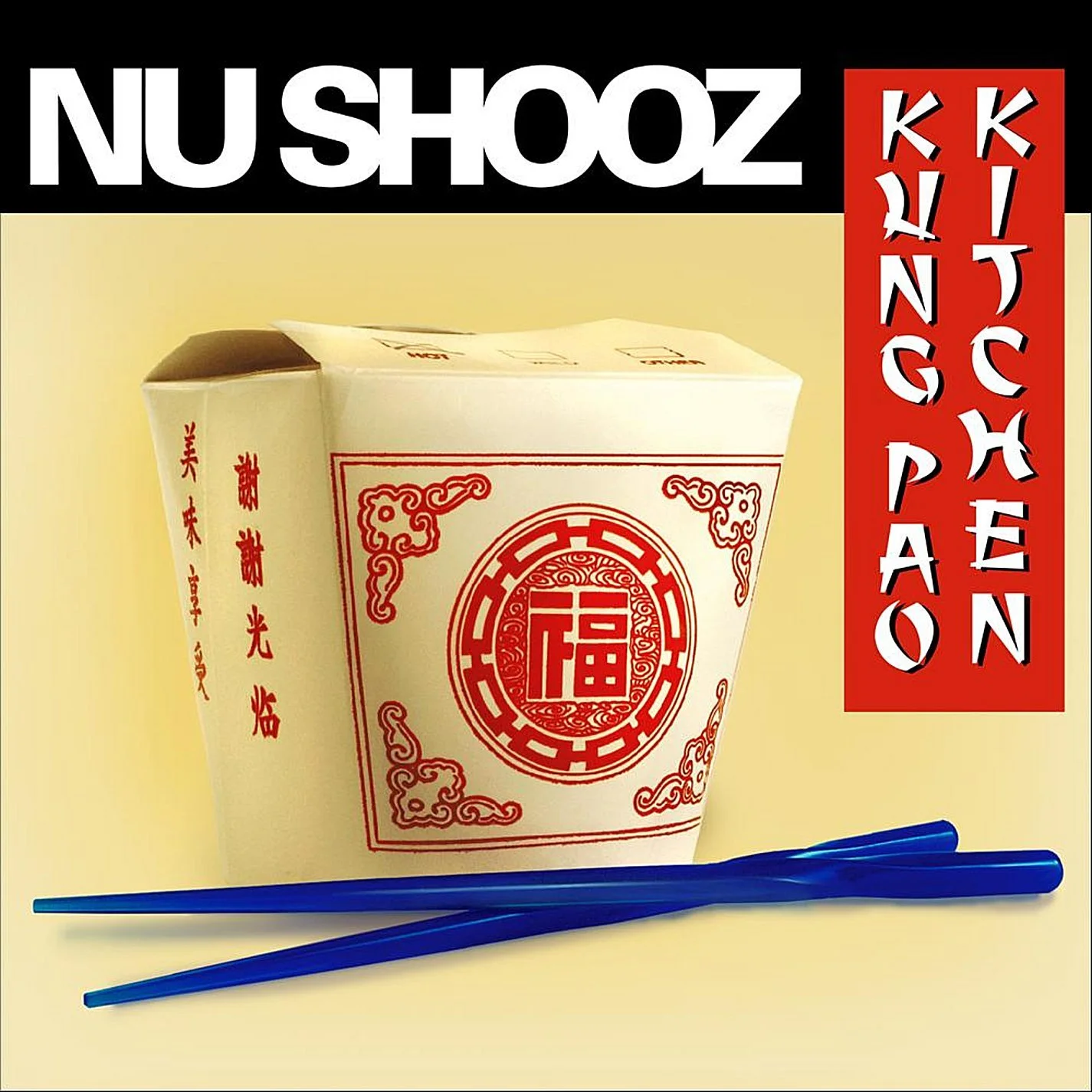
The continuing saga of Kung Pao Kitchen.
The I-Ching says this:
"IT FURTHERS ONE TO CROSS THE GREAT WATER."
What does that mean?
It means that movement is life.
We try things. We succeed. We fail. And all our endeavors further us in some way.
Thirty million years ago we were writing songs for the fifth Nu Shooz album. It was a struggle. The label hated everything we handed in. We began to doubt ourselves. But I’m proud to say we didn’t stop.
Movement is life, and by moving, we know we’re alive.
Sink or swim, baby.
Sometimes the river fights back. Strong currents want to drown us. If we struggle, we only get tired. (There’s truth in the metaphor I’m beating to death here.)
We worked hard on the songs. I suppose I could use something about rowing against the current. In the end, the label decided to shelve the record.
So now it’s now.
We dusted off the tapes and hey, they’re pretty cool. We spent the next four months scraping them into little sandcastles, adding stuff, taking stuff out. It’s obsessive work…fun work.
"The album will be done in five more days!" Then…Blamp!
The computer is dead.
This is not just a computer. It’s a Mac Pro with a Pro-Tools HDIII system running the new Version 9 software. Only guys with really thick glasses know how to make this thing go.
"Don’t worry, no data was lost."
While this is going on, we received news that a key member of the band was diagnosed with cancer.
This put everything in a different light. Sometimes it feels ridiculous to work on music in the face of grim reality. And then...sometimes it feels like the only thing left to do.
Keep on moving.
The computer is running again.
The cancer has been stared directly in the eye. The Doctor said, “You’ll have to find something else to die of.”
Yesterday we opened up the recovered Kung Pao Kitchen tracks and listened to them. Valerie said she thought horns would be good on one of the songs. After she said that, other songs sprouted horns. It’s like the whole record went from three dimensions to four! Nothing was lost.
While we were busy fighting the tides, they were changing us, and changing the landscape around us. The roiling waters changed us in ways we couldn’t guess.
It’s going to be a great record, a different record.
We try things. We succeed. We fail.
And all our endeavors further us in some way.
Movement is life.
- JRS
9/1/11
Find our latest newsletter below!
Search The Blog….

![Welcome to your summer. Yes, it's finally here! And it's the 46th anniversary of the very first NuShooz gig. [Colonel Summer's Park, Portland, Oregon, June 21st, 1979.] What a different world that was; pre-internet, no smartphones or smart toasters,](https://images.squarespace-cdn.com/content/v1/54cee645e4b01fa0f0bfc5f9/1772327896063-IIMMIJOZCTP00HOVTU9D/image-asset.jpeg)