NU SHOOZ TIME MACHINE: Soul 45s
It’s the 60s in Southern California, and John’s just been introduced to Taco Bell and Soul Music. Read on to find out what connects his first ever Soul 45 to Nu Shooz on the telly in 1986.

A while ago we asked the question, What would you like to see on our website?
The universal answer was (of course,) more stories about the ‘good old days.’ Some stories we’ve told over and over, like writing ‘Should I Say Yes’ in a full-blown [pun intended] tornado.
Is there anything left to say?
Valerie and I sat down and brainstormed, and came up with a pretty good list. We’ll take them in the order that they occurred to us. Here’s story #4.

I grew up in Cleveland, Ohio.
The ‘Best Location in the Nation,’ or the ‘Mistake on the Lake.’
Choose one.
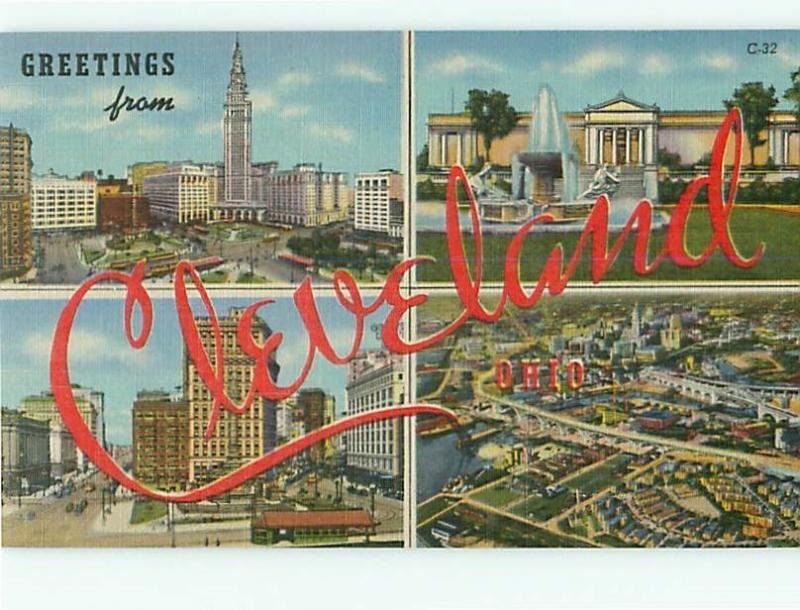
I was raised by kind foster parents, the Sheldons, till I was ten. That summer, they shipped me and all my belongings out to L.A. to live with my mother. The first thing we did was go to Taco Bell, where she turned me on to Mexican food. They didn’t have that in Cleveland in 1966. (It’s off-topic, but Taco Bell at that time had about six items, and they all cost 24 cents.)

We rented a tiny house in San Pedro, the Port of Los Angeles. My mom, she insisted that I call her Dorothy, worked three jobs. So I was suddenly on my own. That suited me fine.
Wandering the neighborhood, I met a half-Filipino kid named Michael. I wouldn’t say that we were exactly friends. For a while, he used to beat me up when I got off the school bus. Gradually, I got to know the family, Betty, a single mom, and Michael’s older brother, Philip.
Philip was a follower of Elijah Muhammad and the Nation of Islam. He turned me on to the black A.M. station, KGFJ 1230, “The Sound of Black America.”

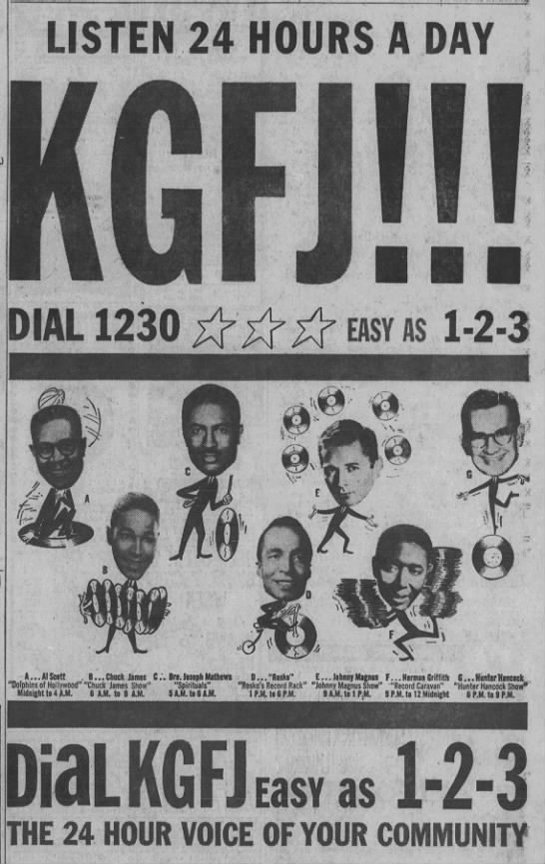
Back in Cleveland our musical tastes ran more toward Herb Alpert and the Tijuana Brass, and the Baja Marimba band. (Uncle Tony was a professional trombone player.)
For Christmas I got a portable radio complete with a three-speed turntable. I carried it everywhere and became an overnight convert to the Church of Soul Music. KGFJ was a window into another planet. This was the Golden Age of Soul. Motown, Stax, and regional labels like King and Brunswick were putting out their greatest work.

(Image by Joe Haupt)
There was a black family who lived up the alley from our house. With Dorothy gone all the time, I started hanging out there. Frank and Amanda Miller had five kids. Two of them were deaf/mute. Frank was building a supercar in the garage, a souped-up ’49 Plymouth. Amanda taught me how to dance the ‘Popcorn.’ I could go on and on about them, but anyway…
One day Amanda says, “I’m going to the record store. What song do you want?”
I chose, Say A Little Prayer, recorded by Dionne Warwick.
And she bought it for me, my first Soul 45.

Others would follow. James Brown had a new single out every other week. I loved Smokey and the Miracles, The Four Tops, and The Meters. A new record would come out of my portable radio on the morning trip to school. As soon as school was out, I’d get 69 cents in my sweaty paw and run down to the little black record store, Jesse’s Records, on Gaffey Street.
Fast forward twenty years.
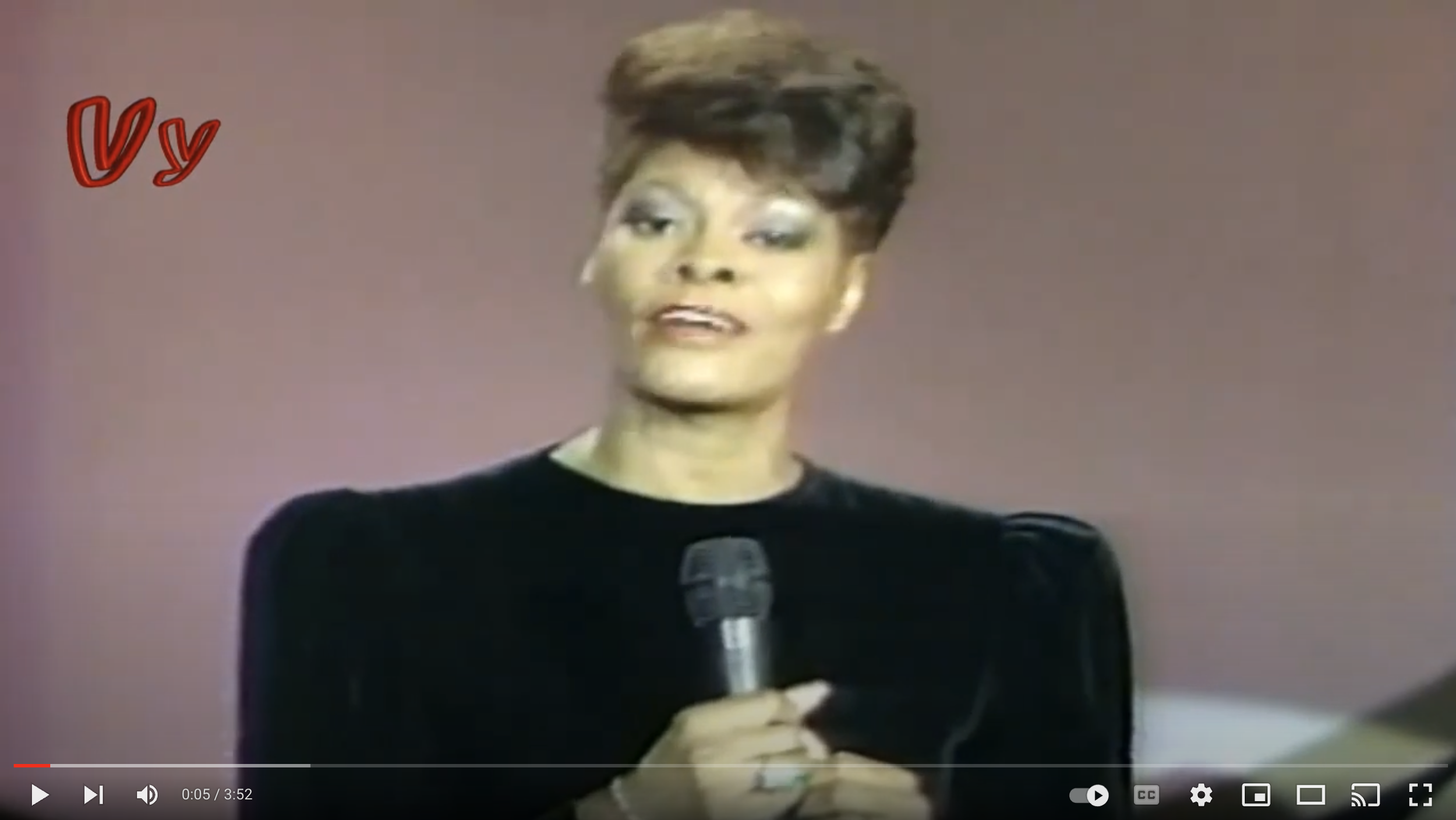
Our band, Nu Shooz, is appearing on Solid Gold, and the host is…
Dionne Warwick!
My first Soul 45.
The camera’s rolling. The red light is on.
She says, “Now here’s Nu SHOOZ, with I CAIN’T Wait.”

CHOONS: FROM PORTLAND TO THE WORLD; The Story of Nu Shooz' "I Can't Wait."
Host Diego Martinez from CHOONS takes us back to the Mid-70s and the incredible series of events that led to “The Bassline Heard’ Round the World.” It’s one of our favorite interviews ever. Enjoy!
CHOONS is a podcast about "The Songs we vibe to," dedicated to the "History and longevity of underrated and much loved tunes."
Host Diego Martinez takes us back to the Mid-70s and the incredible series of events that led to "The Bassline Heard 'Round the World." It’s one of our favorite interviews ever. Enjoy!
INTERVIEW: LIVED THROUGH THAT with Mike Hipple
How can one moment change a life? In this interview, John tells how a pair of headphones and 16 bars of Hendrix changed his trajectory from pathologist to musician.

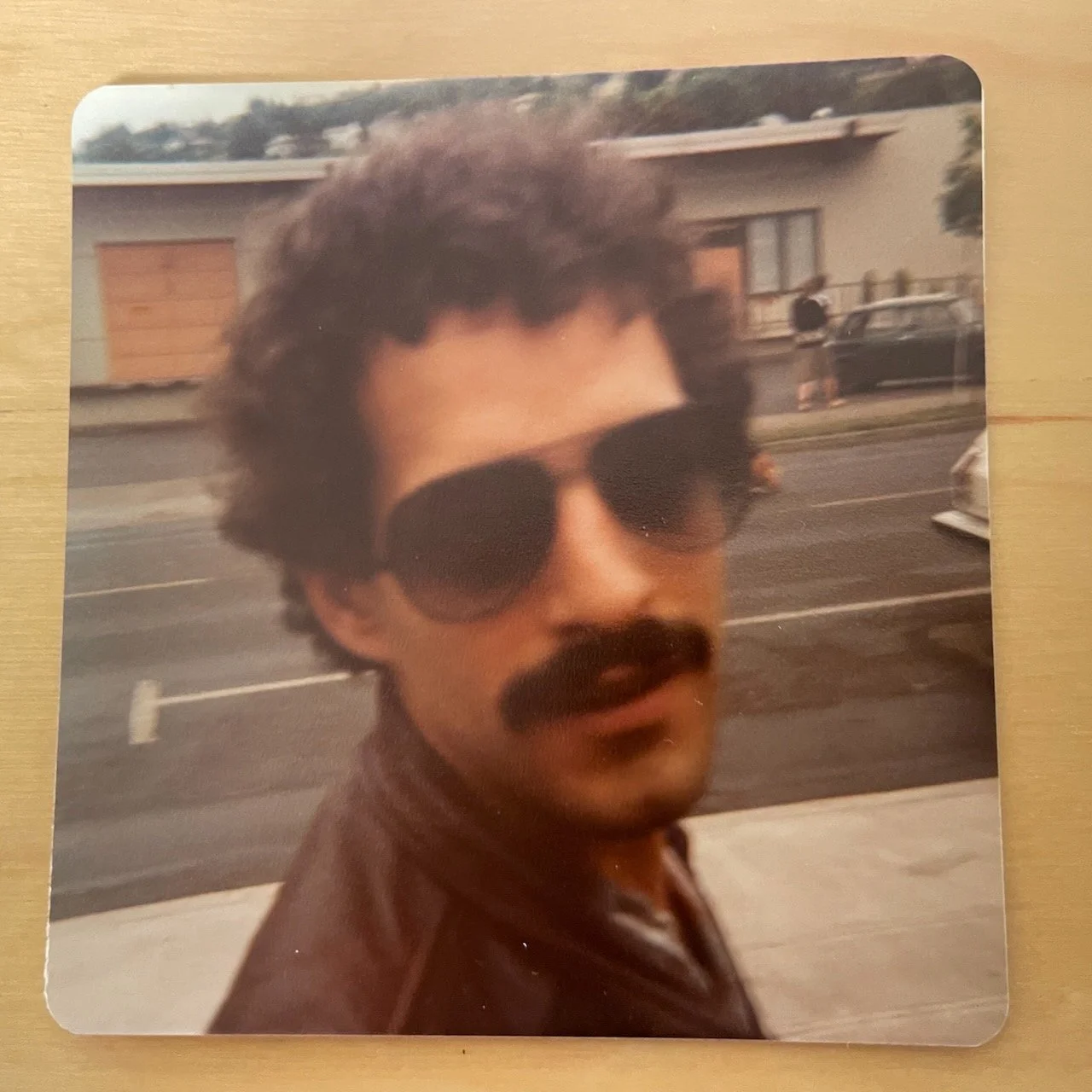
John circa 1978
We're going to let Mike describe the theme of his show.
"On this podcast, we'll delve deeper into a single pivotal moment in the lives of the artists I feature in [my] book. In this episode, John Smith, from the band Nu Shooz, you know them from their ubiquitous song "I Can't Wait," but their history is much longer and deeper than that one song. Today, John tells us how Jimi Hendrix helped him find his groove.
Mike Hipple is a photographer, and the author of two books: "80's Redux," about 80's musicians, (John and Valerie are on page 26, and John's beloved battered Gibson 335 gets a beauty shot on page 27,) and his latest, "Lived Through That," celebrating influential musicians of the 90's.
NU SHOOZ TIME MACHINE: Recording at Prince's Paisley Park
It’s Nu Shooz Time Machine Story #3! This one takes us to Paisley Park to record our second album, Told U So. Will John fit into Prince’s fur coat? Continue reading to find out more!

A while ago we asked the question, What would you like to see on our website?
The universal answer was (of course,) more stories about the ‘good old days.’ Some stories we’ve told over and over, like writing ‘Should I Say Yes’ in a full-blown [pun intended] tornado.
Is there anything left to say?
Valerie and I sat down and brainstormed, and came up with a pretty good list. We’ll take them in the order that they occurred to us. Here’s story #3.

Paisley Park, MN
The most futuristic building in Eden Prairie, Minnesota is Paisley Park, the home studio of Prince Rogers Nelson. Home studio is a little misleading. It’s a sprawling complex with three world-class recording rooms, a kitchen, and a full wardrobe department where they ‘built’ all his wild clothes.
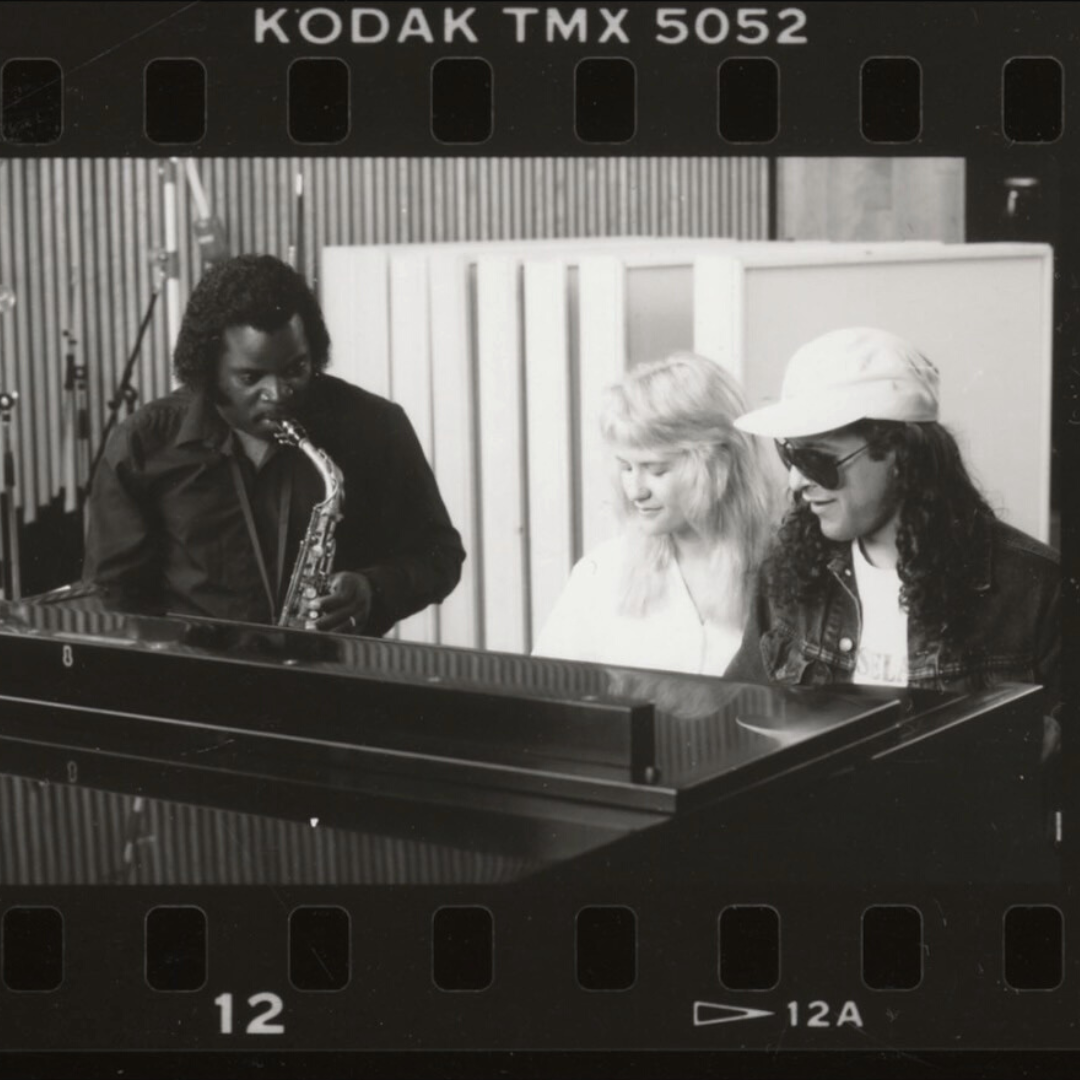
We were there working on our second Atlantic record, Told U So. The producer was David ‘Z’ Rivkin.
We had the whole place to ourself for two weeks.
Our manager, Rick, asked me, “If you could have any guest stars on the record, who would it be?”
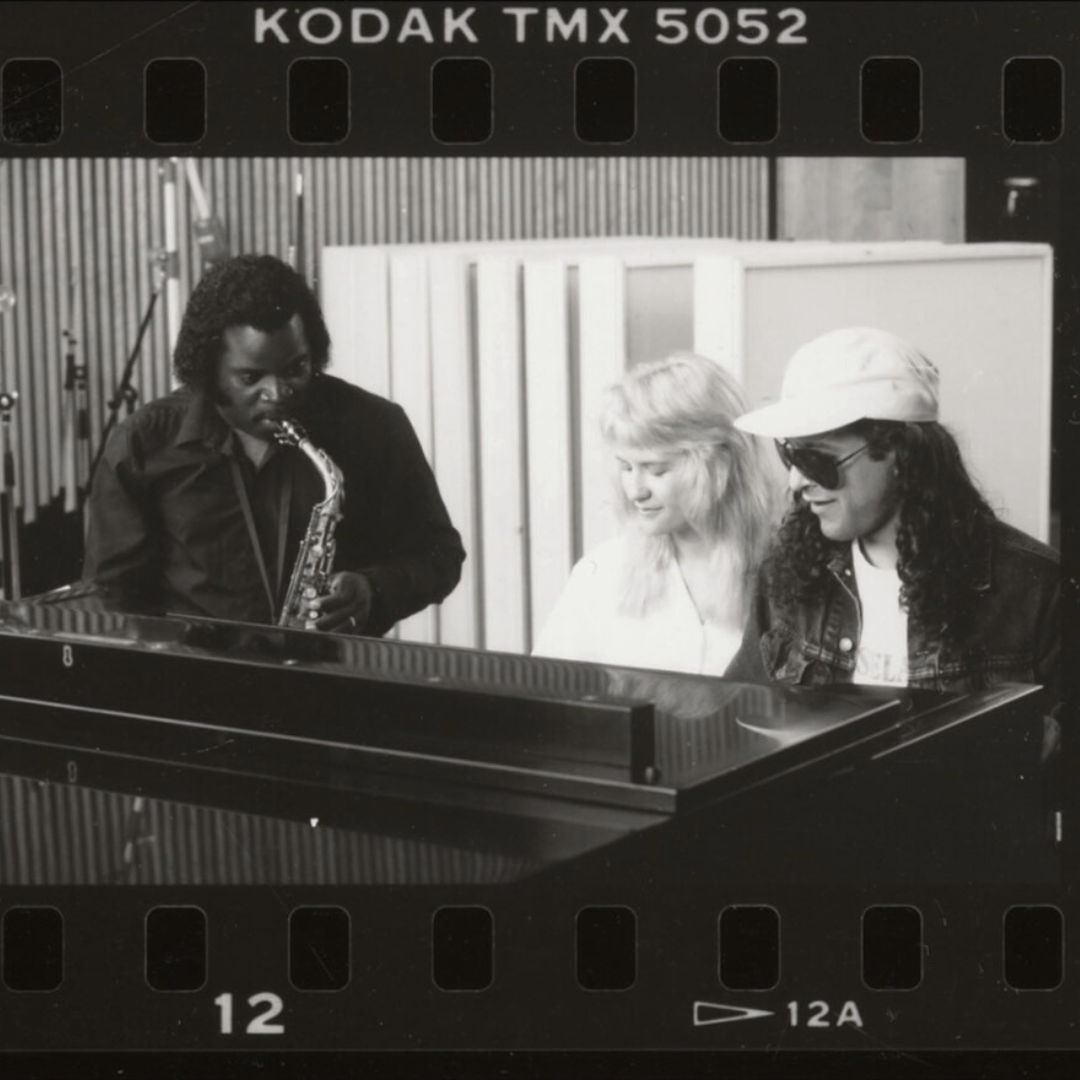
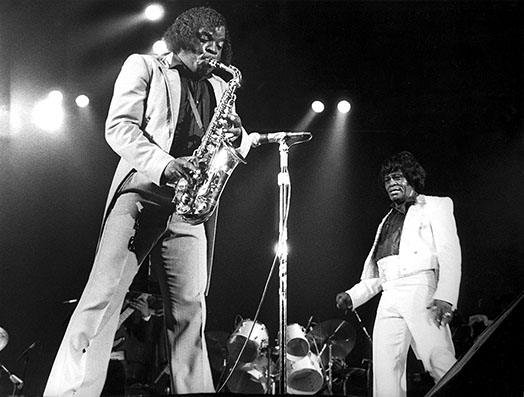
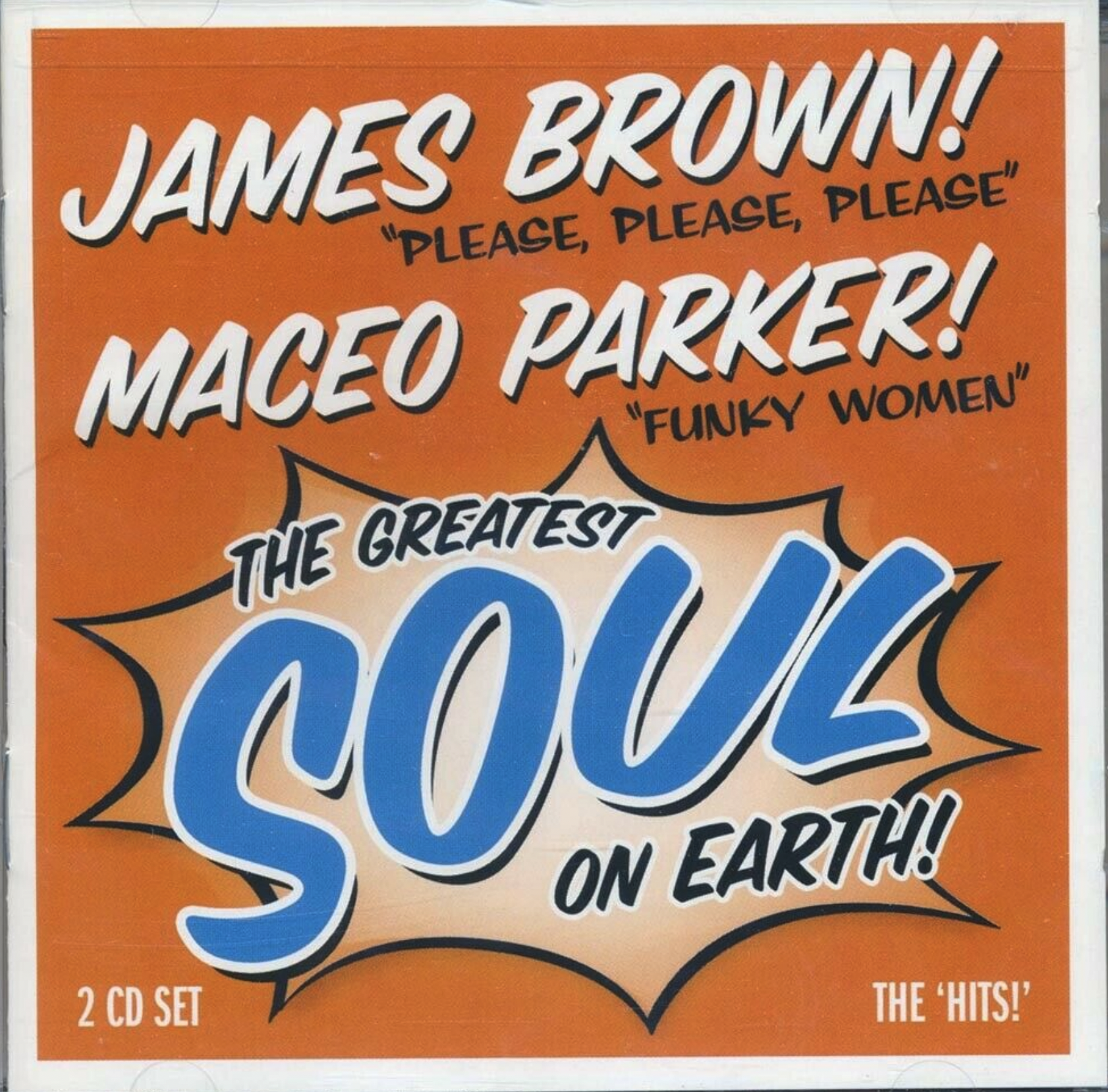
“Maceo Parker.”
Maceo was the alto saxophone player on all those late-60s James Brown records. He was one of my Soul Music heroes since I was eleven!
Rick found him somehow, and we flew him up to Minnesota. He played on our record for five hundred bucks. Said he could use the money ‘cause he had a half-dozen kids and lots of alimony payments.
James Brown used to name-check the kid
on his records.
That name-check made him famous.

David Z.
Maceo!
Blow your horn
Don’t want no trash
Play me some POPCORN
Maceo, C’MON!
When J.B. and the band got to Africa, the locals thought Maceo! was just a cool American thing to say, like hang ten or cowabunga!
So, I’m sitting behind the mixing board. Maceo starts playing on the title cut, and it sounds too…happy.
I look over at Rick. “This is Maceo Parker! How can I tell him what to play?”
“Go on,” Rick says. “You gotta do it.”
OK, so…
“Maceo…um…that’s a little too sweet. We’re looking for something a little more like…” I sing him his solo from Ain’t It Funky Now. [1969]
Bedop bedop vol-u-vop!
“Oh, ha HA!” He says. “You want that jagged stuff.”
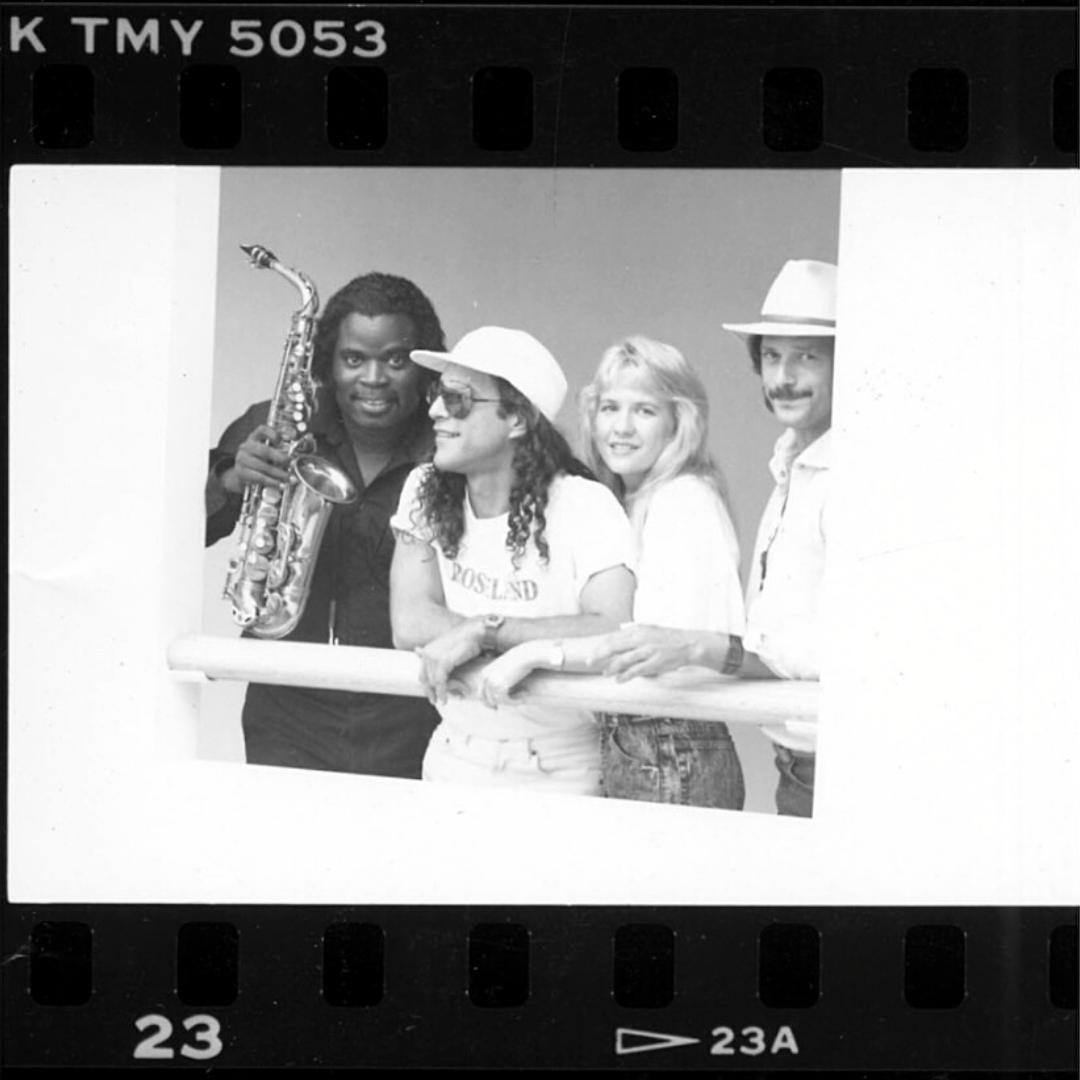
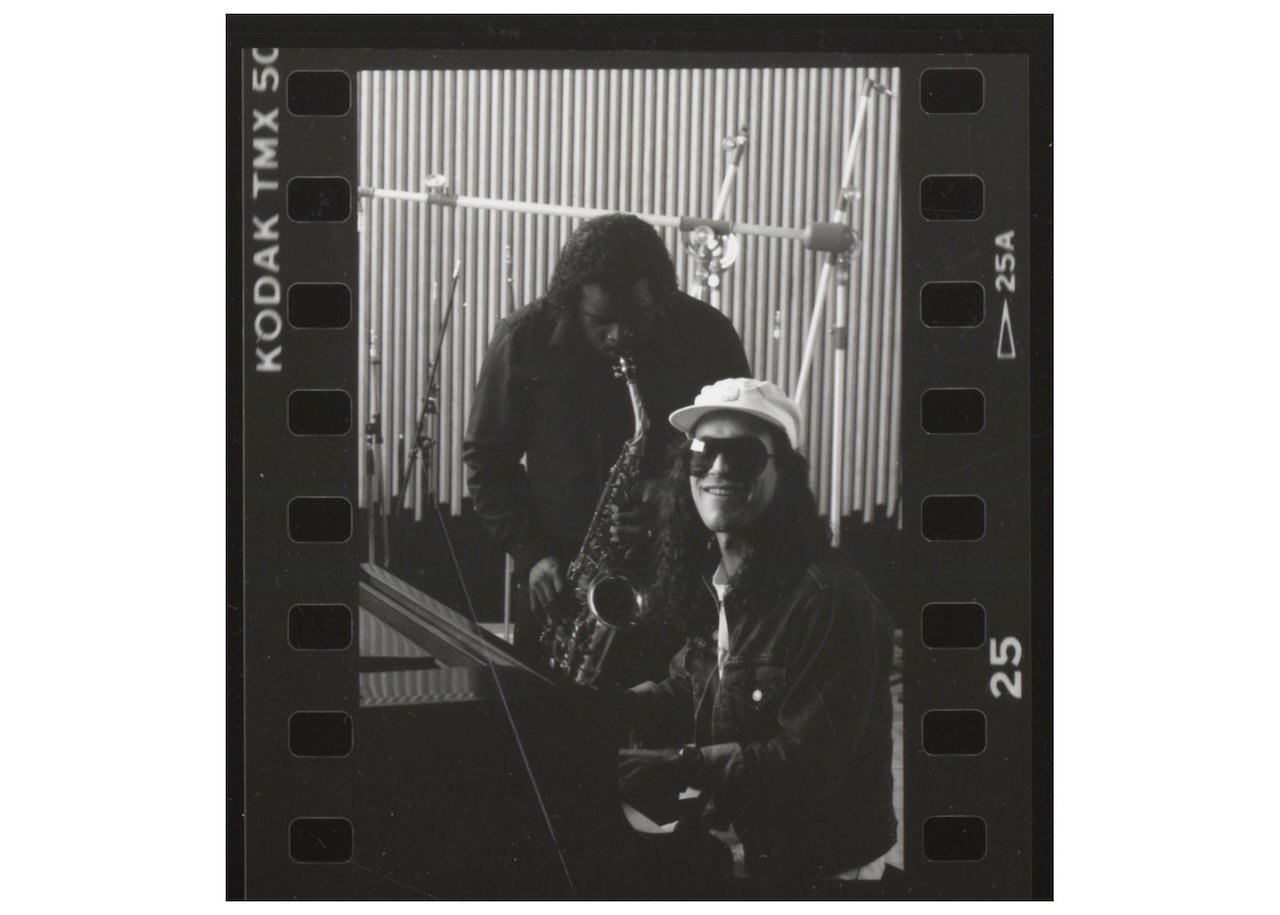
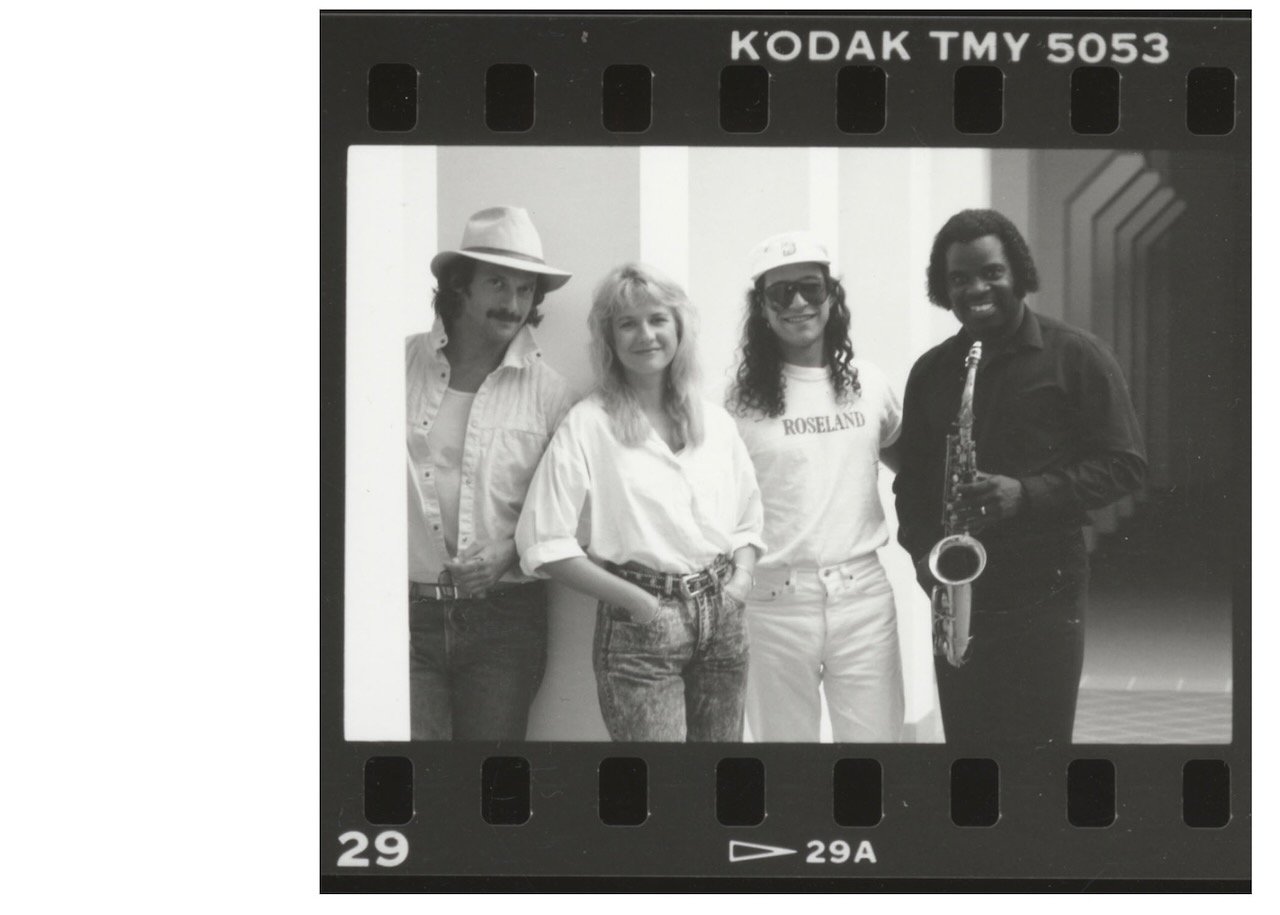
Prince’s saxophone guy, Eric Leeds, shows up. He’s a great modern funky bebop player; perfect for Prince’s band. Plays mostly Bari. I tell him he’s one of my favorite horn players. He looks at me like dirt under his fingernails and says nothing.
Parker and Leeds are sitting in the corner. Maceo’s taking swigs off a bottle of blue mouthwash he carries around with him. He doesn’t drink, and he declines our invitation to dinner.
During the mixing, which was Rick’s job and bored me to death, I got to roam the studio. One room was full of every keyboard in the world. Another room was packed floor-to-ceiling with tapes. There was a guitar case in the hallway with a label that said, #3 PEACH.
I sat on the floor and took it out of the case. It was one of those wild Prince guitars, with the long protruding slightly suggestive upper horn.
The neck was skinny.
The action was tight.

John L. Nelson
Around this time, Prince’s father strolls in.
He’s a little old bald man in a purple suit, about the same height as ‘The Artist’ himself. He asks the receptionist for a few posters, “for his girlfriends.”
Prince was having a little pop-up concert at a club near the studio. David Z got us in. We got right up front. The band didn’t go on till two or three. Sheila Escovedo, (Sheila E) was the drummer. Damn, she was good! In musician speak, they dug a deep trench! We stood five feet from the man himself. They played non-stop for two and a half hours!

Sheila E.
Back at the studio the next day, I had more time to explore. Made my way up to the second floor, where the wardrobe department was. There were a dozen sewing machines at individual stations, like a factory.
In the corner, there were all these clothes. Famous clothes! There was the fur coat and wide-brimmed hat from the MTV Video for I-forget-what-song.
So, I’m there in the wardrobe room at Paisley Park.
Trying on Prince’s clothes.
They were so tiny.
Like clothes tailored for Tinkerbell,
Or Peter Pan.

Prince in the coat.
BOOK REVIEW: EXIT STAGE LEFT by Nick Duerden
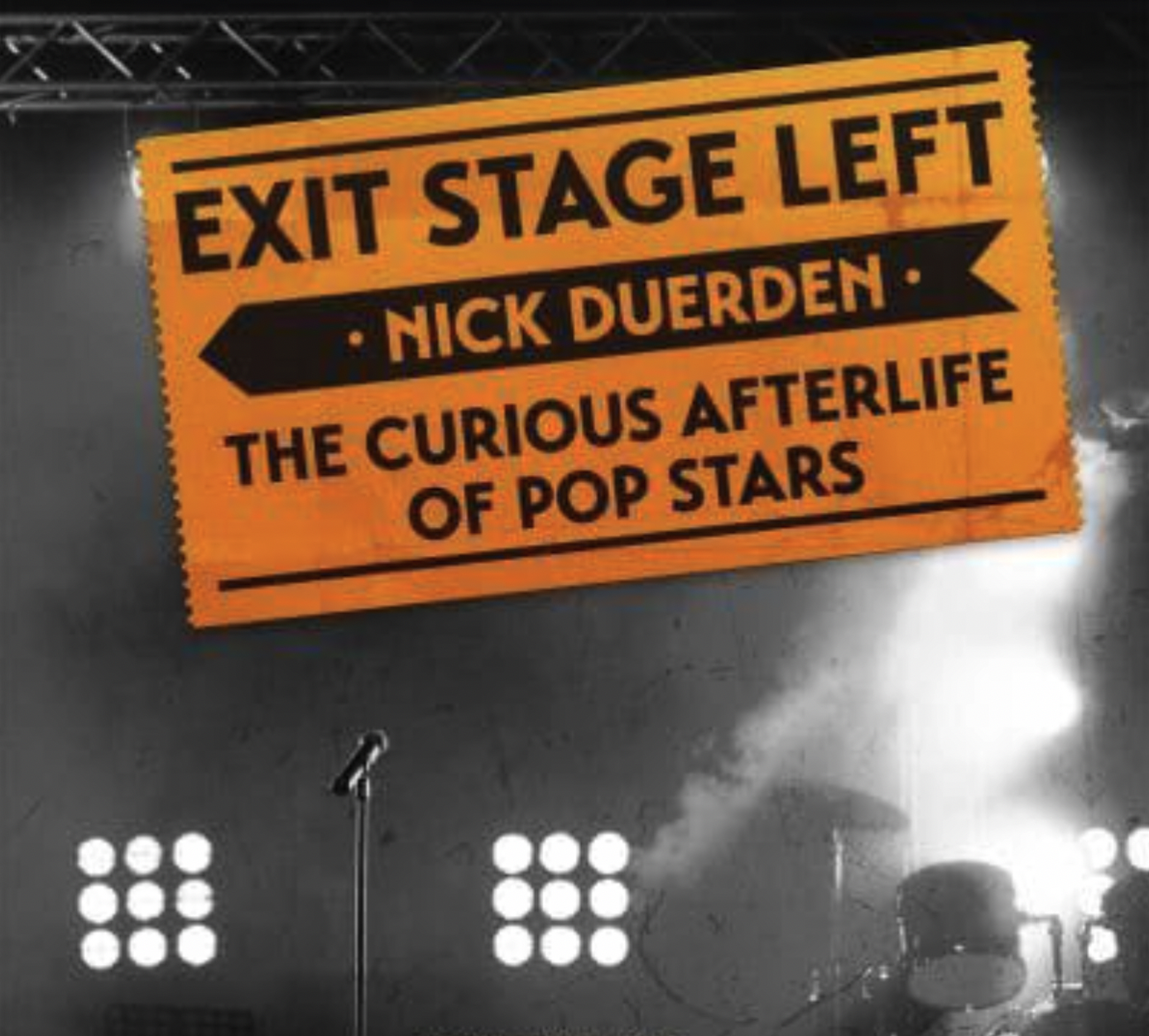
Ever wonder what happens to Pop Stars when the spotlight moves on to the Next Big Thing? British writer Nick Duerden interviewed dozens of Pop Stars, from famous names like Joe Jackson and Bob Geldof to lesser acts and One-Hit Wonders. Here's what we thought of the book at Nu Shooz HQ.

Ever wonder what happens to Pop Stars when the spotlight moves on to the Next Big Thing?
British writer Nick Duerden interviewed dozens of Pop Stars, from famous names like Joe Jackson and Bob Geldof to lesser acts and One-Hit Wonders.
Their reactions to the 'Dying of the Light' run the gamut from drug overdose to domesticity, from moving on to making music for the pure pleasure of the craft.
For us at Nu Shooz HQ, the book was like a weekend therapy session. "Hey, we made it out of that experience with our lives and relationships intact!" We especially recommend "Exit Stage Left" to anyone pursuing a career in music and anyone who made it out alive.
We heard about this book in Austin Kleon's excellent Newsletter. He's the New York Times Best-Selling author of three books about the Artist's Life; "Steal Like an Artist," "Keep Going," and "Show Your Work."
Nu Shooz Interview with David Hooper on Music Business Radio
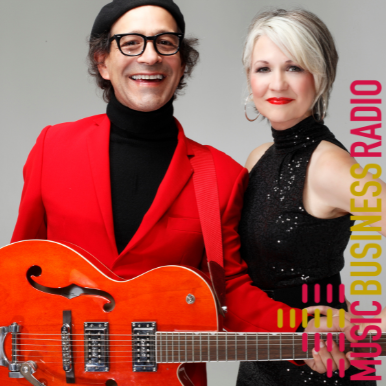
Catch the latest SHOOZ interview on the Nashville-based podcast "Music Business Radio" with Host David Hooper. First, we cover some of the usual territory, the Hits, the Record Label, the Grammys, etc. Then the discussion veers into the Creative Process, the Current State of the Industry, and why we don't believe in Writer's Block. It's a deep dive into the Band's unique journey in the Music Business.

Catch the latest SHOOZ interview on Nashville-based Music Business Radio with Host David Hooper. First, we cover some of the usual territory, the Hits, the Record Label, the Grammys, and the 80s music scene. Then the discussion veers into the Creative Process, the Current State of the Industry, and why we don't believe in Writer's Block. It's a deep dive into the Band's unique journey in the Music Business.
David Hooper is an American marketing professional and broadcaster and one of our favorite interviewers. His latest book is Big Podcast – Grow Your Podcast Audience, Build Listener Loyalty, and Get Everybody Talking About Your Show. He can be heard weekly on the syndicated radio show, Music Business Radio.
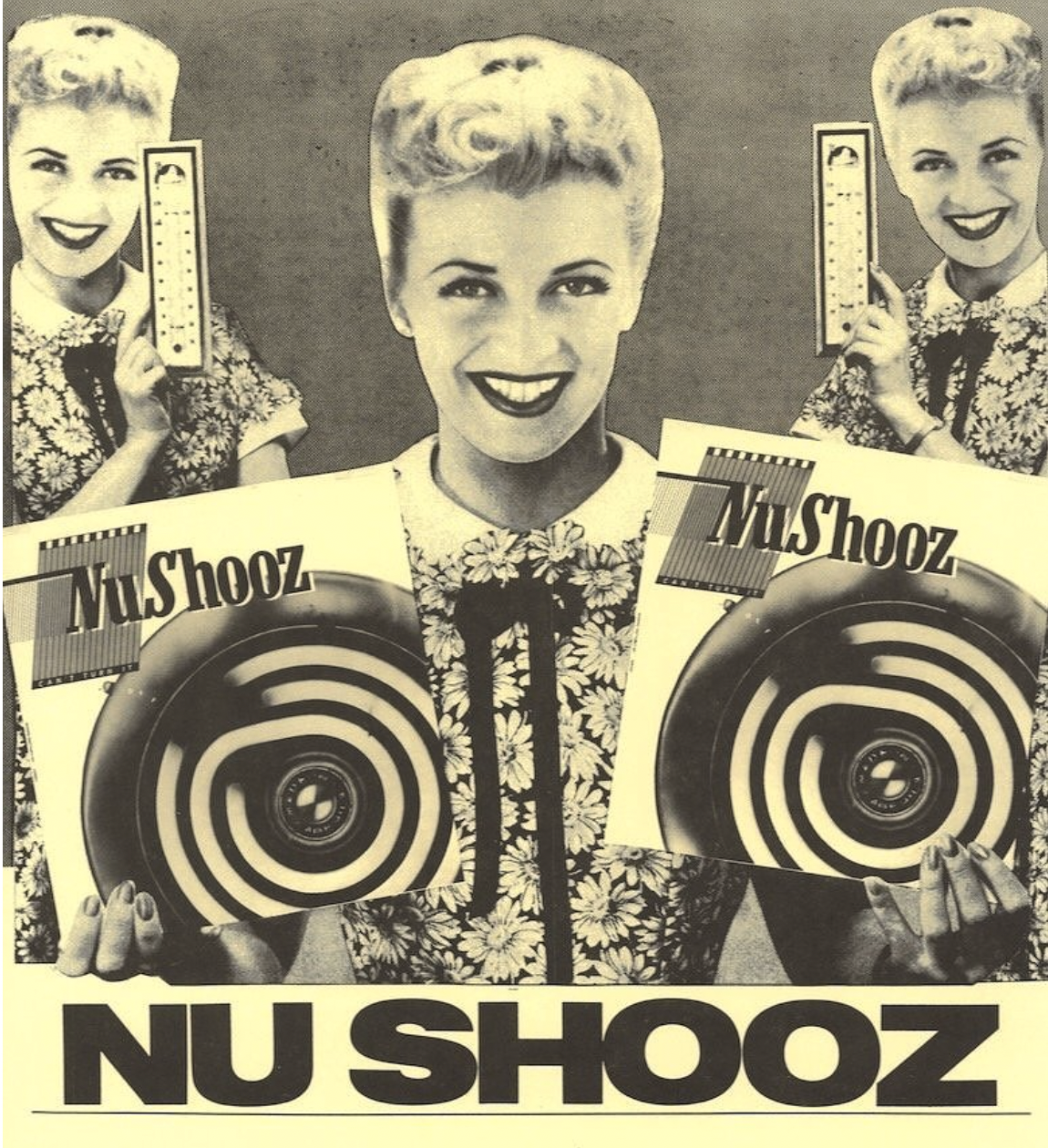
Perennial Interview Question #3: How’d You Get The Band Name?
Ever wonder how the band got its name? Well, wonder no more! John answers the perennial interview question, How’d You Get The Name?
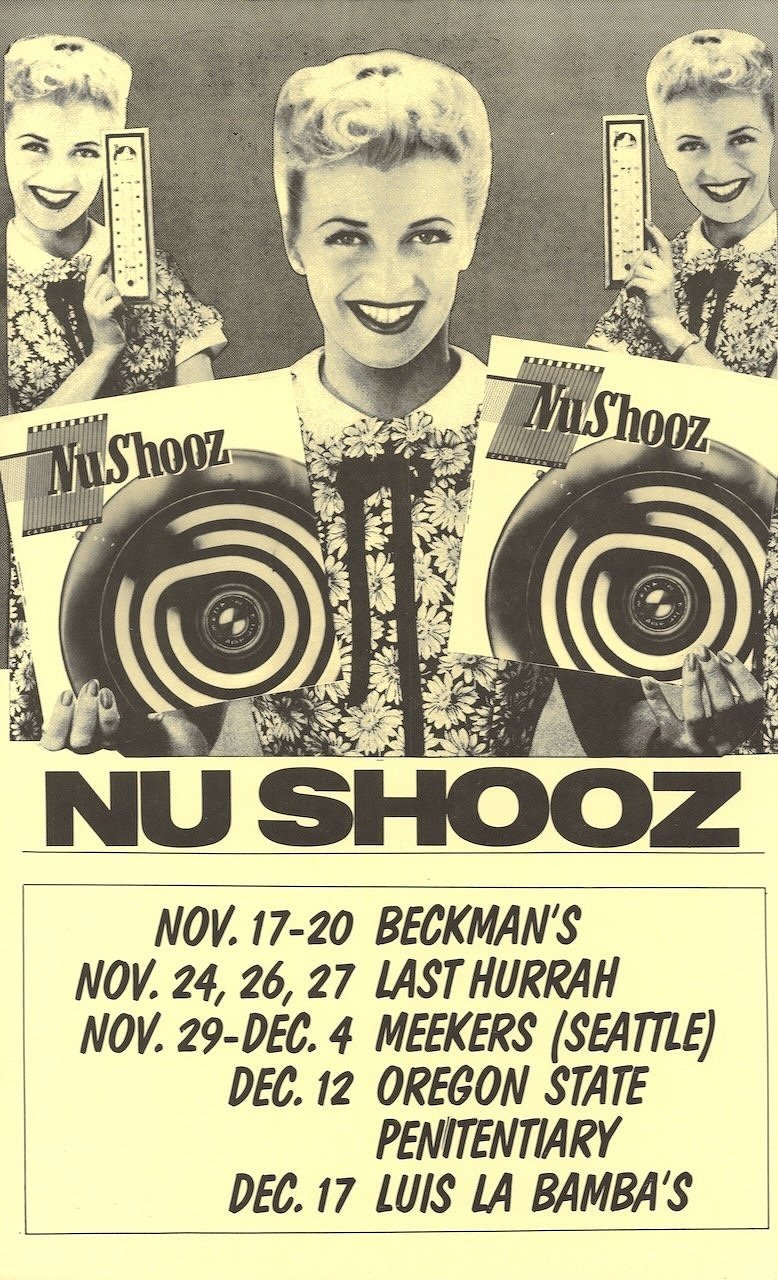
Early Nu Shooz band poster circa 1982
HOW DID WE GET THE BAND NAME?
OK…Once and for all, we come to Perennial Interview question #3.
(Question #1 is: What’s “I Can’t Wait” about?
Answer: “It’s about six minutes and twenty-nine seconds. That’s the long version.”
Question #2: What’s it like to be in a Famous Band with your spouse?
Answer: “Well, we got to see each other a lot!”)
Back to Question #3.
We started rehearsals for what became Nu Shooz in May 1979. Our drummer, Randy Givens, was the son of a music store owner. He could play something credible on almost any instrument and was particularly resourceful at getting gigs. Before we learned our first song, he’d already gotten us a gig at Col. Summers Park, half a block down the street.
The gig was a month away.
We needed a name.
Something to put on a poster.
Somebody (not me) said, “Let’s call it ‘The John Smith Group’.” That was the kind of thing jazzers did in the late 70s.
“Hell no!”
I forget what other names we came up with. I think one of them was ‘Hide the Silverware,’ which I kinda liked.

John Smith & Larry Haggin
Larry Haggin and I, former members of the late great Latin band Felicidades, had decided to put a new thing together. We were standing by the kitchen stove at “Twenty-One-Twelve,” the house where we had band practice. On the wall behind the stove was ‘Contact Paper.’ Does anybody remember that stuff? It came in wood grain and bunny rabbits and a thousand other prints.
This one was printed to look like a page from an 1890’s newspaper, what they used to call ‘fish wrap.’
And on the page was an ad for lace-up shoes.
Larry and I looked over at the same time and said, “We could be The Shoes!”
“Yeah…that’s stupid enough.”
This was the era of Band Names with Dumb Nouns; The Cars, The Police, Doctor and the Medics.
“Yeah…The Shoes.”

photo by Valerie Day
OK. Fast-forward two weeks. We’re in a Record Store. (Remember those?) And we find a record by a band called SHOES. Just SHOES. Personally, I thought the omission of the ‘the’ a little pretentious.
Anyway, the search for a band name began all over again.
Then, Jim Hogan, our bass player and arguably the best-looking member of the group, says, “Why don’t you call it New Shoes?”
“Hey!”
“Not bad!”
The original concept for the band was a mash-up of the Temptations and late-period Isley Bros.; four-part soul harmonies and Psychedelic Jazz guitar solos. There were two good singers in our four-piece band and two bad ones. I was definitely in Column B. We won’t say who the other one was.
Since the concept was a vocal group, I decided to be clever and spell the name New Shoo’s, you know, ‘Shoo’ like a backup vocal syllable. “Shoo-bop-shoo-BAM!”

Poster art by John R. Smith
But Americans, as a people, not the best of readers, read it as Shoosss. So that lasted for one poster.
Jim Hogan to the rescue again.
“You should spell it N-U-S-H-O-O-Z.
The ‘Z’ makes it more ROCK!”

For 30 years I didn’t like our band name very much. It sounded frumpy and old to me. I wanted something edgy and dangerous like METALLICA or MEGADETH. Then in the roaring 2010s, we went out on the 80’s tour, and I realized that it was perfect. Like the ’80s, it was bright and bouncy and all about dance music.
We’ve answered this question so many times that our stock answer to the Perennial Interview Question #3 is:
“The BEATLES was already taken.”
NU SHOOZ Time Machine: Hangin' w/Alice Cooper
John runs into Alice Cooper at Atlantic Recording Studios in the 80s and learns a few production tricks in the process.
A while ago we asked the question, What would you like to see on our website?
The universal answer was (of course,) more stories about the ‘good old days.’ Some stories we’ve told over and over, like writing ‘Should I Say Yes’ in a full-blown [pun intended] tornado.
Is there anything left to say?
Valerie and I sat down and brainstormed, and came up with a pretty good list. We’ll take them in the order that they occurred to us. Here’s story #2.
Hangin’ With Alice Cooper 1986

NYC
Paradise Garage 1980s.

Valerie and Rick, our manager, flew to D.C. to do some ‘Track Dates.’
A track date is where the singer appears at a dance club (like Larry Levan’s famous Paradise Garage above) to sing their hit over a backing track, usually around two or three in the morning.
We needed money to keep our nine-piece band alive, and Valerie could make more money doing one track date than the band could make in a week.
They left me in New York to mix some demo tapes. We had time booked at the legendary Atlantic Studios on 58th and 8th. Everybody recorded there back in the Golden Age; Ray Charles, Ruth Brown, Sinatra, Count Basie. You name it.
I didn’t really know what I was doing there. We had a stack of two-inch reels. We put them up, and a couple apathetic engineers fooled with them. I fell asleep on the couch, then got up and took a look around.

Arif Mardin (center) w/Dizzy Gillespie and Chaka Khan
Down the hall, I ran into Arif Mardin, one of my producer heroes. He produced my favorite Chaka Khan album, What You Gonna Do For Me. But he also wrote up the horns for that first blast of Aretha Franklin singles, Respect, Think, and Chain of Fools.
And he knew about Nu Shooz!
“Nice horn charts,” he said.
I think I died and went to Heaven.

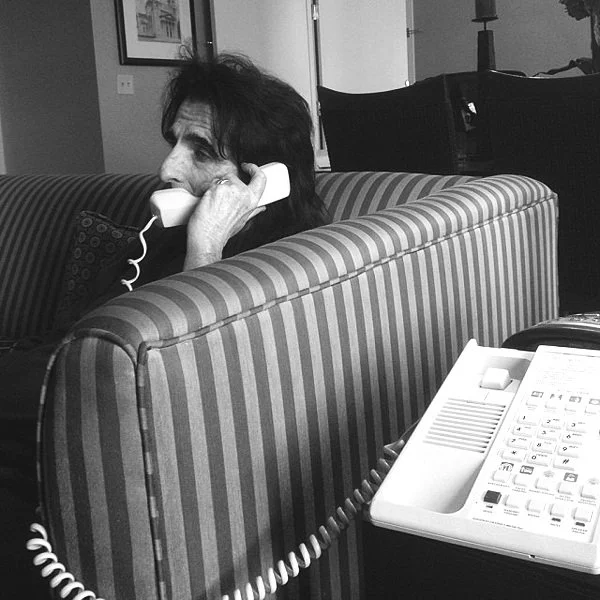
The second day, I come up the stairs and sitting at the receptionist’s desk is Alice Cooper. He’s manning the phones. Mr. Cooper sticks out his hand and says, “Vince.”
We order a couple of hamburgers.
While we’re eating he talks about how much he loves golf. His accent is distinctly mid-western, though later he owned a sports bar in Phoenix.
He was making a new album in the studio next to where I was (supposed to be) working. I was welcomed in to watch his sessions. Learned a whole lot. He had some beefy weight-lifter dude overdubbing guitars on a B.C. Rich. Machine tracks, live guitar. The coolest part was that they put the live drummer on last. That’s when the whole record came alive. I took that lesson with me when I left New York.
What a great down-home guy was Vincent Damon Furnier.
Never saw him bite the head off a bat. He said he doesn’t really go in for that kind of thing.
NU SHOOZ Time Machine: The Riot On Sunset
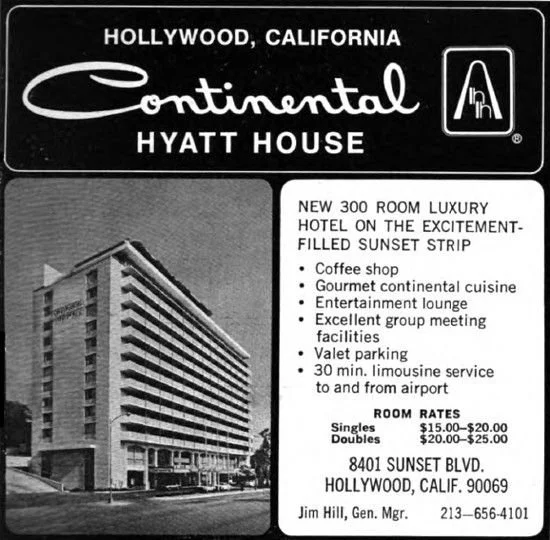
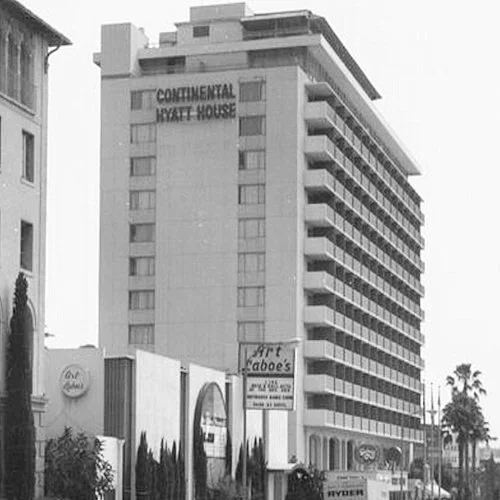
It’s our NU series, NU SHOOZ Time Machine! In this episode, it’s 1986 as we travel back in time to “The Riot On Sunset” in Hollywood, CA — also known as The Continental Hyatt House. We’re not in Kansas anymore, Toto.

A while ago we asked the question, What would you like to see on our website?
The universal answer was (of course,) more stories about the ‘good old days.’ Some stories we’ve told over and over, like writing ‘Should I Say Yes’ in a full-blown [pun intended] tornado.
Is there anything left to say?
Valerie and I sat down and brainstormed, and came up with a pretty good list. We’ll take them in the order that they occurred to us.

The Riot On Sunset
NU SHOOZ TIME MACHINE TALES #1
Down on Sunset Blvd in L.A., not far from Ben Franks and the Chateau Montmartre, is the Continental Hyatt Hotel. For whatever reason, it’s a destination for the touring acts working their way up and down the West Coast. We stayed there many times, during demo recordings for Warner Bros, and making the ‘Poolside’ album for Atlantic.
The place earned its nickname, the ‘Riot on Sunset.’
This was not the place to stay for a nice quiet vacation. In spite of the signs in the hallway, the party went on all night, punctuated by car alarms going off in the parking lot at random intervals.
If you want to get the feel of it, it’s featured in the movie Almost Famous.

Sly Stone
We were having breakfast with a record company guy in the downstairs restaurant when Sly Stone wandered in, full-on into his Lost Decade, looking a little worse for wear.
He says to the waitress, “Gimme a sandwich.”
“Mr. Stone,” the waitress says, “You’re really supposed to be wearing shoes in here.”
“Gimme a sandwich.”
We’re not in Kansas anymore, Toto. Welcome to Hollywood.
After breakfast, we’re passing through the lobby and we see a black-clad punk rocker talking into a payphone. It’s 1986. People still used payphones.
After breakfast, we’re passing through the lobby and we see a black-clad punk rocker talking into a payphone. It’s 1986. People still used payphones.
We hear him say, “I just got the name of the band tattooed on my arm!”
Valerie and I look at each other.
A permanent testament to band loyalty?
In a business where a career lasts about as long as a tsetse fly?
He's just sealed his fate!
“He’s out-a there.”
“He’s fired!”

Ladysmith Black Mambazo
We make our way to the elevator, press the button to go up.
Ding!
The double doors whoosh open, and there’s Ladysmith Black Mambazo, the South African group featured on Paul Simon’s Graceland album. There’s like twelve or fifteen people, crowded into this elevator. Somehow we squeeze in there too. Ride up to the third floor.
As we’re getting off, Joseph Shabalala says in his mellifluous Xosa accented English,
“Good Luck.”
So, next morning, I’m standing out in front of the ‘Riot House,’ dressed in white bib overalls, digging the L.A. air, when a tourist family approaches me; Mom, Dad, Teenage daughter.
“Excuse me,” the Dad says. “Are you Eddie Van Halen?”
I look down at my sneakers.
“Well…um…yeah.”
“Can we get a picture?
“Sure.”

John Smith 1986 (The suit was pink!)

Happy Nu Year! Inspiration & Uplift
Four of the best words in Western Literature are, "This Too Shall Pass" Think of all the things that have come and gone; The Great Plague, The Spanish Inquisition, Joe McCarthy, Shoulder Pads! THIS TOO SHALL PASS. So, what do we do while we wait for this moment to pass? What inspires us to keep going? We've got a few things to share with you that we hope will lift your spirits.

Photo by Kristopher Roller on Unsplash
Dear Friends,
Four of the best words in Western Literature are, "This Too Shall Pass" Think of all the things that have come and gone; The Great Plague, The Spanish Inquisition, Joe McCarthy, Shoulder Pads! THIS TOO SHALL PASS. We hope this email finds you well and happy as we turn another page on the calendar, and our tiny globe spins on and on. Happy New Year, and Thanks for keeping the Music alive.
Until next time, be well!
Valerie and John
So, what do we do while we wait
for this moment to pass?
What inspires us to keep going?
We've got a few things to share with you that we hope will lift your spirits.
One of the things that inspires us most are the children coming up in this uncertain world. Their courage and determination are remarkable. In honor of them and Martin Luther King Day, above is a trailer for a movie that's a must-see:
"Every year in Oakland, CA, hundreds of pre-K through 12th grade students compete in the Martin Luther King Oratorical Festival, performing a mix of published and original poetry and speeches. This documentary chronicles the months leading up to the 40th annual festival, as schools across the city send their top-placing students to compete. It is a portrait of passionate young people raising their voices about issues they care about – social justice, immigration and more – and of a community that celebrates them."
You can rent or purchase the movie HERE on Amazon.
Are you a Creative struggling to Keep Going?
One of our favorite authors and creatives, Austin Kleon, has a book for that!
Check out a preview of it below.
You can purchase copies on Amazon, Barnes and Noble, IndieBound, or iBooks
or find it online at your local library. (Download the Libby app,
connect your library card, and you can read it for free!)
Here's some more info about what's in the book from Austin himself:
"The world is crazy. Creative work is hard. How do you keep going?
In my previous books — the New York Times bestsellers Steal Like An Artist and Show Your Work! — I showed readers how to steal their way to a more creative life and then share their creativity to get discovered. In Keep Going, I show you 10 ways to stay creative, focused, and true to yourself:
1. Every day is Groundhog Day.
2. Build a bliss station.
3. Forget the noun, do the verb.
4. Make gifts.
5. The ordinary + extra attention = the extraordinary
6. Slay the art monsters.
7. You’re allowed to change your mind.
8. When in doubt, tidy up.
9. Demons hate fresh air.
10. Plant your garden.
Whether you’re burned out, starting out, starting over, or wildly successful,
Keep Going will help you stay on the path to more creative work."
Last but not least is a project David Byrnes (Talking Heads) started a few years ago to gather and spread the good news happening in the world through a website called Reasons To Be Cheerful. In the bleak landscape of 24/7 bad news, Reasons To Be Cheerful is a bright light.
Here's a bit about the project from the website About page:
Reasons to be Cheerful
is a non-profit editorial project
that is tonic for tumultuous times.
We tell stories that reveal that there are, in fact, a surprising number of reasons to feel cheerful.
Many of these reasons come in the form of smart, proven,
replicable solutions to the world’s most pressing problems.
We’re here to tell you about some of them.
Through sharp reporting, our stories balance a sense of healthy optimism
with journalistic rigor and find cause for hope. We are part magazine,
part therapy session, part blueprint for a better world.
Reasons to be Cheerful was founded by artist and musician David Byrne, who believes in the power of approaching the world with curiosity—in art, in music, in collaboration, and in life. Under the banner of Byrne’s non-profit organization, Arbutus, Reasons to be Cheerful embodies this sensibility, applying it now to the future of our world. Through stories of hope, rooted in evidence, Reasons to be Cheerful aims to inspire us all to be curious about how the world can be better, and to ask ourselves how we can be part of that change.

![Welcome to your summer. Yes, it's finally here! And it's the 46th anniversary of the very first NuShooz gig. [Colonel Summer's Park, Portland, Oregon, June 21st, 1979.] What a different world that was; pre-internet, no smartphones or smart toasters,](https://images.squarespace-cdn.com/content/v1/54cee645e4b01fa0f0bfc5f9/1772327896063-IIMMIJOZCTP00HOVTU9D/image-asset.jpeg)