
Mahavishnu and Music As Mating Ritual
I read an article in Scientific American Mind about music preferences in humans. Different personality types prefer different levels of complexity in music art and literature. Extroverts love mainstream pop, they love magazines, and Mark Rothko. Introverts love dissonance, byzantine novels, and Albrecht Durer.
Extroverts want their expectations fulfilled.
Introverts want to be confused.
These are gross generalizations, but see if they ring true for you.
(You’ll see where I’m going with this in a second.)
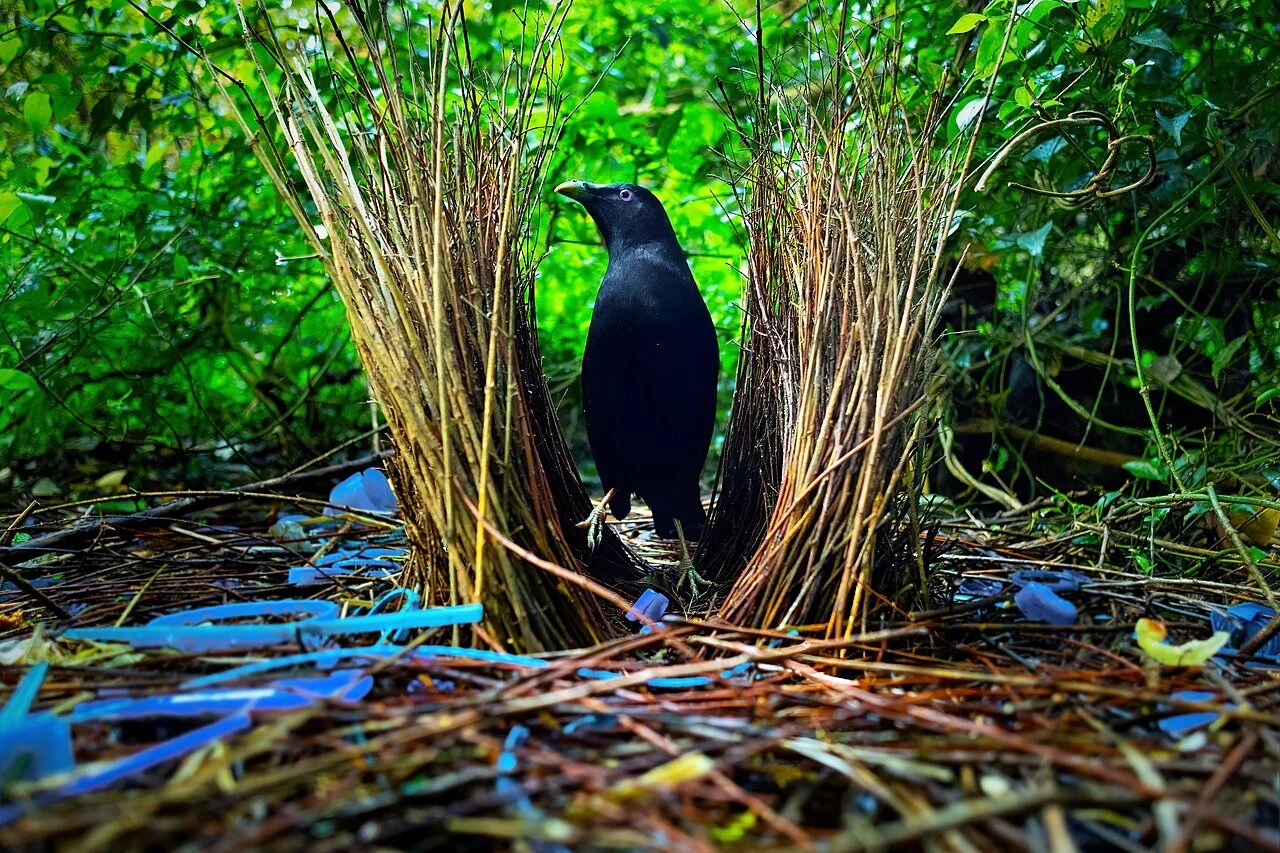
Photo by JJ Harrison
In the jungles of New Guinea there’s a species of bird called the Bowerbird. To attract a mate, the male Bowerbird builds an elaborate love nest. The door is made of woven grass. Its graceful shape beckons. He’s got Marvin Gaye playing on a cassette deck. Let’s get it on.
But he’s not done yet.
Now the intrepid male goes out and collects a wild array of stuff, shells, bottle caps, bits of colored plastic, the shiny wing feathers of beetles and arranges it around the perimeter, marking out a circle around the front door. This whole time he’s barely eating or sleeping. He’s wound up tight. He’s burning calories like a madman.
When the nest is just right, the male Bowerbird breaks out in song.
Four notes over and over.
If he can keep up a steady beat, any female within earshot knows he’s got good genes or whatever. Probably they aren’t thinking about genetics at all.
What strange birds are we?
I read an article in Scientific American Mind about music preferences in humans. Different personality types prefer different levels of complexity in music art and literature. Extroverts love mainstream pop, they love magazines, and Mark Rothko. Introverts love dissonance, byzantine novels, and Albrecht Durer.
Extroverts want their expectations fulfilled.
Introverts want to be confused.
These are gross generalizations, but see if they ring true for you.
(You’ll see where I’m going with this in a second.)
We were having dinner at the Bombay Cricket Club with our niece Elizabeth and her husband Don. He was talking about when they were first dating.
“Elizabeth asked me, ‘what kind of music do you like?’ Don said, ‘I like this and I like that, and…um…I like a little country.’ I was embarrassed about it, you know? Then I look at her CD collection and it’s like country, country, country.”
At this point in the story Don gives me this look like, ‘Yup…that’s when I knew.’
Zip back 35 years, to 1975.
I loved the Mahavishnu Orchestra. No girls liked this stuff. It was jazz-jock music for psychos. Music for Introverts. No girls had even heard of them.
Then I met Valerie Day.
Not only had she heard of them, she saw them play at the Paramount.
Yup.
That’s when I knew,
She was the one.
Bye for now.
~JRS
Nu Shooz Band
P.S. Weirdly enough, it was "Birds of Fire" that became "our song". How's that for my unconscious mind starting this blog with a bit about birds?
P.S.S. Was music a part of YOUR mating dance? We’d love to hear from you! Please leave a comment below...
I Can’t Wait: The Video…What IS It All About?
Since it first appeared in 1986 during the heyday of MTV, people having been asking us about the video for “I Can’t Wait”. What is the meaning behind it all? Why is Valerie pulling a shark out of a coffee pot? Is the dog wearing sunglasses a part of the band?
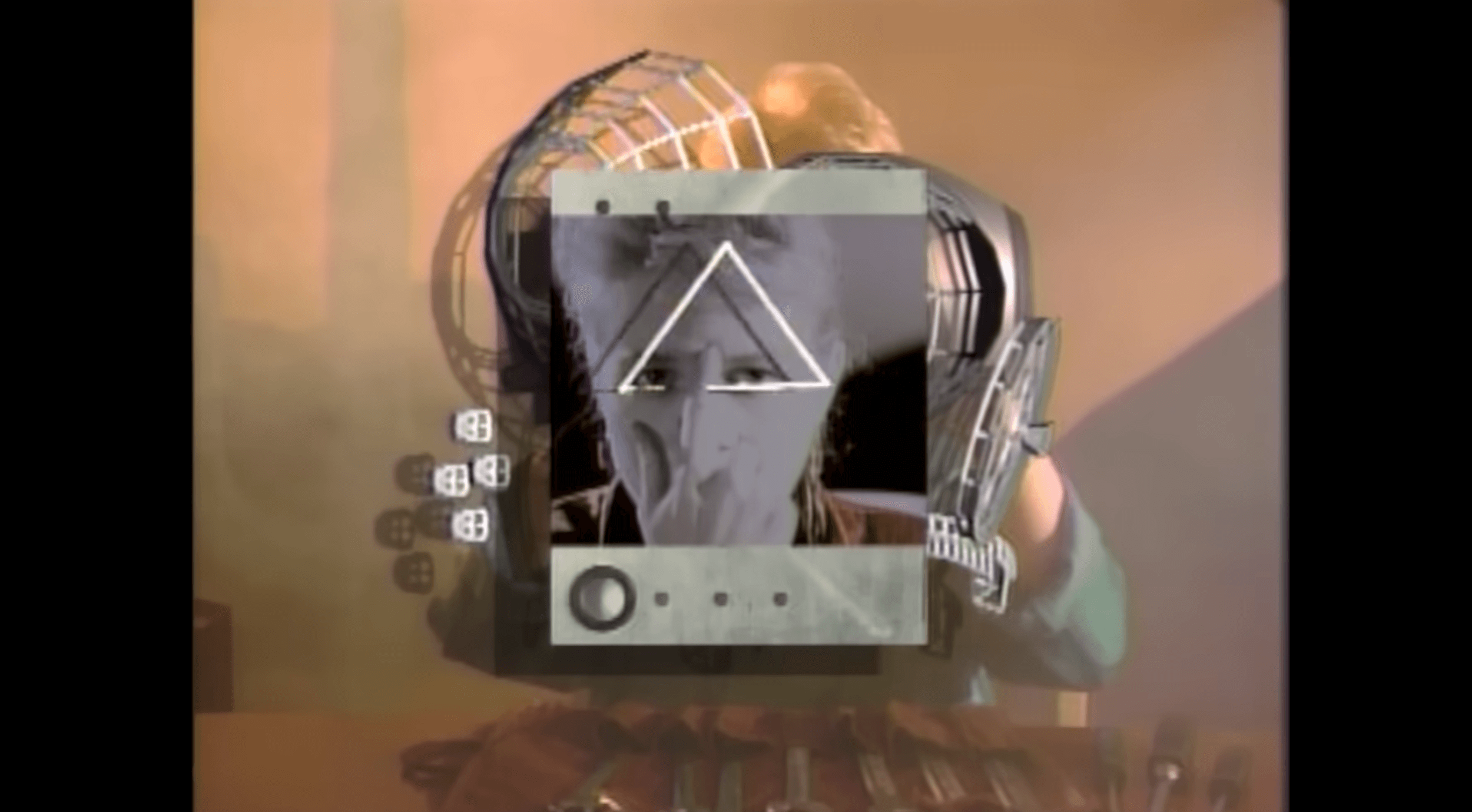
Since it first appeared in 1986 during the heyday of MTV, people have been asking us about the video for “I Can’t Wait”. What is the meaning behind it all? Why is Valerie pulling a shark out of a coffee pot? Is the dog wearing sunglasses a part of the band?
John and I have always loved the video for I Can’t Wait. Working on it with Jim Blashfield was one of the highlights of our pop music career. Jim lives in Portland with his wife, Mellisa Marsland (who also produced the video), and his daughter Hallie. We have gotten to be good friends with Jim and his family over the years. We even got to work with Jim recently on a multi-media performance called Brain Chemistry For Lovers. Jim directed, edited the script, and created video for it. Over the years, we’ve had a few discussions about the music business and assorted other music-related topics, but because the video for ICW had always “made sense” on a non-literal level to us, John and I had never thought to ask Jim, “What was that all about?”
Enter Sloan de Forest, a woman who calls herself “the Pauline Kael of classic MTV.” Sloan had a blog called “Images of Heaven: Remembering The Lost Art of Music Video.” She had decided it was time to uncover the story behind the “making of” ICW. She emailed Jim. He responded and copied us on the email. The blog no longer exists, but Jim's response does. Here it is in its entirety:
The video came about because I was a filmmaker living in Portland and my producer Melissa Marsland and I had just finished our first video, And She Was, and another for Joni Mitchell called Good Friends, and our fellow Portlanders-- the Nu Shooz crew who had been having some big international dance hits-- asked us to do a video for them. I explained that I wanted to improvise it. I didn't want to plan it at all. I wanted the experience of just making it up from what was around when we got to the studio. The morning of the shoot, I loaded my kitchen table and chair, and lamp into my car, along with some biology slides and a coffee maker, and some kind of cigar box, and headed over to the stage.
I rummaged around among the props there and found some canvas and some walls from a commercial, and some fake cactuses. I went upstairs, where the band and the crew were assembled-- we had a good and very professional crew, as you can tell from looking at the images-- and told them I would be back in 10 minutes with instructions about setting up for the first shot, about which I had no idea whatsoever. I rummaged around in people's offices and borrowed a few other items which looked promising. I went upstairs and said we were doing a video that took place in the desert and set people about creating that. It seemed like we needed something in front of the green walls, so the video editor went down the street and came back with a dumpster and rigged a way to make the lid go up and down with fishing line.
I recalled that my friends who were on vacation had a great-looking dog house for their dog Buster and some people went there and stole it. We called up a friend with an obedient dog who would stay when asked, and he brought his pooch over. Somebody else got a bunch of tools out of the trunk of their car. Now, fully prepared, with the band members doing an admirable job of hiding their apprehension, we were all set to shoot the live-action! Valerie was completely along for the ride with a great sense of playfulness, as her song was absolutely misinterpreted.
After the shoot, the next step was a trip to Seattle to get the footage transferred and do strange things to some of it, and then, for post-production, a trip to the thrift store and the corner grocery, returning with every other little gadget and doo-dah you see on the screen.
The video editor was Mike Quinn, who subsequently did the high-degree-of-difficulty video editing for my videos for Paul Simon, Peter Gabriel, and others. During editing, I called my friend Roger Kukes, the animator, and asked him if I could use part of his animated film Up for the ending of the video where Valerie Day opens the little box, and all the wiggly images come out, revealing all knowledge known to humankind.
I recall that the opening scene with the Banana and souvenir totem pole dropping onto a piece of metal with holes in it took about 8 hours to composite and was completed while I slept on the couch in the editing room. The scene where the image of the dog watching the golf ballish thing swings in and unceremoniously lands on Valerie's head-- and where it remains for longer than might be considered, strictly speaking, necessary-- is there because it made me laugh when we tried it in post and was left in because nobody said I couldn't. We had a take in which the guy with the smoke machine walks through in the background, waving it around while Valerie is singing, but I left that out due to some conservative impulse on my part, which I regret.
When they saw the video, the record company called it "unusual," or perhaps "quite unusual," or maybe "very unusual," or possibly some other less neutral phrase that I have repressed.
So what is it? Besides being a promo for a band and a song, it is an experiment to see what results when you take a line from the video "tell me what it's all about" and decide that Valerie is some kind of a scientist with an interest in small appliance repair instead of somebody waiting, lovesick, for a phone call, and let everything follow logically from that. If viewers look closely, they may notice that happiness seems to be represented as a shark found lurking in a coffee pot, a metaphor which is certainly worth considering if you ask me.
This being Portland and Nu Shooz being Nu Shooz and me being something of a troublemaker with a perhaps overdeveloped allegiance to the ordinary, the Portland MTV video premiere party was held in a truck-stop cafe and bar up the street. The local news sent a mobile truck to broadcast the glamorous event live.
By the way, and not incidentally, Valerie Day and John Smith, the Nu Shooz core, are fabulous and very versatile musicians and have a new CD out, Pandora's Box, that is exquisitely produced, hypnotically beautiful and completely different from the zillion seller Poolside, of which I Can't Wait was a part. I didn't have in mind to promote their CD when I began this fascinating run-on mind-evacuation, but since I'm talking about it... https://nushoozorchestra.bandcamp.com/album/pandoras-box
So hey, thanks for your interest, Sloan. I agree that some pretty interesting work was made during that period, and am aware that my co-conspirators and I were behind a few of the more interesting ones. That was our intention. To do stuff that bent the expected trajectory or looked deeper, or cast light and attention on subjects, images, and ways of seeing things that were often overlooked. Thanks for appreciating that!
I must go now and milk the swan.
Jim Blashfield
Reading Jim’s account of how the video came together made us appreciate him even more than we already do. And what a blast to have his version of the making of! He’s a master at using images to explore that theme park of the mind – the unconscious – and give us all a great time while doing it.
Thought I’d share it with you.
- Valerie

How to Get A Hit Record and Sell a Million Records
Want to know how to achieve FAME and FORTUNE in the music business? Yes, YOU can be a pop sensation. Check out our very tongue-in-cheek entry on "The One Minute How To," as we tell you the secret of "How to Get A Hit Record and Sell a Million Records." It's a fun show, hosted by George Smyth. In this educational, 550-episode series, you can learn everything under the sun from how to unclog your drain to how to ride a Bactrian camel, and all in sixty seconds.
Follow along with the interview here:

Want to know how to achieve FAME and FORTUNE in the music business? Yes, YOU can be a pop sensation. Check out our very tongue-in-cheek entry on "The One Minute How To" below as we tell you the secret of "How to Get A Hit Record and Sell a Million Records." It's a fun show hosted by George Smyth. In this educational, 550-episode series, you can learn everything under the sun, from how to unclog your drain to how to ride a Bactrian camel and all in sixty seconds.
Follow along with the interview here:
GS: Hello, everyone. This is George, your host. On this show, we’ve got Valerie Day and John Smith, and they’re going to explain to us How to Get a Record Deal and Sell a Million Records. Guys, can you first tell us a little something about yourselves?
VJD: Well, we had a band in the heyday of MTV called NU SHOOZ that racked up some Top-40 hits, one of which still plays somewhere on Earth every eleven minutes. Before our ‘overnight success’ though, we spent seven years playing clubs, touring in a broken-down school bus, and recording when we could scrape up the money. So this How-To will give people a leg up on the step-by-step process we took to go from local obscurity to international stardom.
GS: OK, if you’re ready, then you’ve got sixty seconds.
VJD: How to Get a Record Deal and Sell a Million Records.
JRS: Start a band, make a poster, and, oh yeah…Choose a band name.
Remember…
You’ll be stuck with it for life.
Play four or five nights a week
Four hours a night
For seven years
Oh, and don’t forget to record.
You never know
Which track
Is going to be MAGIC.
We sure didn’t know.
Get your recording reviewed in the local newspaper.
Make sure the writer says something about how you suck as a live band.
But that it’s too bad that Top-40 stations in town won’t play local music.
‘Cause the recording’s actually pretty good.
Have a DJ from the Number One pop station in your city read the review…
And put a call out over the air to bring the tape on down. They’ll pick a song and play it on the radio.
Then the next year, becoming a Regional Hit.
So you can get turned down by all the major labels.
Put your single out on a 12” record for dance clubs
Have a remix artist
In Holland
Find your record in a record store bin
In Holland
Have him remix it.
So he can send HIS remix back to the states.
Where it can wind up in all the New York City dance clubs
To be discovered by a nice Italian boy who happens to work at the Dance Department at Atlantic Records
Where his boss will hear it and sign you to a singles deal
That turns into an album deal
That produces more Top-40 Hits
That get you nominated for a Best New Artist Grammy
And help you sell over a million records worldwide.
GS: (Laughs) I’m hearing this and what takes me back to when I was in bands was the four-hour gigs, and you happened to mention that, and I guess that’s something that’s rather common.
JRS: Oh yeah.
VJD: Back in the day. Now people have opening acts in clubs and stuff, but we played the whole time.
GS: Yeah, yeah. I can remember it would be like either an eight to twelve gig or like a ten to two gig, and they’d give you one, maybe two breaks, and…not so easy.
VJD: No, no, It’s a good way to learn though.
GS: Absolutely.
VJD: Yeah.
GS: OK, Is there anything else that you’d like to talk about?
VJD: Well, first of all, there’s really no step-by-step guide, as you know, that can help you to get a record deal or sell a million records, but the point of the whole story is that if you really, really really want to do something badly enough, you’ll just have to keep going no matter what because you have to do it for you. And since the 80’s, we’ve been doing all kinds of music, everything from Jazz to Classical, Film Scores to Funk, and we got excited about combining our favorite styles to create a new sound. So, we put together a new band called The NU SHOOZ Orchestra, and we just released our first CD. It’s called Pandora’s Box, and you can find it on our website, nushoozmusic.com. We’ve got free tracks there, full streams for listening, and links to places you can buy actual physical copies of the CD if you want.
GS: And Nu Shooz is spelled N-U-S-H-O-O-Z.
JRS: That’s right.
GS: OK. I’ll have a link to that on the One Minute How-To dot com show notes.
VJD: Thanks, George.
GS: Valerie and John, thanks a lot. I appreciate it.
JRS: Thanks for having us. It’s been fun.
VJD: It’s been really fun
Find our latest newsletter below!
Search The Blog….


![Welcome to your summer. Yes, it's finally here! And it's the 46th anniversary of the very first NuShooz gig. [Colonel Summer's Park, Portland, Oregon, June 21st, 1979.] What a different world that was; pre-internet, no smartphones or smart toasters,](https://images.squarespace-cdn.com/content/v1/54cee645e4b01fa0f0bfc5f9/1772327896063-IIMMIJOZCTP00HOVTU9D/image-asset.jpeg)